7 SCRYMGEOUR-WEDDERBURN DESCENDANTS of Capt FL MAITLAND
Issue: 7/7/2003
This section is a compilation of information from several sources, including, inter alia:
A Wedderburn site (14/2/2001):
(http://perso.wanadoo.fr/euroleader/wedderburn/blackness/)
SRO Records.
Daughter of Frederick Lewis & Margaret (Dick) Maitland:
MARY MAITLAND(2nd name Turner in A/F & PR, not in Will)
C: 28 Oct 1768 Ratho, Midlothian, Scotland (SRO, FR145)
A Minor in FLM's Will
Married 5/4/1793 @ Edinburgh Parish, Edinburgh, (SPR)
of Fife (Henry Scrymgeour Wedderburn in PR)
4th & ygst. s. of David Scrymgeour & Katharine Wedderburn (b. 1715, 6th
d. of Alexander W., 4th Bt. of Blackness, & Katharine Scott) - see 1739 -
was b. on 3/11/1755 (in Scotland). -
From Scottish Records:
David Scrymgeour M: 12 Aug 1739 Katharine Wedderburn @ Balmerino, Fife.
Henry went out to Jamaica 'about October 1773'. "Members of his mother's
family had been established there since the '45 and were now prosperous"
He owned an estate called Baulk and became a member of the House of
Assembly" (W.B. p. 179)
[The three sons of Thomas Wedderburn 'of Cantra' (younger brother of the
executed 5th Bt. of Blackness & of Robert Wedderburn 'of Pearsie'):
Alexander (b. 1741 at 'Grange Hill'); John (b. 1743 at Forres, Morayshire) and
James (b. 1751, at Inverness), all went out to Jamaica as well. - Alexander
went there in the spring of 1760 "staying on his way South with his uncle
'Pearsie'….but four years later died, unmarried, at Bluecastle, in the parish
of Westmoreland, Jamaica. (W.B. p. 342)
Henry Scrymgeour returned from Jamaica in 1790-91 and m. Mary Turner Maitland
(e.d. of Capt. the Hon. Frederick Lewis Maitland, R.N., sixth s. of Charles,
6th Earl of Lauderdale) in 1793, q.v. (W.B. p. 179/80)
[There is no mention in either the W.B. or Burke's Peerage that Henry had been
married previously, but the Will of his cousin, James Wedderburn (b. 1751, d.
1797) indicates that he had a wife (and children) while he was living in
Jamaica (although, in a Codicil, written in 1792, James also left legacies 'in
the event of his marriage' to Henry's eldest son and eldest daughter yet to be
born - on the rather curious 'express condition' that Henry should marry within
three years of the date of the Codicil 'C' - i.e. by 30 April 1795.)] - Henry
& Mary had 4 sons & 8 daughters, of whom only one son, the youngest,
Frederick, b. 1808, survived, and only one daughter, the 7th, Mathilda, b. 1803
(q.v.), had children. (W.B. p. 181)]
Issue of Henry Scrymgeur & Mary Turner Maitland:
1/1. Janet Scrymgeur-Wedderburn C: 25 Aug 1796 @ Kettle, Fife,
At Edinburgh Parish:
1/2. Margaret Louisa Scrymgeour-Wedderburn C: 8 Feb 1794
1/3. Catharine Scrymgeour-Wedderburn C: 8 Feb 1794
1/4. Elizabeth Wedd S Wedderburn B: 19 Feb 1795
Parents: Henry Scrymgeour-Wedderburn & Mary Turner Maitland-Makgill
1/5. David Scrymgeour-Wedderburn C: 21 Aug 1799 (@ Saint Cuthberts,
Edinburgh)
from Scottish Records, probably not ours:
David Scrymgeour M: 11 Dec 1825 Maria Jack, @ Crieff, Perth,
David Scrymgeour M: 17 Oct 1841 Janet Gow @ Crieff, Perth,
1/6. Matilda Scrymgeour B: 30 May 1803. (Father: William Henry
Scrymgeour)
From internet 14/2/2001 (Wedderburn site):
1829 Matilda Scrymgeour-Wedderburn m. Robert Matthew Isacke, of
Foreland Lodge, Kent, in 1829. Kent IGI (This m. is also shown in
the Fifeshire IGI) [They were m. at Balmerino, Fife on 11/9/1829.
- Matilda, b. 30/5/1803 in Edinburgh, was the 7th d. of Henry S-W
& Mary Turner Maitland, e.d. of Capt. the Hon. Frederick Lewis
Maitland, R.N. (sixth s. of Charles, 6th Earl of Lauderdale). -
Captain Robert Isacke, 'e.s. of Capt. Isacke (d. 1831), of Croomes
Hill, Greenwich, Kent, was in the naval service of the East India
Company'. (W.B. p. 182) [Capt. Robert Isacke & Matilda had 4 sons
& 2 daughters.]
1/7. Alexander Scrymgeour B: 3 Jan 1807
1/8. Frederick Lewis Scrymgeour B: 4 Mar 1808, Edinburgh (Wedd. Site)
Died on 16 Aug 1874 in Birkhill Fife.
Married (1): the Hon. Helen Arbuthnot, fifth d. of John, 8th
Viscount Arbuthnot, & Lady Margaret Ogilvie. (Lady Margaret was
the e.d. of Walter, 7th Earl of Airlie.) Helen died on 23 Apr 1840
in Balgarvie, Fife. (John Arbuthnot's youngest daughter, Lady Helen
Ogilvie, m. John Wedderburn 'of Auchterhouse', b. 1788 at Clapham,
Surrey, the younger s. of John Wedderburn of 'Spring Garden' Jamaica,
who was b. in Inverness in 1743. From 1801 until his death in 1820
'Spring Garden John' was the senior partner in Wedderburn & Co. at 35
Leadenhall St., London.]
Issue:
2/1. Henry SCRYMGEOUR-WEDDERBURN was born on 18 Apr 1840. He died
on 1 Feb 1914.
Married Juliana BRADDELL, daughter of Thomas BRADDELL Esq., of
Coolmelagh, in 1869 in Dublin.
Married (2) 31/8/1852: at Hurst Church, Berks., on 31/8/1852,
Selina Mary Garth (d. of Captain Thomas Garth, R.N., of Haines
Hill, Berks. - W.B. p. 182). [Frederick & Selina had 2 sons and 3
daughters (b. in Scotland - see Komcol2). She died on 18/10/1902
at Haines Hill, Twyford, Berks. - Probate was granted to Alexander
Scrymgeour-Wedderburn. - Estate valued at £5,646. (Derek & Pauline
Weatherburn's Notes)
Issue:
2/2. Selina Elgiva SCRYMGEOUR WEDDERBURN, born on 22 Aug 1856.
Married Capt. James CARNEGIE GILLESPIE, son of David GILLESPIE
of Mountquhanie Cupar Fife, on 21 Jun 1883 in Sandleford Newbury.
1881 Census was unm., living with her widowed mother and sister
Charlotte at Sandleford Lodge, Sandleford, Berks.
M. 21/6/1883: Capt. James Carnegie Gillespie, R.H.A. (3rd s. of
David Gillespie of Mountquhanie, Cupar, Fife - grandson of
Janet Scrymgeour, b. c1747, & John Gillespie, m. 1776),
1897 Selina and her husband, by then Colonel of the R.H.A.,
were living, s.p., at Weedon, Northamptonshire. (W.B. p. 183)
SRO:
Henry Scrymgeour Wedderburn C: 22 May 1840
Father: F. L. P. Wedderburn Mother: Helen Arbuthnot
Balmerino, Fife, Scotland
1/9. Euphemia Scrymgeour B: 28 Sep 1809 Edinburgh (Father: William
Henry Scrymgeour) She died, widow, in 1881. (Wedd. Site)
Married 20/1/1848: John SCOTT M.D., FRCS Edinb. in St Peter's
Thanet. (as his second wife), (physician to the East India
Company). Their only child Euphemia, d. soon after its birth.
1784 Almanac:
John Wedderburn Magistrate for Westmoreland
Also Thomas Thistlewood
James Robert Tomlinson
Major, St ELizabeth Militia, William B. Wright.
Ensign, Westmoreland, John Tomlinson
1796 Almanac
Magistrate Westmoreland: James Robert Tomlinson
James Wedderburn
St Elizabeth Coroner, R.B. Wright
From Jamaica Handbook:
1811:
John Wedderburn @ Spring Garden, W'moreland: 1524/1877
Sir David & Andrew W: Blue Castle & Blackheath: 602/633
1824:
James Wedderburn: Mint, Moreland, Mount Edgcumbe, Paradise, Retreat,
Spring Garden: 1625/1934
Sir David W: Blue Castle: 241/332.
From Scottish Records:
David Scrymgeour M: 12 Aug 1739 Katharine Wedderburn @ Balmerino,
Fife.
1793: James Wedderburn, Foreman of Grand Jurors for Westmoreland
1900 HANDBOOK OF JAMAICA EXCERPTS
SUGAR ESTATES IN CULTIVATION IN JAMAICA - WESTMORELAND
Blue Castle - Samuel H. Morris
Scottish Church Records - Version 2.00
Henry Scrymgeour
M: 24 Jul 1836
Spouse: Jane Craig Edinburgh Parish, Edinburgh,
Henry Scrymgeour B: 14 Mar 1844
Father: Henry Scrymgeour Mother: Jane Craig
Edinburgh Parish, Edinburgh, FR4697
Donald Scrymgour M: 28 May 1804
Spouse: Martha TAIT Logierait, Perth, Scotland
Alexander Scrymgour M: 19 Sep 1802
Spouse: Elizabeth Fraser Logierait, Perth, Scotland
Alexander Scrymgeour M: 2 Jun 1839
Spouse: Mary Dachson Blairgowrie, Perth, Scotland
Alexander Scrymgeour M: 5 May 1842
Spouse: Mary Brown Arbroath, Angus, Scotland
Alexander Scrymgeour M: 28 Dec 1845
Spouse: Henriatta Anne Sophia Moris Fowlis Wester, Perth,
Mary Turner Scrymgeour Wedderbrun (F). M: 23 Jul 1843
Spouse: Thomas Smith Duddingston, Midlothian, Scotland
From Internet: http://www.stirnet.com/HTML/genie/genfam.htm 15/3/04
James Scrymgeour of Kirkton (d 1580)
m. Agnes Bruce of Earlshall (probably dau of Sir William Bruce, 2nd of Earlshall)
1. John Scrymgeour of Kirkton (d 06.1629)
m. (03.05.1593) Marion Fothringham (dau of Thomas Fothringham of Powrie)
A. John Scrymgeour of Kirkton (d 23.06.1656)
m. (11.10.1624) Jean Makgill (dau of James Makgill of Rankeillour)
i. John Scrymgeour of Kirkton, de jure 2nd Earl of Dundee (d 1698)
The right of this line of Scrymgeours to the Earldom of Dundee (and Viscounts Dudhope) was not formally accepted by the Committee of Privileges of the House of Lords until July 1952 when John's successor Henry James Scrymgeour-Wedderburn became accepted as 11th Earl of Dundee. Arguably the main reason for the delay in such recognition arose from the influence of John Maitland, Duke of Lauderdale, who claimed the right to be Scotland's hereditary standard bearer.
m. Magdalene Wedderburn (dau of Alexander Wedderbun of Kinggenny and Easter Powrie)
a. James Scrymgeour of Kirkton, de jure 3rd Earl of Dundee (dsp)
b. Alexander Scrymgeour, de jure 4th Earl of Dundee (profeessor)
m. Janet Falconer (dau of David Falconer, professor)
(1) David Scrymgeour of Birkhill, de jure 5th Earl of Dundee
m. Katherine Wedderburn (dau of Sir Alexander Wedderburn, 4th Bart of Blackness)
(A) Alexander Scrymgeour of Birkhill, later Scrymgeour-Wedderburn of Wedderburn, de jure 6th Earl of Dundee (dsp 1811)
m. Elizabeth Ferguson (dau of James Ferguson of Pitfour)
(B) John Scrymgeour (d 1791)
(C) David Scrymgeour (d 1780)
(D) Henry Scrymgeour-Wedderburn of Wedderburn, de jure 7th Earl of Dundee (d 30.12.1841) had issue
m. (05.04.1793) Mary Turner Maitland (d 1851, dau of Frederick Lewis Maitland of Rankeillour)
c.+ other issue
Main sources: BLG1952 (Scrymgeour-Wedderburn of Wedderburn), BP1999 (Scrymgeour of Dundee)
EXTRACTS from WEDDERBURN SITE with JAMAICAN CONNECTIONS
Generation 8
Sir Alexander WEDDERBURN 4th Bt. of Blackness 1 (James , Alexander , James , Alexander , Alexander , Robert , Robert ) was born on 4 Nov 1675. He died on 21 Sep 1744.
Married Katherine SCOTT, daughter of John SCOTT merchant of Dundee and Christian WATSON, on 15 Nov 1697.
They had the following children:
1/1. Elizabeth WEDDERBURN was born in 1699.
1/2. Sir John WEDDERBURN 5th Baronet was born on 4 Aug 1704 and died on
28 Nov 1746. Married Jean FULLARTON.
2/1. Alexander WEDDERBURN b 1727. D.1764 in Blue Castle
Westmoreland, Jamaica.
2/2. Peter WEDDERBURN b abt 1735/1736. died in 1773 in
Jamaica.[Notes]
1/3. Robert WEDDERBURN Sheriff Clerk of Forfar was born on 16 Feb 1708
and died on 19 Feb 1786.
1/4. Thomas WEDDERBURN was born in 1710 and died in 1771.
1/5. Alexander WEDDERBURN was born in 1718. He died in 1788.[Notes]
1/6. Grizel WEDDERBURN.
1/7. Katharine WEDDERBURN was born in 1715.
The Wedderburns
Ninth Generation
Issue of (Alexander , James , Alexander , James , Alexander , Alexander , Robert , Robert )
79. Elizabeth WEDDERBURN born in 1699.
81. Robert WEDDERBURN Sheriff Clerk of Forfar was born on 16 Feb 1708
married Isabelle (Isobel?) EDWARD on 29 Jan 1738.
101 M David WEBSTER WEDDERBURN was born on
15 Aug 1757 and died on 21 Mar 1801.
In 1789, under the terms of James Webster's Will, David took the surname
Webster in addition to his own and became senior partner of Wedderburn, Webster
& Co. [In July of that year, David's cousin John Wedderburn (b. 1743, 2nd
but elder surv. s. Thomas W. 'of Cantra' - brother of Robert W. of Pearsie)
returned from Jamaica, having lived there for more than 25 years, and joined
David and other members of the family who were also partners in the firm. -
David died of 'a decline', at Bath, in 1801] His cousin John Wedderburn (b. 1743),
late of 'Spring Garden', Jamaica, then became senior partner of Wedderburn
& Co. (W.B. p. 329) [His Will written & signed as 'David Webster'.]
82. Thomas WEDDERBURN was born in 1710. He died in 1771.
Thomas married Katherine DUNBAR, daughter
of Robert DUNBAR.
102M Alexander WEDDERBURN was born on 28 Aug 1741. He died on 10 Feb 1770/1771
in Blue Castle Jamaica.[Notes]
85. Katharine WEDDERBURN was born in 1715.
Katharine married David SCRYMGEOUR of
Birkhill, son of Dr. Alexander SCRYMGEOUR and Janet FALCONER, in Aug 1739.
David and Katharine had the following children:
1/1. Henry SCRYMGEOUR-WEDDERBURN was born on 3 Nov 1755.
Henry married Mary Turner MAITLAND, daughter of Capt. The Hon. Frederick
Lewis MAITLAND R.N., on 5 Apr 1793 in Edinburgh.
They had the following children:
149F Matilda SCRYMGEOUR was born on 30 May 1803 in Duke Street
Edinburgh.[Notes]
Matilda married Capt. Robert Matthew ISACKE in 1829 in Birkhill Fife.[Notes]
1829 Matilda Scrymgeour-Wedderburn m. Robert Matthew Isacke, of Foreland Lodge,
Kent, in 1829. Kent IGI (This m. is also shown in the Fifeshire IGI) [They were
m. at Balmerino, Fife on 11/9/1829. - Matilda, b. 30/5/1803 in Edinburgh, was
the 7th d. of Henry S-W & Mary Turner Maitland, e.d. of Capt. the Hon.
Frederick Lewis Maitland, R.N. (sixth s. of Charles, 6th Earl of Lauderdale). -
Captain Robert Isacke, 'e.s. of Capt. Isacke (d. 1831), of Croomes Hill,
Greenwich, Kent, was in the naval service of the East India Company'. (W.B. p.
182) [Capt. Robert Isacke & Matilda had 4 sons & 2 daughters.]
Capt. Robert Matthew ISACKE
1829 Matilda Scrymgeour-Wedderburn m. Robert Matthew Isacke, of Foreland Lodge,
Kent, in 1829. Kent IGI (This m. is also shown in the Fifeshire IGI) [They were
m. at Balmerino, Fife on 11/9/1829. - Matilda, b. 30/5/1803 in Edinburgh, was
the 7th d. of Henry S-W & Mary Turner Maitland, e.d. of Capt. the Hon.
Frederick Lewis Maitland, R.N. (sixth s. of Charles, 6th Earl of Lauderdale). -
Captain Robert Isacke, 'e.s. of Capt. Isacke (d. 1831), of Croomes Hill,
Greenwich, Kent, was in the naval service of the East India Company'. (W.B. p.
182) [Capt. Robert Isacke & Matilda had 4 sons & 2 daughters.]
150M Frederick Lewis SCRYMGEOUR WEDDERBURN was born in 1808 and died on 16 Aug
1874.
151F Euphemia SCRYMGEOUR-WEDDERBURN was born on 28 Sep 1809 and died in 1881.
The Wedderburns - Tenth Generation
93. Sir John WEDDERBURN
6th Baronet
Served in Ogilvy's Regiment
escaped to Jamaica 1746
Returned to Scotland 1779, purchased the estate of Balindean, co. Perth died 13 June 1803 Scotland aged 74
94. Dr. James WEDDERBURN-COLVILE (John ) was born on 28 Aug 1730. He died on 14 Dec 1807.
of Jamaica, then Inveresk
Case in Edinburgh Court of Session 2nd
December 1780
ref. 1711 Alexander Wedderburn (b. 1711 in Dundee, e. surv. s. of Alexander W.,
b. 1678, & Grizell Watson) was a shipmaster in London by 1740. ["It is
to him, I think", says "A.W.", "that James Wedderburn (b.
1730, later of Jamaica & afterwards 'of Inveresk', Midlothian) 'tooke boat'
on 27/11/1746, to see if anything could still be done to avert the execution of
his father (Sir John W., 5th Bt. of Blackness).] Alexander m. Marion Stuart (d.
of John Stuart of Inverness - see W.B. p. 229, footnote 4). - Alexander died
'before 6/12/1757'. (W.B. p. 229)]
James first had three children by Rosanna, his housekeeper in Jamaica, between 1752 and 1762. He also had at least two children by Rosanna's replacement, Esther Trotter. The latter's children, a boy and a girl, were separated from
their mother and brought up back in Inveresk, Scotland, under the name Graham.
James and Rosanna had the following children:
123M John? WEDDERBURN.
124M James WEDDERBURN.
125M Robert WEDDERBURN was born in 1752/1762.
James, on returning to Scotland, was to marry Isabella BLACKBURN, daughter of Andrew BLACKBURN, in Mar 1774. Isabella died on 14 Jan 1821.
They had the following children:
126M John WEDDERBURN was born in 1776 in Inveresk. He died on 19 May 1799 in Jamaica and was buried on 21 May 1799 in Westmoreland Jamaica.
127M Andrew COLVILE WEDDERBURN was born on 6 Nov 1779 and died in 1856.
Andrew COLVILE WEDDERBURN
1779 Andrew Wedderburn, b. 6/11/1779, e.
surv. (legitimate) s. of James Wedderburn 'of Inveresk', Midlothian (b. 1730,
2nd s. of Sir John Wedderburn, the executed 5th Bt. of Blackness) &
Isabella Blackburn, joined the 'West India' House of Webster Wedderburn &
Co. in London, as a salaried partner, in 1798. [Andrew's elder brother John, b.
1776, at Inveresk, went out to Jamaica in 1794 and d. there, unm., on 19/5/1799.]
In 1802 (q.v.). Andrew m. i) Elizabeth Susannah Wedderburn (b. 1773 in
Jamaica), who died a year later. Andrew m. ii) in 1806, the Hon. Mary Louisa
Eden (b. 1788 in Spain). They had a large family. - In 1814 (q.v.) Andrew took
the surname and arms of Colvile of Ochiltree in lieu of Wedderburn. (W.B. p.
308) 1814 Andrew Wedderburn (b. 1779 in Scotland, 2nd but e. surv. s. of James
Wedderburn of Inveresk & Isabella Blackburn) 'by order in council and
licence thereto, took for himself and his heirs in possession of Craigflower
the surname and arms of Colvile of Ochiltree in lieu of those of Wedderburn'.
W.B. p. 308 [Andrew, by then a partner in Wedderburn & Co. at 35 Leadenhall
St., London, became the senior partner following the death, in 1820, of his
second cousin, John Wedderburn (b. 1743 in Inverness, afterwards of Spring
Garden, Jamaica).]
1836 Andrew Colvile was present at the inaugural meeting of the
"Commercial Railway Company", held on 5/8/1836, at 16 Bishopsgate. -
The Minutes (at the PRO) list the 28 men present: 'Andrew Colvile, Esq.,
Chairman of the West India Dock Company' is third on the list. (His name is
followed by Thomas Hughes, Esq.) The Chairman of the East India Dock Co.,
William Routh, was also present, as well as a Sir William Young, Bt., a George
Brown, Esq., and a Crawfurd Davidson. The Directors of the
"Commercial" decided to amalgamate with the existing
'London-Blackwall Railway Company'. John Robertson, Chairman of
London-Blackwall, was elected Chairman of the new 'Commercial Co.']
101. David WEBSTER WEDDERBURN (Robert ) was born on 15 Aug 1757 in Pearsie, Scotland. He died on 21 Mar 1801 in Bath.
1757 David Wedderburn (afterwards Webster),
b. 1757 (in Scotland), 4th & ygst. s. of Robert Wedderburn 'of Pearsie',
Forfarshire [b. 1708, fifth but second surv. s. of Sir Alexander W., 4th Bt. of
Blackness (b. 1675) & Katharine Scott] & his wife Isabella Edward, went
to London in 1772 (not in 1780, as shown in the W.B. - viz. his letter dated
8th Feb. 1775, in the Dundee City archives). David worked for his step-uncles,
the Webster brothers at their 'East & West India House', Webster & Co.,
at 35, Leadenhall Street. (W.B. p. 322, footnote 5) - In 1789, under the terms
of James Webster's Will, David took the surname Webster in addition to his own
and became senior partner of Wedderburn, Webster & Co. [In July of that
year, David's cousin John Wedderburn (b. 1743, 2nd but elder surv. s. Thomas W.
'of Cantra' - brother of Robert W. of Pearsie) returned from Jamaica, having
lived there for more than 25 years, and joined David and other members of the
family who were also partners in the firm. - David died of 'a decline', at
Bath, in 1801, and John Wedderburn then became the firm's senior partner.]
1801 David (Wedderburn-Webster (b. 'Wedderburn' in 1757, at 'Pearsie',
Forfarshire), of Shenley Hill, Herts. (formerly of Clapham), died at Bath on
21/3/1801, aged 43, and is there buried. His cousin John Wedderburn (b. 1743),
late of 'Spring Garden', Jamaica, then became senior partner of Wedderburn
& Co. (W.B. p. 329) [His Will written & signed as 'David Webster'.]
David married Elizabeth READ, daughter of Alexander READ of 'Logie' and Anne FLETCHER, on 26 Dec 1785 in Dundee.
They had the following children:
137M Sir James WEBSTER WEDDERBURN was born on 31 May 1788 and died on 13 Aug 1840.
138F Anne WEBSTER WEDDERBURN was born on 2 Mar 1791 and died in Jul 1822.
139F Mary WEBSTER WEDDERBURN was born on 15 Sep 1793 in Clapham Surrey.[Notes]
Mary married George HAWKINS of Harnish House Wilts on 22 Mar 1814 in Brussels.
139. Mary WEBSTER WEDDERBURN
1793 Mary 'Webster or Wedderburn', younger d. of David Wedderburn of Pearsie (b.
1757, by now 'Webster') & Elizabeth Read [m. 1785], was b. at Clapham on 15/9/1793. - Mary m., on 22/3/1814, at Brussels, George Hawkins of Harnish House, Wilts. (grandson of Sir Cæsar Hawkins, Bt., of Kelston, Somerset). - 'Both were living in 1856 but had no issue'. (W.B. p. 330)
George HAWKINS of Harnish House Wilts
1793 Mary 'Webster or Wedderburn', younger d. of David Wedderburn of Pearsie (b.
1757, by now 'Webster') & Elizabeth Read [m. 1785], was b. at Clapham on 15/9/1793. -
Mary m., on 22/3/1814, at Brussels, George Hawkins of Harnish House, Wilts. (grandson of Sir Cæsar Hawkins, Bt., of Kelston, Somerset). - 'Both were living in 1856 but had no issue'. (W.B. p. 330)
140M Charles WEBSTER WEDDERBURN was born on 10 Sep 1799 and died in 1863.
141M David WEBSTER WEDDERBURN was born on 10 Aug 1801. He died on 14 Jul 1816 in Brigton Angus.
103. John WEDDERBURN (Thomas ) was born on 19 Aug 1743 and was christened on 22 Aug 1743 in Forres Moraysh.. He died on 29 Dec 1820.
London merchant of Clapham
[John went to Jamaica in 1762 and became the owner of a number of sugar plantations, including - through his marriage to Mary Wisdom Bedward in 1782 - the "Spring Garden" Estate. He returned from Jamaica with his wife & 3 children in 1789 and joined the West India House of Webster & Co. in Leadenhall St., London. - From 1801 until his death in 1820 John was chief partner in 'Wedderburn Webster & Co.' - He & Mary had 2 more daughters and another son born in England. - They lived first in Upper Grosvenor St., then in Bedford Square and later at 19 Devonshire Place, Portland Place. (W.B. pp. 343-45) [In 1806, a 'J. Wedderburn' was the tenant of 'Mill-farm of Camno' in Perthshire, which, with 30 other farms, was then 'to let'. The proprietor of all 31 farms was 'J. Wedderburn of Portland Place, London'. ("Tay Valley People") - The origins of John Wedderburn, a farmer at Camno - are somewhat obscure! (See W.B. pp. 224-25)] John died on 29/12/1820, at Chigwell, Essex, leaving in his Will (proved in Feb. 1821) a legacy to 'a John Wedderburn, a free mulatto planter in Jamaica'. His widow, Mary Wisdom Wedderburn, lived at Queen Anne St. London, after her husband's death. - She d. on 17/3/1835 at Abele Grove, Epsom, Sy. (W.B. p. 345, footnote ø) [John & Mary are the great-grandparents of Alexander Wedderburn, Q.C. (b. 7/8/1854, q.v.), the author of the "Wedderburn Book" published in 1898. (See W.B. p. 351)]
John married Mary Wisdom BEDWARD, daughter of George BEDWARD, in 1782.
They had the following children:
142F Elizabeth Susanna WEDDERBURN was born on 1 Jan 1784 in Jamaica and was christened on 1 Jun 1785 in Westmoreland Jamaica. She died on 23 Dec 1803 in Inveresk.
Elizabeth married Andrew COLVILE WEDDERBURN, son of Dr. James WEDDERBURN-
COLVILE and Isabella BLACKBURN, on 27 Dec 1802 in Clapham Surrey. Andrew was born on 6 Nov 1779. He died in 1856.
104. James WEDDERBURN (Thomas ) was born on 23 Sep 1751 in Jamaica. He died on 17 Jul 1797 and was buried in Paradise Westmoreland.
He had the following children:
Attorney & proprietor of Jamaica
Representative in Assembly for Westmoreland Parish
Will dated 6 October 1790
Proved PCC 1799
148F Lydia WEDDERBURN.
148. Lydia WEDDERBURN
1818 A Lydia Wedderburn m. Hugh Wilson on 10/5/1818 at St. Martin in the Fields, Westminster. L/M IGI [Was Lydia the 'quadroon' daughter of that name who was b. in Jamaica and was left a handsome legacy in the Will of James Wedderburn (b. 1751 in Inverness - brother of John W., the senior partner of Wedderburn & Co. in Leadenhall St.) 'on the day of her marriage …..with a Creditable white person', on condition that 'she remains in Great Britain and does not return to Jamaica'? (James' Will, at Myddleton House.) - James 'was never married'. (W.B. p. 342)] - ( Possibly Lydia was later Lydia 'Duglas', sister of Hope who d. 1837, aged 35, & Sarah who m. John Dugdale in 1829, q.v. - A Lydia Duglas, sister, was the informant of Hope's death. - 'London Will No. 20'. - W.B. Vol. II, p. 519)
125. Robert WEDDERBURN (James WEDDERBURN-COLVILE , John ,) was born in 1752/1762 in Kingston Jamaica.
Robert married Elizabeth RYAN on 5 Nov 1781 in Saint Katherine Creechurch, London, London, England.
They had the following children:
163F Ann? WEATHERBURN was christened on 16 Sep 1776 in St Anne's Soho.[Notes]
163. Ann? WEATHERBURN
1776 Ann Weatherburn, d. of Robert Weatherburn & Elizabeth ---, bap. 16/9/1776 at St. Anne's, Soho, Westminster. L/M IGI [Poss. 'ante-nuptial' child of Robert & Elizabeth m. 1781, q.v.?]
164M Robert WETHERBURN was born on 24 Jul 1786 in Holborn, Lying-in-Hospital and was christened on 27 Jul 1786. Robert was employed as Scalemaker. He published notice of marriage to Sarah, born 1781-6 Middlesex. He resided 172 High Holborn (1841) - 1841 in London.
165F Elizabeth WETHERBURN was born on 24 Jul 1786 in Holborn, Lying-in-Hospital and was christened on 27 Jul 1786.
166F Maria WEATHERBOURN was born on 4 Mar 1790 and was christened on 31 Mar 1790 in St Katherine Kreechurch London.[Notes]
1790 Maria Weatherbourn d. of Robert Weatherbourn & Elizabeth [Ryan], bap.
31/3/1790 at London, St. Katherine Creechurch. L/M IGI } [Not shown in the W.B. but 'Gaol' records at Dorset County Record Office show that Robert had 6 children
167M George WEATHERBOURNE was born on 2 Jun 1791 and was christened on 1 Jul 1791 in St Katherine Kreechurch London.[Notes]
1791 Maria Weatherbourn d. of Robert Weatherbourn & Elizabeth [Ryan], bap. 1/7/1791 at London, St. Katherine Creechurch. L/M IGI } [Not shown in the W.B. but 'Gaol' records at Dorset County Record Office show that Robert had 6 children]
168M Jabez WEDDERBURN was born in 1798 and died on 8 Nov 1880.
169M Jacob WEDDERBURN was born in 1806 and died on 20 Dec 1841.
127. Andrew COLVILE WEDDERBURN (James WEDDERBURN-COLVILE , John) was born on 6 Nov 1779. He died
in 1856.
1779 Andrew Wedderburn, b. 6/11/1779, e. surv. (legitimate) s. of James
Wedderburn 'of Inveresk', Midlothian (b. 1730, 2nd s. of Sir John Wedderburn,
the executed 5th Bt. of Blackness) & Isabella Blackburn, joined the 'West
India' House of Webster Wedderburn & Co. in London, as a salaried partner,
in 1798. [Andrew's elder brother John, b. 1776, at Inveresk, went out to Jamaica
in 1794 and d. there, unm., on 19/5/1799.] In 1802 (q.v.). Andrew m. i)
Elizabeth Susannah Wedderburn (b. 1773 in Jamaica), who died a year later.
Andrew m. ii) in 1806, the Hon. Mary Louisa Eden (b. 1788 in Spain). They had a
large family. - In 1814 (q.v.) Andrew took the surname and arms of Colvile of
Ochiltree in lieu of Wedderburn. (W.B. p. 308)
1814 Andrew Wedderburn (b. 1779 in Scotland, 2nd but e. surv. s. of James
Wedderburn of Inveresk & Isabella Blackburn) 'by order in council and
licence thereto, took for himself and his heirs in possession of Craigflower
the surname and arms of Colvile of Ochiltree in lieu of those of Wedderburn'.
W.B. p. 308 [Andrew, by then a partner in Wedderburn & Co. at 35 Leadenhall
St., London, became the senior partner following the death, in 1820, of his
second cousin, John Wedderburn (b. 1743 in Inverness, afterwards of Spring
Garden, Jamaica).]
1836 Andrew Colvile was present at the inaugural meeting of the
"Commercial Railway Company", held on 5/8/1836, at 16 Bishopsgate. -
The Minutes (at the PRO) list the 28 men present: 'Andrew Colvile, Esq.,
Chairman of the West India Dock Company' is third on the list. (His name is
followed by Thomas Hughes, Esq.) The Chairman of the East India Dock Co.,
William Routh, was also present, as well as a Sir William Young, Bt., a George
Brown, Esq., and a Crawfurd Davidson. The Directors of the
"Commercial" decided to amalgamate with the existing
'London-Blackwall Railway Company'. John Robertson, Chairman of London-Blackwall,
was elected Chairman of the new 'Commercial Co.']
Andrew married (1) Elizabeth Susannah WEDDERBURN in 1802. Elizabeth was born in
1773 in Jamaica. She died in 1803.
Andrew also married (2) Hon. Mary Louisa EDEN, daughter of William EDEN 1st
Lord Auckland, on 26 Jun 1806 in Bromley Kent. Mary was born in 1788 in Spain.
They had the following children:
170F Eleanor COLVILE WEDDERBURN was born on 23 Dec 1808 in Clay Hill Kent and
was christened in Beckenham. She died on 30 Nov 1824 in Langley Farm and was
buried in Beckenham.
171M Sir James William COLVILE WEDDERBURN was born on 12 Jan 1810.
172M John COLVILE WEDDERBURN was born on 16 Jan 1811 in Langley Farm Beckenham.
He died on 17 Feb 1830 in Eton and was buried Bovingdon Herts.[Notes]
1811 John Wedderburn [afterwards Colvile], 2nd s. of Andrew Wedderburn [b.
1779] & the Hon. (Louisa) Mary Eden [m. 1806], was b. 16/1/1811 at Langley
Farm, Beckenham, Kent. [John Colvile d. (of scarlet fever) on 17/2/1830, while
at Eton. He was buried at Bovingdon, Herts. (W.B. p. 309)]
173F Isabella COLVILE WEDDERBURN was born on 24 Apr 1812 in Langley Farm
Beckenham. She died on 4 Aug 1896 in Chesterton Shrops.[Notes]
1834 Isabella Colvile [b. 1812, 2nd d. of Andrew Colvile (formerly Wedderburn)
& the Hon. Louisa Mary Eden, m. 1806] m. in Feb. 1834, at St. Marylebone's
Church, London, Samuel Marindin, then a lieut. in the second lifeguards, but
later in Holy Orders, and rector Buckhorn Weston, Dorset, and Pen Selwood,
Somerset. They had 6 sons and 3 daughters. The Rev. Samuel Marindin d. on
3/1/1852. 'His widow lived for some years at Chesterton, Shropshire, where she
d. on 4/8/1896'. (W.B. p. 309) [In the 'Preface' to Vol. I of the W.B., p. xvi,
"A.W." apologises for his errors re their descendants on p. 309. - Corrections
are shown in 'Additions & Corrections', W.B. Vol. I, p. 520.]
Isabella married Lieut. Samuel MARINDIN in Feb 1834 in St. Marylebone's Church.
Samuel died on 3 Jan 1852.
174M George COLVILE WEDDERBURN was born on 23 Oct 1813 in Langley Farm
Beckenham. He died on 26 Jun 1814.
175F Louisa COLVILE WEDDERBURN was born on
21 Oct 1815 in Langley Farm Beckenham. She died on 30 Nov 1836 in Hastings and
was buried in Hastings.
176F Emily COLVILE WEDDERBURN was born on 24 Jun 1817 in Langley Farm
Beckenham. She died on 14 Jan 1889 in Lustleigh Devon and was buried in
Lustleigh devon.
177M Eden COLVILE WEDDERBURN was born on 12 Feb 1819 in Langley Farm Beckenham.
He died on 2 Apr 1893.[Notes]
1819 Eden Colvile, 4th & ygst., but ultimately only surv., s. of Andrew Colvile
(formerly Wedderburn) & the Hon. (Louisa) Mary Eden [m. 1806], was b. on
12/2/1819, at Langley Farm, Beckenham, Kent. He joined his father's business,
being the last representative of the old West India House of the Wedderburns
(originally 'Webster & Co.'), 'of which his father had long been the head'.
He m. at Montreal in Dec. 1845, Annie Maxwell (d. of Lieut.-Col. Maxwell of
Montreal) but 'by her had no issue'. - He was Governor of the Red River
Settlement under the Hudson Bay Company….. and visited Vancouver Island. He
returned to England in 1852 and on his father's death, in 1856, 'he succeeded
to most of his directorships and to the management of much West India business
for members of his family and for himself. Few men have been more respected in
all relations of life….'. Eden Colvile d. on 2/4/1893 and the representation of
his grandfather, James Wedderburn of Inveresk, devolved on the descendants of
his uncle, Peter Wedderburn-Ogilvy (b. 1781). (W.B. pp. 310 -312)]
178F Jean COLVILE WEDDERBURN was born on 21 Aug 1820 in Langley Farm Beckenham.
She died in 1895 in Lustleigh Devon.
179F Georrgiana Mary COLVILE was born on 21 Feb 1822 in Langley Farm Beckenham.
Georrgiana married Sir Frederick ROGERS Bt., (Lord Blatchford) on 29 Sep 1847
in Trinity Chapel Dunfermline. Frederick died on 21 Nov 1889.
180F harlotte COLVILE WEDDERBURN was born on 18 Dec 1823 in Langley Farm
Beckenham.
181F Isalen Mary COLVILE WEDDERBURN was born on 21 Jun 1825 in Langley Farm
Beckenham.
182F Margaret Agnes COLVILE WEDDERBURN was born on 18 Jul 1829 in Craigflower
Fife. Margaret married Charles Kegan PAUL on 12 Dec 1856 in St Paul's
Knightsbridge.
183F Alice Douglas COLVILE WEDDERBURN was born on 3 Dec 1830 in Lower Grosvenor
St Westminster and was christened in St George's Hanover Sq. London. She died
on 27 Jul 1845 in Craigflower Fife and was buried in Crombie.
184F Katharine COLVILE WEDDERBURN was born on 28 Jul 1834 in Craigflower Fife
and was christened in Torryburn. She died in Nov 1834 in Lower Berkeley St Westminster
and was buried in St. Marylebone Parish.
185F Caroline COLVILE was born on 1 Feb 1827 in Langley Farm Beckenham. She
died on 5 Jun 1846 in Craigflower and was buried in Crombie.
Andrew also married (3) Elizabeth Susanna WEDDERBURN, daughter of John
WEDDERBURN and Mary Wisdom BEDWARD, on 27 Dec 1802 in Clapham Surrey. Elizabeth
was born on 1 Jan 1784 in Jamaica and was christened on 1 Jun 1785 in
Westmoreland Jamaica. She died on 23 Dec 1803 in Inveresk.
Frederick Lewis SCRYMGEOUR WEDDERBURN
(Henry SCRYMGEOUR-WEDDERBURN , Katharine
WEDDERBURN ,) was born in 1808 in Edinburgh. He died on 16 Aug 1874 in Birkhill
Fife.
1852 Frederick Scrymgeour-Wedderburn [b. 1808, only surv. s. of Henry S-W, b.
1755, & Mary Turner Maitland, m. 1793] m. ii) at Hurst Church, Berks., on
31/8/1852, Selina Mary Garth (d. of Captain Thomas Garth, R.N., of Haines Hill,
Berks. - W.B. p. 182). [Frederick & Selina had 2 sons and 3 daughters (b.
in Scotland - see Komcol2). Frederick died at Birkhill, Fife, on 16/8/1874 and
was succeeded by his son Henry S-W (b. 18/4/1840), the only child of his first
m., to the Hon. Helen Arbuthnot, fifth d. of John, 8th Viscount Arbuthnot,
& Lady Margaret Ogilvie. (Lady Margaret was the e.d. of Walter, 7th Earl of
Airlie. His youngest daughter, Lady Helen Ogilvie, m. John Wedderburn 'of
Auchterhouse', b. 1788 at Clapham, Surrey, the younger s. of John Wedderburn of
'Spring Garden' Jamaica, who was b. in Inverness in 1743. From 1801 until his
death in 1820 'Spring Garden John' was the senior partner in Wedderburn &
Co. at 35 Leadenhall St., London.] Selena Mary Scrymgeour-Wedderburn, widow of
Frederick Lewis Scrymgeour Wedderburn of Wedderburn and Birkhill, died on
18/10/1902 at Haines Hill, Twyford, Berks. - Probate was granted to Alexander
Scrymgeour-Wedderburn. - Estate valued at £5,646. (Derek & Pauline
Weatherburn's Notes)
Frederick married (1) The Hon. Helen ARBUTHNOTT, 5th daughter of John
ARBUTHNOTT 8th Viscount and Lady Margeret OGILVY. Helen died on 23 Apr 1840 in
Balgarvie.
They had the following children:
218M Henry SCRYMGEOUR-WEDDERBURN was born on 18 Apr 1840. He died on 1 Feb 1914.
Henry married Juliana BRADDELL, daughter of Thomas BRADDELL Esq., of Coolmelagh, in 1869 in Dublin.
1840 Henry Scrymgeour-Wedderburn, only s. of Frederick Lewis Scrymgeour-
Wedderburn (b. 1808 in Edinburgh) by his first wife, the Hon. Helen Arbuthnott,
was b. on 18/4/1840. His mother died at Balgarvie, Fife, on 23/4/1840.
Selena Mary Scrymgeour-Wedderburn, widow of Frederick Lewis Scrymgeour Wedderburn of Wedderburn and Birkhill,died on 18/10/1902 at Haines Hill, Twyford, Berks. - Probate was granted to Alexander Scrymgeour-Wedderburn. - Estate valued at £5,646. (Derek & Pauline Weatherburn's Notes)
Frederick also married (2) Selina Mary GARTH, daughter of Capt. Thomas GARTH R.N., on 31 Aug 1852 in Hurst Ch. Berks. Selina died on 18 Oct 1902 in Haines Hill Twyford.
Frederick and Selina had the following children:
219F Selina Elgiva SCRYMGEOUR WEDDERBURN was born on 22 Aug 1856.[Notes]
Selina married Capt. James CARNEGIE GILLESPIE, son of David GILLESPIE of Mountquhanie Cupar Fife, on 21 Jun 1883 in Sandleford Newbury.
1883 Selina Elgiva Scrymgeour Wedderburn [b. 22/8/1856 at Birkhill, Fife, 3rd d. of Frederick Lewis Scrymgeour-W (b. 1808) & his second wife, Selina Mary Garth (m. 1852)] in the 1881 Census was unm., living with her widowed mother and sister Charlotte at Sandleford Lodge, Sandleford, Berks. She m. Capt. James Carnegie Gillespie, R.H.A. (3rd s. of David Gillespie of Mountquhanie, Cupar, Fife - grandson of Janet Scrymgeour, b. c1747, & John Gillespie, m. 1776), on 21/6/1883 at Sandleford, Newbury, Berks. - In 1897 Selina and her husband, by then Colonel of the R.H.A., were living, s.p., at Weedon, Northamptonshire. (W.B. p. 183)
151. Euphemia SCRYMGEOUR-WEDDERBURN (Henry SCRYMGEOUR-WEDDERBURN , Katharine
WEDDERBURN ,) was born on 28 Sep 1809 in Edinburgh. She died in 1881.
Euphemia married John SCOTT M.D., FRCS Edinb. on 20 Jan 1848 in St Peter's Thanet.
151. Euphemia SCRYMGEOUR-WEDDERBURN
1848 Euphemia Scrymgeour [b. 28/9/1809 at Edinburgh, 8th & ygst. d. of Henry Scrymgeour-Wedderburn (b. 1755) & Mary Turner Maitland] m. (as his second wife), John Scott, M.D., & F.R.C.S. Edinr. (physician to the East India Company), on 20/1/1848, at St. Peter's, Thanet, Kent. Their only child d. soon after its birth. Euphemia, then a widow, d. 1881. (W.B. p. 182)
They had the following children:
220F Euphemia SCOTT died died soon after birth.
169. Jacob WEDDERBURN (Robert WEDDERBURN ,)
was born in 1806. He died on 20 Dec 1841
in 25 Eagle Court Clerkenwell. [Notes]
Jacob married Mary Elizabeth WILLIAMS, daughter of Benjamin WILLIAMS, on 8 Oct
1828 in Christchurch Greyfriars Newgate.
1806 Jacob Wedderburn, ygst. s. of Robert Wedderburn [b. c1762, in Jamaica
& known in London as 'the Black Preacher' - W.B. p. 505] was born in 1806.
(His bap. not found - ?b. Ireland.) He became a scalemaker in London & m.
Mary Elizabeth Williams, d. of Benjamin Williams, a carpenter. (They had 4 sons
& 2 daughters.) - Jacob died at 25 Eagle Court on 20/12/1841, aged 35. -
His widow m. ii) in 1843, William Henry Partridge. (W.B. p. 506)
They had the following children:
233Fi Mary Ann WEDDERBURN was christened on 24 May 1829.
234Mii Jacob WEDDERBURN was born in 1834 and was christened on 9 Mar 1834 in
St. Leonard's Shoreditch. He died on 26 Nov 1846 in 63 Noble St. St Luke's.
235Miii Hope WEDDERBURN was christened on 13 Dec 1835 in St. Luke's Old St.
Finsbury. He died in 1839.[Notes]
1835 Hope Wedderburn, 2nd son of Jacob Wedderburn (b. 1806, 4th & ygst. s.
of Robert W. the 'B.P.'), & Mary [Williams, m. 1828], bap. 13/12/1835 at
St. Luke's, Old Street, Finsbury. L/M IGI [On W.B. p. 506, "A.W."
states: "Hope (no doubt twin with William), b. 1837, died at 2 Red Lion
Market aforesaid, aged 2 years 2 m., 17 Aug. 1839". (There is an error
here as Hope was obviously not 'twin with William, b. 1837', q.v.]
236Miv William WEDDERBURN was born in 1837. He died on 7 Aug 1839 in 2 Red Lion
Market, St. Luke's.[Notes]
1839 William Wedderburn, 2nd s. of Jacob W. (b. 1806, ygst. s. of Robert W. the
'B.P.'), & Mary [Williams], died on 7/8/1839 at 2 Red Lion Market, St.
Luke's, aged 2 yrs. 2m. (W.B. p. 506)
237Mv Joseph WEDDERBURN was born on 12 Oct 1839 and was christened on 1 Dec
1839 in St. Andrew's Holborn. He died on 2 Nov 1869 in St. Luke's Workhouse
Shoreditch.[Notes]
1839 Joseph Wedderburn, 4th s. of Jacob Wedderburn (b. 1806, ygst. s. of Robert
W. the 'B.P.'), & Mary [Williams, m. 1828], bap. 1/12/1839 at St. Andrew's,
Holborn. L/M IGI [Joseph, a Smith, b. on 12/10/1839 at Red Lion Market, d. on
2/11/1869 at St. Luke's Workhouse, Shoreditch. (W.B. p. 506)]
238Fvi Elizabeth Hannah (Susannah) WEDDERBURN was born on 17 Jun 1841 in 25 Eagle Court and was christened on 29 Mar 1850 in St Thomas Charterhouse Finsbury.[Notes]
1841 Elizabeth Hannah (or Susannah) Wedderburn, younger d. of Jacob Wedderburn (b. 1806 4th & ygst. s. of Robert W. the 'B.P.') & Mary [Williams, m. 1828], was b. on 17/6/1841 at 25 Eagle Court. (W.B. p. 506) - [Elizabeth was bap. at St. Thomas, Charterhouse, Finsbury, on 29/3/1850. - [The Elizabeth Wedderburn 'aged 37' ('b. London') in the 1881 Census, who was a Domestic Servant in the household of Hannah Bowker & her family, at 12 Union Street, Islington, may be this Elizabeth.] Elizabeth m. John Charles Aubrey in 1886 (q.v.). W.B. p. 506
Elizabeth married John Charles AUBREY on 1 Aug 1886 in Peckham Weslyan Chapel.
171. Sir James William COLVILE WEDDERBURN (Andrew COLVILE WEDDERBURN ,) was born on 12 Jan 1810 in Upper Grosvenor St London and was christened in Parish of St George. [Notes]
James married Frances Elinor GRANT, daughter of Sir John Peter GRANT KCB, CCMG, on 13 Apr 1857 in Calcutta Cathedral.
1810 James William Wedderburn [afterwards Colvile], e.s. of Andrew Wedderburn [b. 1779,'Colvile' from 1814] & the Hon. (Louisa) Mary Eden [m. 1806], was b. on 12/1/1810 at 21 Upper Grosvenor Street, London, & 'bap. in the parish of St. George'. He was called to the Bar in 1835 & in 1845 became Advocate-General for the East India Company at Fort William, Bengal. He was knighted in 1848. On the death of his father, in 1856, Sir James Colvile succeeded to the estate of 'Craigflower' in Fifeshire, Scotland, and also inherited from him the estate of Blackheath in Jamaica, which he sold. On 13/4/1857, at the Cathedral in Calcutta, Sir James m. Frances Elinor Grant (d. of Sir John Peter Grant, K.C.B.., C.C.M.G, of Rothiemurchus, Invernesshire, late Lieut.-Governor of
Bengal, and Governor of Jamaica). - They had an only child, Andrew John Wedderburn Colvile, b. 20/1/1859, who d. 4/11/1876. (W.B. p. 310)
They had the following children:
239Mi Andrew John WEDDERBURN COLVILE was born on 20 Jan 1859. He died on 4 Nov 1876.
213. John Kellerman WEDDERBURN (James , John) was born on 13 Feb 1818 in Upper Seymour St. London and was christened on 25 Mar 1818 in St Mary's St Marylebone. He died on 4 Jun 1891 in Cadogan Place London. [Notes]
John married Charlotte MCMAHON, daughter of Gen. Sir Thomas MCMAHON, on 23 Feb 1843 in Bombay. Charlotte was born on 15 Feb 1823. She died on 4 Apr 1894 in Cadogan Place London. [Notes]
1818 John Kellerman Wedderburn, only child of James Wedderburn & Isabella Lyon [m. 1817], bap. 25/3/1818 at St. Mary's, St. Marylebone. L/M IGI [John, a gradson of John Wedderburn of "Spring Garden", Jamaica (b. 1743 in Morayshire, who, from 1801 until his death in 1820, was the senior partner of 'Wedderburn & Co.' at 35 Leadenhall St.), was b. on 13/2/1818 in Upper Seymour St., London. In 1836, after Eton & Oxford, he joined the 2nd Life Guards as a cornet. In Nov. 1837 he went on leave of absence to visit the estates in Jamaica which he had inherited on his father's death in 1831. In June 1838 John rejoined his regiment and later went to India with the 9th Lancers. He m. Charlotte McMahon at Bombay in 1843 (q.v.), left the army & subsequently lived in London. (He and Isabel had 2 daughters.) - [In the 1881 Census, John, a Fund Holder, aged 63 ('b. Marylebone') and Charlotte, aged 58 ('b. Calcutta, East Indies') are shown as
'Widderburns' (as is William Thomas, b. c1807, only s. of Alexander Wedderburn 'of Exeter' - who was bap. in 1782 at Berwick upon Tweed as 'Weatherburn').] They were then living at 21 Lowndes St., Chelsea, with six servants.] John died on 4/6/1891 at 41 Cadogan Place, London, and Charlotte died there in 1894. (W.B. p. 346)
1891 John Kellerman Wedderburn [b. 1818, only s. of James W. & Isabella Lyon (m. 1817)] died on 4/6/1891 at 41 Cadogan Place, London, leaving one surviving daughter. (W.B. p. 346) - "The male representation of his grandfather and great-grandfather [John Wedderburn of "Spring Garden", Jamaica, & Leadenhall St., London, and Thomas Wedderburn 'of Cantra] thus devolved on the descendants of 'Spring Garden' John's second son, John Wedderburn 'of Auchterhouse' (b. 1798 - grandfather of the author of the 'Wedderburn Book', Alexander W., b. 1854, q.v.). - W.B. p. 347 [John Kellerman Wedderburn's widow, Charlotte (née McMahon), died in 1894 (q.v.).]
John married Margaret Ann WHAITE on 27 Apr 1854 in Castle Eden Co. Durham.
1824 John Walter Wedderburn, e.s. of John Wedderburn [b. 1798, afterwards 'of Auchterhouse'] & Lady Helen Ogilvy [m. 1823, at Airlie, Angus], bap. 5/8/1824 at Beddington, Wallington. Surrey IGI [John Walter, b. 20/7/1824, entered the army and became a Captain in the 42nd Highlanders (the Black Watch), with whom he served in the West Indies and elsewhere. He m. Margaret Ann Whaite on 27/4/1854 at Castle Eden, co. Durham. (They had 2 sons & a daughter, all b. in Scotland.) - John Walter died in 1879 at Blairgowrie, Perth. (W.B. p. 349-50)]
They had the following children:
275Mi Charles David St Clair WEDDERBURN was born in 1864 in Roslin
Midlothian.[Notes]
1898 Charles David St. Clair Wedderburn [b. 1864 at Roslin, Midlothian, 2nd s.
of John Walter W. (b. 1824 at Beddington, Surrey - e.s.of John Wedderburn 'of
Auchterhouse', b. 1788 at Clapham, & Lady Helen Ogilvy)] m. Louisa Mary
Whaite (d. of her husband's mother's half-brother, the late Major J.E. White,
formerly of the 10th Regt. of Connaught Rangers - St. Mayo Rifles) on 31/8/1898
at St. Jude's Church, Southsea, Hants. [Charles qualified as a railway engineer
& in 1898 was an engineer to the Kathiawar Railway in India. - W.B. p.
350)]
8 The Wedderburns – Main Line
6/10/23
8.1 Ninth Generation
Issue of (Alexander , James , Alexander , James , Alexander , Alexander , Robert, Robert )
79. Elizabeth WEDDERBURN
was born in 1699.
Elizabeth married Alexander READ of 'Turfbeg'.
They had the following children:
91 M Alexander READ of 'Logie'.
80. Sir John WEDDERBURN 5th Baronet
was born on 4 Aug 1704 and was christened in Dundee. He died on 28 Nov 1746 in executed Kennington Common.
married Jean FULLARTON, daughter of John FULLARTON of Fullarton and Margaret CARNEGIE, on 22 Oct 1724. Jean died calculated 1768.
They had the following children:
92 M Alexander WEDDERBURN was born 1 in 1727. He died in 1764 in Blue Castle Westmoreland Jamaica.
93 M Sir John WEDDERBURN was born on 21 Feb 1729 and died on 13 Jun 1803.
94 M Dr. James WEDDERBURN-COLVILE was born on 28 Aug 1730 and died on 14 Dec 1807.
95 M Peter WEDDERBURN was born calculated 1735/1736. He died in 1773 in Jamaica.[Notes]
81. Robert WEDDERBURN Sheriff Clerk of Forfar was born on 16 Feb 1708 in Pearsie Forfarshire. He died on 19 Feb 1786.
Robert married Isabelle (Isobel?) EDWARD on 29 Jan 1738. Isabelle was born in Pearsie Forfarshire.
They had the following children:
96 M John WEDDERBURN was born in Jul 1744 and was christened on 17 Jul 1744 in Kingoldrum Angus. He died on 15 Jul 1787.[Notes]
97 M Charles WEDDERBURN was christened on 21 Jul 1748 in Kingoldrum Angus.
Charles married (1) Anne READ in 1787.
Charles also married (2) Eliza RATTRAY in 1797.
98 F Elizabeth WEDDERBURN was christened in May 1746.
99 F Katharine WEDDERBURN was christened on 28 May 1750 and died in Dec 1793.
100 F Isobel WEDDERBURN was born on 9 Oct 1753.
101 M David WEBSTER WEDDERBURN was born on 15 Aug 1757 and died on 21 Mar 1801.
David WEBSTER WEDDERBURN
1757 David Wedderburn (afterwards Webster), b. 1757 (in Scotland), 4th & ygst. s. of Robert Wedderburn 'of Pearsie', Forfarshire [b. 1708, fifth but second surv. s. of Sir Alexander W., 4th Bt. of Blackness (b. 1675) & Katharine Scott] & his wife Isabella Edward, went to London in 1772 (not in 1780, as shown in the W.B. - viz. his letter dated 8th Feb. 1775, in the Dundee City archives). David worked for his step-uncles, the Webster brothers at their 'East & West India House', Webster & Co., at 35, Leadenhall Street. (W.B. p. 322, footnote 5) - In 1789, under the terms of James Webster's Will, David took the surname Webster in addition to his own and became senior partner of Wedderburn, Webster & Co. [In July of that year, David's cousin John Wedderburn (b. 1743, 2nd but elder surv. s. Thomas W. 'of Cantra' - brother of Robert W. of Pearsie) returned from Jamaica, having lived there for more than 25 years, and joined David and
other members of the family who were also partners in the firm. - David died of 'a decline', at Bath, in 1801, and John Wedderburn then became the firm's senior partner.]
1801 David (Wedderburn-Webster (b. 'Wedderburn' in 1757, at 'Pearsie', Forfarshire), of Shenley Hill, Herts. (formerly of Clapham), died at Bath on 21/3/1801, aged 43, and is there buried. His cousin John Wedderburn (b. 1743), late of 'Spring Garden', Jamaica, then became senior partner of Wedderburn & Co. (W.B. p. 329) [His Will written & signed as 'David Webster'.]
82. Thomas WEDDERBURN was born in 1710. He died in 1771.
Thomas married Katherine DUNBAR, daughter of Robert DUNBAR. Katherine died in 1740.
They had the following children:
102M Alexander WEDDERBURN was born on 28 Aug 1741. He died on 10 Feb 1770/1771 in Bluen Castle Jamaica.[Notes]
103M John WEDDERBURN was born on 19 Aug 1743 and died on 29 Dec 1820.
104M James WEDDERBURN was born on 23 Sep 1751 and died on 17 Jul 1797.
105 F Elizabeth Susanna WEDDERBURN.
Elizabeth married BLYTH.
106F Mary WEDDERBURN.
107F Catherine-Georgina WEDDERBURN.
108F Thomasine WEDDERBURN.
109F Robina WEDDERBURN.
85. Katharine WEDDERBURN was born in 1715.
Katharine married David SCRYMGEOUR of Birkhill, son of Dr. Alexander SCRYMGEOUR and Janet FALCONER, in Aug 1739.
David and Katharine had the following
children:
110M Henry SCRYMGEOUR-WEDDERBURN was born on 3 Nov 1755.
8.2 1.1 Tenth Generation
91. Alexander READ of 'Logie' son of Elizabeth WEDDERBURN , Alexander married Anne FLETCHER. They had the following children: 111F Elizabeth READ.
93. Sir John WEDDERBURN son of John , was born on 21 Feb 1729 in Ballindean Perthshire. He died on 13 Jun 1803 in Scotland.
John married (1) Margaret OGILVY on 26 Nov 1769. Margaret died in 1775 in Billindean and was buried in Dundee.
93. Sir John WEDDERBURN
6th Baronet
Served in Ogilvy's Regiment
escaped to Jamaica 1746
Returned to Scotland 1779, purchased the estate of Balindean, co. Perth
died 13 June 1803 Scotland aged 74
Will dated 20th May 1800 proved 1803
He was one of the last of his name to be buried in the Howff of Dundee (C.B. intro)
They had the following children:
112M John WEDDERBURN was born on 27 Feb 1771 in Scotland. He died on 22 Jun 1783 in Clapham Surrey.[Notes]
1783 John Wedderburn [b. in Scotland on 27/2/1771 (e.s. of Sir John Wedderburn of Balindean, the e. surv. s. of the executed Sir John W., & his first wife, Margaret Ogilvy)
died on 22/6/1783 at Clapham, Surrey - at the house of Sir John's cousin, David
Wedderburn of Pearsie (b. 1757), who was working for 'Webster & Co.', in Leadenhall
St., London. (W.B. p. 293)
113M Sir David WEDDERBURN 1st Bt. of Balindean was born on 3 Mar 1775 and died
on 7 Apr 1858. 7th Baronet London merchant
John also married (2) Alicia DUNDAS, daughter of Sir James DUNDAS 24th of Dundas and Jean Maria FORBES,
on 27 Dec 1780. Alicia died on 24 Jun 1831.
They had the following children:
114M James WEDDERBURN was born in 1782. He died in 1815 in France. Unmarried
115M Sir John WEDDERBURN 2nd Bt. of Balindean was christened on 1 May 1789 and died on 2 Jul 1862.
, 2nd s. of Sir John Wedderburn of Balindean by his second wife, Alicia Dundas, was bap. on 1/5/1789, at Inchture. - Perth IGI. - John entered the Indian Civil Service and went out to Bombay in 1807. He held a number of important posts there during the following 30 years. - John m. Henritetta Milburn (only surviving child of William Milburn of the East India Company) at St. Thomas's Church, Bombay, on 7/9/1822. He retired on 1/5/1837 and he returned home with his wife and children.
They lived for many years at Keith House, co. Haddington, spending the spring of each year at 'Meredith', near Tibberton, Gloucestershire (which his wife had inherited from a maternal uncle of that name). They had 4 sons & 5 daughters, of whom 3 sons & 4 daughters survived infancy. (Their 2nd but e. surv. s., John, b. 1825, was killed, with his wife and child, in the Indian Mutiny of 1857.) [As John (senior's) elder brother James (b. 1782) had died unm., in 1815, it was John who succeeded his half-brother, Sir David Wedderburn (b. 1775), as 2nd Bt. of Balindean, when Sir David died on 7/4/1858 without surviving issue. - Sir John died only four years later, on 2/7/1862, at 4, Chichester Terrace, Brighton, where he had been visiting a friend, Mr. George Ashburner (who was
one of the executors of Sir John's Will') - Sir John was succeeded as 3rd Bt. of Balindean by his third son, David (b. 1835, at Bombay), who died, unm., on 18/9/1882, at Inveresk Lodge, Midlothian. - Sir David was succeeded by his younger brother. William (b. 25/3/1838, at 2 Atholl Crescent, Edinburgh), who was bap. at Inveresk Lodge on 9/5/1838, q.v. (W.B. pp. 298-301)]
1800 David Wedderburn [b. 1775, e. surv. s. of Sir John Wedderburn of Balindean & his first wife, Margaret Ogilvy] m. Margaret Brown (2nd d. of George Brown of Ellistoun, Roxburghshire, a Commissioner for Excise for Scotland) on 2/9/1800, at Comrie, Perth. [David had joined Webster, Wedderburn & Co. in London in 1796. - After his father's death, in June 1803, he succeeded to Balindean and in October 1803 he was created a baronet of Great Britain. - Sir David was M.P. for Perth 1805-1818. - In 1819-20 he sold Balindean to a Mr. Trotter, provost of Edinburgh, and in 1823 he was appointed Postmaster-General for Scotland - which post he held until 1831. - He died on 7/4/1858, at Inveresk, and is there buried. (W.B. pp. 296-97)
116M Alexander WEDDERBURN.
117F Margaret WEDDERBURN.
118F Jean WEDDERBURN.
119F Maria WEDDERBURN.
120F Susan WEDDERBURN.
121F Louisa Dorothea WEDDERBURN was born on 8 Jun 1786 and died on 16 Jul 1836.
122F Ann WEDDERBURN.
8.2.1 94. Dr. James WEDDERBURN-COLVILE
(John ) was born on 28 Aug 1730. He died on 14 Dec 1807.
of Jamaica, then Inveresk
Case in Edinburgh Court of Session 2nd December 1780
ref. 1711 Alexander Wedderburn (b. 1711 in Dundee, e. surv. s. of Alexander W., b. 1678, & Grizell Watson) was a shipmaster in London by 1740. ["It is to him, I think", says "A.W.", "that James Wedderburn (b. 1730, later of Jamaica & afterwards 'of Inveresk', Midlothian) 'tooke boat' on 27/11/1746, to see if anything could still be done to avert the execution of his father (Sir John W., 5th Bt. of Blackness).] Alexander m. Marion Stuart (d. of John Stuart of Inverness - see W.B. p. 229, footnote 4). - Alexander died 'before 6/12/1757'. (W.B. p. 229)]
James first had three children by Rosanna, his housekeeper in Jamaica, between 1752 and 1762. He also had at least two children by Rosanna's replacement, Esther Trotter. The latter's children, a boy and a girl, were separated from
their mother and brought up back in Inveresk, Scotland, under the name Graham.
James and Rosanna had the following children:
123M John? WEDDERBURN.
124M James WEDDERBURN. See below
125M Robert WEDDERBURN was born in 1752/1762.
James, on returning to Scotland, was to marry Isabella BLACKBURN, daughter of Andrew BLACKBURN, in Mar 1774. Isabella died on 14 Jan 1821.
They had the following children:
126M John WEDDERBURN was born in 1776 in Inveresk. He died on 19 May 1799 in Jamaica and was buried on 21 May 1799 in Westmoreland Jamaica.
127M Andrew COLVILE WEDDERBURN was born on 6 Nov 1779 and died in 1856.
Andrew COLVILE WEDDERBURN
1779 Andrew Wedderburn, b. 6/11/1779, e. surv. (legitimate) s. of James Wedderburn 'of Inveresk', Midlothian (b. 1730, 2nd s. of Sir John Wedderburn, the executed 5th Bt. of Blackness) & Isabella Blackburn, joined the 'West India' House of Webster Wedderburn & Co. in London, as a salaried partner, in 1798. [Andrew's elder brother John, b. 1776, at Inveresk, went out to Jamaica in 1794 and d. there, unm., on 19/5/1799.] In 1802 (q.v.). Andrew m. i) Elizabeth Susannah Wedderburn (b. 1773 in Jamaica), who died a year later. Andrew m. ii) in 1806, the Hon. Mary Louisa Eden (b. 1788 in Spain). They had a large family. - In 1814 (q.v.) Andrew took the surname and arms of Colvile of Ochiltree in lieu of Wedderburn. (W.B. p. 308) 1814 Andrew Wedderburn (b. 1779 in Scotland, 2nd but e. surv. s. of James Wedderburn of Inveresk & Isabella Blackburn) 'by order in council and licence thereto, took for himself and his heirs in possession of Craigflower the surname and arms of Colvile of Ochiltree in lieu of those of Wedderburn'. W.B. p. 308 [Andrew, by then a partner in Wedderburn & Co. at 35 Leadenhall St., London, became the senior partner following the
death, in 1820, of his second cousin, John Wedderburn (b. 1743 in Inverness, afterwards of Spring Garden, Jamaica).]
1836 Andrew Colvile was present at the inaugural meeting of the "Commercial Railway Company", held on 5/8/1836, at 16 Bishopsgate. - The Minutes (at the PRO) list the 28 men present: 'Andrew Colvile, Esq., Chairman of the West India Dock Company' is third on the list. (His name is followed by Thomas Hughes, Esq.) The Chairman of the East India Dock Co., William Routh, was also present, as well as a Sir William Young, Bt., a George Brown, Esq., and a Crawfurd Davidson. The Directors of the "Commercial" decided to amalgamate with the existing 'London-Blackwall Railway Company'. John Robertson, Chairman of London-Blackwall, was elected Chairman of the new 'Commercial Co.']
128M Peter WEDDERBURN OGILVY was born in 1781.
129M Rt. Hon. James WEDDERBURN Solicitor General for Scotland was born on 12 Nov 1782 and died on 7 Nov 1822.
130F Joan WEDDERBURN-COLVILE died on 10 Jun 1871.
98. Elizabeth WEDDERBURN (Robert ) was christened in May 1746 in Kingoldrum Angus.
Elizabeth married James GRAHAM of Meathie & Balmuir, son of James GRAHAM and ?. James was born in 1741. He died in 1792.
They had the following children:
131M James GRAHAM/WEBSTER was born in 1774.
99. Katharine WEDDERBURN (Robert) was christened on 28 May 1750 in Kingoldrum Angus. She died in Dec 1793.
99. Katharine WEDDERBURN
Katharine died in Dec. 1793, leaving a 'death-bed deposition' re a legacy from her step-uncle, John Webster (of Webster & Co., Leadenhall St., London), who had died in July 1793. [See John's Will, written 1/2/1792.]
Katharine Wedderburn, [2nd] d. of Robert Wedderburn [of Pearsie & Isobel Edward], bap. 28/5/1750 at Kingoldrum. Angus IGI [Katharine was b. at Pearsie on 6/6/1750. (Gregorian Calendar.) - She m., c1780, Dr. Robert Stewart, an eminent physician in Dundee, and had a son & 3 daughters: James Stewart (b. & bap. at Dundee, 13/1/1782) 'who d. unm. 30/4/1839'; Isobel Stewart (b. 8/10/1763, bap. 13/10) 'who d. unm. 1834'; Margaret (twin with Isobel) 'who is said to have d. in infancy'; & Elizabeth Stewart (b. 11/1/1786) 'who m. her cousin, Alexander Stormonth (b. 1790) - from which marriage descend the Maclagan-Wedderburns of Pearsie'. W.B. p. 324] (See Isobel W., b. 1753.) - Katharine died in Dec. 1793, leaving a 'death-bed deposition' re a legacy from her step-uncle, John Webster (of Webster & Co., Leadenhall St., London), who had died in July 1793. [See John's Will, written 1/2/1792.]
Katharine married Dr. Robert STEWART calculated 1780.
They had the following children:
132M James STEWART was born on 13 Jan 1782 and was christened on 13 Jan 1782. He died on 30 Apr 1839.
133F Isobel STEWART was born on 8 Oct 1763 and was christened on 13 Oct 1763. She died in 1834.
134F Margaret STEWART was born on 8 Oct 1763.
135F Elizabeth STEWART was born on 11 Jan 1786.
100. Isobel WEDDERBURN (Robert ) was born on 9 Oct 1753 in Pearsie Forfarshire and was christened on 10 Oct 1753 in Kingoldrum Angus.
Isobel married Rev. James STORMONTH of Kinclune on 31 Mar 1785 in Dundee.
They had the following children:
136M Alexander STORMONTH was born in 1790.
101. David WEBSTER WEDDERBURN (Robert ) was born on 15 Aug 1757 in Pearsie, Scotland. He died on 21 Mar 1801 in Bath.
1757 David Wedderburn (afterwards Webster), b. 1757 (in Scotland), 4th & ygst. s. of Robert Wedderburn 'of Pearsie', Forfarshire [b. 1708, fifth but second surv. s. of Sir Alexander W., 4th Bt. of Blackness (b. 1675) & Katharine Scott] & his wife Isabella Edward, went to London in 1772 (not in 1780, as shown in the W.B. - viz. his letter dated 8th Feb. 1775, in the Dundee City archives). David worked for his step-uncles, the Webster brothers at their 'East & West India House', Webster & Co., at 35, Leadenhall Street. (W.B. p. 322, footnote 5) - In 1789, under the terms of James Webster's Will, David took the surname Webster in addition to his own and became senior partner of Wedderburn, Webster & Co. [In July of that year, David's cousin John Wedderburn (b. 1743, 2nd but elder surv. s. Thomas W. 'of Cantra' - brother of Robert W. of Pearsie) returned from Jamaica, having lived there for more than 25 years, and joined David and
other members of the family who were also partners in the firm. - David died of 'a decline', at Bath, in 1801, and John Wedderburn then became the firm's senior partner.]
1801 David (Wedderburn-Webster (b. 'Wedderburn' in 1757, at 'Pearsie', Forfarshire), of Shenley Hill, Herts. (formerly of Clapham), died at Bath on 21/3/1801, aged 43, and is there buried. His cousin John Wedderburn (b. 1743), late of 'Spring Garden', Jamaica, then became senior partner of Wedderburn & Co. (W.B. p. 329) [His Will written & signed as 'David Webster'.]
David married Elizabeth READ, daughter of Alexander READ of 'Logie' and Anne FLETCHER, on 26 Dec 1785 in Dundee.
They had the following children:
137M Sir James WEBSTER WEDDERBURN was born on 31 May 1788 and died on 13 Aug 1840.
138F Anne WEBSTER WEDDERBURN was born on 2 Mar 1791 and died in Jul 1822.
139F Mary WEBSTER WEDDERBURN was born on 15 Sep 1793 in Clapham Surrey.[Notes]
Mary married George HAWKINS of Harnish House Wilts on 22 Mar 1814 in Brussels.
139. Mary WEBSTER WEDDERBURN
1793 Mary 'Webster or Wedderburn', younger d. of David Wedderburn of Pearsie (b.
1757, by now 'Webster') & Elizabeth Read [m. 1785], was b. at Clapham on 15/9/1793. - Mary m., on 22/3/1814, at Brussels, George Hawkins of Harnish House, Wilts. (grandson of Sir Cæsar Hawkins, Bt., of Kelston, Somerset). - 'Both were living in 1856 but had no issue'. (W.B. p. 330)
George HAWKINS of Harnish House Wilts
1793 Mary 'Webster or Wedderburn', younger d. of David Wedderburn of Pearsie (b.
1757, by now 'Webster') & Elizabeth Read [m. 1785], was b. at Clapham on 15/9/1793. -
Mary m., on 22/3/1814, at Brussels, George Hawkins of Harnish House, Wilts. (grandson
of Sir Cæsar Hawkins, Bt., of Kelston, Somerset). - 'Both were living in 1856 but had no
issue'. (W.B. p. 330)
140M Charles WEBSTER WEDDERBURN was born on 10 Sep 1799 and died in 1863.
141M David WEBSTER WEDDERBURN was born on 10 Aug 1801. He died on 14 Jul 1816 in Brigton Angus.
103. John WEDDERBURN (Thomas ) was born on 19 Aug 1743 and was christened on 22 Aug 1743 in Forres Moraysh.. He died on 29 Dec 1820.
London merchant of Clapham
[John went to Jamaica in 1762 and became the owner of a number of sugar plantations, including - through his marriage to Mary Wisdom Bedward in 1782 - the "Spring Garden" Estate. He returned from Jamaica with his wife & 3 children in 1789 and joined the West India House of Webster & Co. in Leadenhall St., London. - From 1801 until his death in 1820 John was chief partner in 'Wedderburn Webster & Co.' - He & Mary had 2 more daughters and another son born in England. - They lived first in Upper Grosvenor St., then in Bedford Square and later at 19 Devonshire Place, Portland Place. (W.B. pp. 343-45) [In 1806, a 'J. Wedderburn' was the tenant of 'Mill-farm of Camno' in Perthshire, which, with 30 other farms, was then 'to let'. The proprietor of all 31 farms was 'J.
Wedderburn of Portland Place, London'. ("Tay Valley People") - The origins of John Wedderburn, a farmer at Camno - are somewhat obscure! (See W.B. pp. 224-25)] John died on 29/12/1820, at Chigwell, Essex, leaving in his Will (proved in Feb. 1821) a legacy to 'a John Wedderburn, a free mulatto planter in Jamaica'. His widow, Mary Wisdom Wedderburn, lived at Queen Anne St. London, after her husband's death. - She d. on 17/3/1835 at Abele Grove, Epsom, Sy. (W.B. p. 345, footnote ø) [John & Mary are the great-grandparents of Alexander Wedderburn, Q.C. (b. 7/8/1854, q.v.), the author of the "Wedderburn Book" published in 1898. (See W.B. p. 351)]
John married Mary Wisdom BEDWARD, daughter of George BEDWARD, in 1782.
They had the following children:
142F Elizabeth Susanna WEDDERBURN was born on 1 Jan 1784 in Jamaica and was christened on 1 Jun 1785 in Westmoreland Jamaica. She died on 23 Dec 1803 in Inveresk.
Elizabeth married Andrew COLVILE WEDDERBURN, son of Dr. James WEDDERBURN-
COLVILE and Isabella BLACKBURN, on 27 Dec 1802 in Clapham Surrey. Andrew was born on 6 Nov 1779. He died in 1856.
143F Mary WEDDERBURN was born in 1786.
144M James WEDDERBURN was born on 2 Jun 1788 and died on 23 Apr 1831.
145F Catherine Georgina WEDDERBURN was born on 1 Feb 1791.
146F Thomasina WEDDERBURN was born on 19 Sep 1793 and was christened on 14 Nov
1793 in St Pancras Old Church.[Notes]
1793 Thomasina Wedderburn, ygst. d. of John Wedderburn (b. 1743, late of 'Spring
Garden', Jamaica - by now a partner in Wedderburn, Webster & Co. in Leadenhall St.) & Mary Wisdom Bedward, was b. on 19/9/1793 & bap. 14/11/1793 at St. Pancras' Old Church. L/M IGI - Thomasina died of a fever in Upper Grosvenor Street, Marylebone, on 21/3/1806. (W.B. p. 347)
147M John WEDDERBURN was born on 8 Jan 1798 and died in 1839.
104. James WEDDERBURN (Thomas ) was born on 23 Sep 1751 in Jamaica. He died on 17 Jul 1797 and was buried in Paradise Westmoreland.
He had the following children:
Attorney & proprietor of Jamaica
Representative in Assembly for Westmoreland Parish
Will dated 6 October 1790
Proved PCC 1799
148F Lydia WEDDERBURN.
148. Lydia WEDDERBURN
1818 A Lydia Wedderburn m. Hugh Wilson on 10/5/1818 at St. Martin in the Fields,
Westminster. L/M IGI [Was Lydia the 'quadroon' daughter of that name who was b. in Jamaica and was left a handsome legacy in the Will of James Wedderburn (b. 1751 in Inverness - brother of John W., the senior partner of Wedderburn & Co. in Leadenhall St.) 'on the day of her marriage …..with a Creditable white person', on condition that 'she remains in Great Britain and does not return to Jamaica'? (James' Will, at Myddleton House.) - James 'was never married'. (W.B. p. 342)] - ( Possibly Lydia was later Lydia 'Duglas', sister of Hope who d. 1837, aged 35, & Sarah who m. John Dugdale in 1829, q.v. - A Lydia Duglas, sister, was the informant of Hope's death. - 'London Will No. 20'. - W.B. Vol. II, p. 519)
110. Henry SCRYMGEOUR-WEDDERBURN (Katharine WEDDERBURN ) was born on 3 Nov 1755 in Scotland.
148. Lydia WEDDERBURN
1818 A Lydia Wedderburn m. Hugh Wilson on 10/5/1818 at St. Martin in the Fields,
Westminster. L/M IGI [Was Lydia the 'quadroon' daughter of that name who was b. in Jamaica and was left a handsome legacy in the Will of James Wedderburn (b. 1751 in Inverness - brother of John W., the senior partner of Wedderburn & Co. in Leadenhall St.) 'on the day of her marriage …..with a Creditable white person', on condition that 'she remains in Great Britain and does not return to Jamaica'? (James' Will, at Myddleton House.) - James 'was never married'. (W.B. p. 342)] - ( Possibly Lydia was later Lydia 'Duglas', sister of Hope who d. 1837, aged 35, & Sarah who m. John Dugdale in 1829, q.v. - A Lydia Duglas, sister, was the informant of Hope's death. - 'London Will No. 20'. - W.B. Vol. II, p. 519)
Henry married Mary Turner MAITLAND, daughter of Capt. The Hon. Frederick Lewis MAITLAND R.N., on 5 Apr 1793 in Edinburgh.
They had the following children:
149F Matilda SCRYMGEOUR was born on 30 May 1803 in Duke Street Edinburgh.[Notes]
Matilda married Capt. Robert Matthew ISACKE in 1829 in Birkhill Fife.[Notes]
1829 Matilda Scrymgeour-Wedderburn m. Robert Matthew Isacke, of Foreland Lodge,
Kent, in 1829. Kent IGI (This m. is also shown in the Fifeshire IGI) [They were m. at Balmerino, Fife on 11/9/1829. - Matilda, b. 30/5/1803 in Edinburgh, was the 7th d. of Henry S-W & Mary Turner Maitland, e.d. of Capt. the Hon. Frederick Lewis Maitland, R.N. (sixth s. of Charles, 6th Earl of Lauderdale). - Captain Robert Isacke, 'e.s. of Capt. Isacke (d. 1831), of Croomes Hill, Greenwich, Kent, was in the naval service of the East India Company'. (W.B. p. 182) [Capt. Robert Isacke & Matilda had 4 sons & 2 daughters.]
Capt. Robert Matthew ISACKE
1829 Matilda Scrymgeour-Wedderburn m. Robert Matthew Isacke, of Foreland Lodge,
Kent, in 1829. Kent IGI (This m. is also shown in the Fifeshire IGI) [They were m. at Balmerino, Fife on 11/9/1829. - Matilda, b. 30/5/1803 in Edinburgh, was the 7th d. of Henry S-W & Mary Turner Maitland, e.d. of Capt. the Hon. Frederick Lewis Maitland, R.N. (sixth s. of Charles, 6th Earl of Lauderdale). - Captain Robert Isacke, 'e.s. of Capt. Isacke (d. 1831), of Croomes Hill, Greenwich, Kent, was in the naval service of the East India Company'. (W.B. p. 182) [Capt. Robert Isacke & Matilda had 4 sons & 2 daughters.]
150M Frederick Lewis SCRYMGEOUR WEDDERBURN was born in 1808 and died on 16 Aug 1874.
151F Euphemia SCRYMGEOUR-WEDDERBURN was born on 28 Sep 1809 and died in 1881.
The Wedderburns
8.3 Eleventh Generation
111. Elizabeth READ (Alexander READ , Elizabeth WEDDERBURN ,).
Elizabeth married David WEBSTER WEDDERBURN, son of Robert WEDDERBURN Sheriff Clerk of Forfar and Isabelle (Isobel?) EDWARD, on 26 Dec 1785 in Dundee. David was born on 15 Aug 1757 in Pearsie, Scotland.
He died on 21 Mar 1801 in Bath.
David and Elizabeth had the following children:
152 Sir James WEBSTER WEDDERBURN is printed as #137.
153F Anne WEBSTER WEDDERBURN is printed as #138.
154F Mary WEBSTER WEDDERBURN is printed as #139.
155M Charles WEBSTER WEDDERBURN is printed as #140.
156M David WEBSTER WEDDERBURN is printed as #141.
113. Sir David WEDDERBURN 1st Bt. of Balindean (John , John) was born on 3 Mar 1775 in Balindean. He died on 7 Apr 1858 in Inverresk.
David married Margaret BROWN, daughter of George BROWN, on 2 Sep 1800 in Comrie Perth.
They had the following children:
157M John James WEDDERBURN was born on 16 Oct 1802 in Hanover Sq. London. He died on 11 Oct 1810 in Brighton and was buried in Glynde Sussex.[Notes]
1802 John James Wedderburn, elder s. of Sir David Wedderburn, 1st Bt. of Balindean (b. 1775, e. surv. s. of Sir John Wedderburn of Balindean & Margaret Ogilvie) & Margaret Brown [m. 1800], was b. on 16/10/1802 at Hanover Square, London. He died on 11/10/1810, at Brighton, and was buried at Glynde, Sussex, 'near the seat of his uncle, the then Lord Hampden'. (W.B. pp. 297/98)
158M George WEDDERBURN was born on 16 Nov 1804 in Hanover Sq. London. He died on 23 May 1823 in Brompton.[Notes]
158. George WEDDERBURN yngr. s. of Sir David Wedderburn, 1st Bt. of Balindean (b. 1775, e. surv. s. of Sir John Wedderburn of Balindean & Margaret Ogilvie), & Margaret Brown (m. 1800), was b. on 16/11/1804 at Hanover Square, London. He died on 23/5/1823, at Brompton, whilst a student at Cambridge, and was buried with his elder brother in the churchyard at Glynde, Sussex, 'near the seat of their uncle the then Lord
Hampden'. (W.B. pp. 297/8)
115. Sir John WEDDERBURN 2nd Bt. of Balindean (John , John ) was christened on 1 May 1789 in Inchture. He died on 2 Jul 1862 in 4 Chichester Terrace Brighton.
1789 John Wedderburn, 2nd s. of Sir John Wedderburn of Balindean by his second wife, Alicia Dundas, was bap. on 1/5/1789, at Inchture. - Perth IGI. - John entered the Indian Civil Service and went out to Bombay in 1807. He held a number of important posts there during the following 30 years. - John m. Henritetta Milburn (only surviving child of William Milburn of the East India Company) at St. Thomas's Church, Bombay, on 7/9/1822. He retired on 1/5/1837 and he returned home with his wife and children. They lived for many years at Keith House, co. Haddington, spending the spring of each year at 'Meredith', near Tibberton, Gloucestershire (which his wife had inherited from a maternal
uncle of that name). They had 4 sons & 5 daughters, of whom 3 sons & 4 daughters
survived infancy. (Their 2nd but e. surv. s., John, b. 1825, was killed, with his wife and child, in the Indian Mutiny of 1857.) [As John (senior's) elder brother James (b. 1782) had died unm., in 1815, it was John who succeeded his half-brother, Sir David Wedderburn (b. 1775), as 2nd Bt. of Balindean, when Sir David died on 7/4/1858 without surviving issue. - Sir John died only four years later, on 2/7/1862, at 4, Chichester Terrace, Brighton, where he had been visiting a friend, Mr. George Ashburner (who was one of the executors of Sir John's Will) - Sir John was succeeded as 3rd Bt. of Balindean by his third son, David (b. 1835, at Bombay), who died, unm., on 18/9/1882, at Inveresk
Lodge, Midlothian. - Sir David was succeeded by his younger brother. William (b.
25/3/1838, at 2 Atholl Crescent, Edinburgh), who was bap. at Inveresk Lodge on
9/5/1838, q.v. (W.B. pp. 298-301)]
John married Henrietta Louisa MILBURN, daughter of William MILBURN, on 7 Sep 1822 in St. Thomas Church Bombay.
They had the following children:
159M John WEDDERBURN was born in 1825. He died on 29 May 1857 in Indian 1857 mutiny.[Notes]
2nd but e. surv. s., John, b. 1825, was killed, with his wife and child, in the Indian Mutiny of 1857.
A CONTEMPORARY STORY (from an article by Balram Tandon, in the mid-1900s)
"... One of the hundreds of thousands of Englishmen who served the Raj in 19th-century India and were killed during the Sepoy mutiny in 1857, has been given the status of a "Pir" or Moslem saint, with supernatural powers. People from the Punjab, Haryana and other very distant Indian states travel to Hissar where in the local garden stands a stone memorial to Mr. John Wedderburn, collector of
the Hissar district, who with his wife and infant son was killed by mutinous Sepoys on May 29, 1857. None of the Wedderburns were buried where the stone memorial in the garden was erected in later years by the Government to commemorate an official who served the district well and was popular. The Wedderburns were buried in the graveyard of the East India Company which ruld India until the 1857 mutiny. It remained little more than an attraction for visitors to the town until 20 years ago. The story goes that some years ago, an old woman from Sriganganagar village went to the local courts to help her only son fight a criminal case in which he had been falsely implicated. Fatigued by her ordeal in the court, she decided to rest by the trees surrounding the memorial. When she woke up she looked at the stone column with the cross under steeple top arches and mistook it for the grave of a "Pir" to which India's highly superstitious people make offerings for the granting of favours.
The old woman asked for the acquittal of her son. Luckily her son was discharged and when he was released she took him to Pir John Wedderburn Sahib's Maqbara (resting place) and made generous offerings of country liquor, fruit, sweets and an ornate sheet. She also lit a small earthen and wicker lamp. The woman then told the village how the good Pir Sahib of the Company Bagh - the East India Company garden - had blessed her son. In time the story spread and offerings at the memorial pedestal became common. Over the years the custom of a bottle of country drink in the offerings has given way to a bottle of Indian whisky since they say that this particular Pir Sahib was British and drank only whisky, not the strong rough arak of India. They now also light candles instead of lamps since he was a Christian....."
160M Sir David WEDDERBURN 3rd Bt. of Balindean [image] was born in 1835 in Woodgreen Bombay.
He died on 18 Sep 1882 in Inveresk Lodge.[Notes]
1835 David Wedderburn [afterwards 3rd Bt. of Balindean], 3rd s. Sir John Wedderburn, 2nd Bt. [b. 1825, half-brother of the 1st Bt., Sir David W., b. 1775] & Henrietta Milburn, was b. on 20/12/1835 at Woodgreen, Bombay. - David was called to the Scotch Bar in 1861 & a year later succeeded his father as 3rd. Bt. - He owned Inveresk Lodge but leased it to his eldest sister, Alicia Henrietta & her husband (her cousin, Lt.-Col., afterwards General, Sir William Hope, Bt.) - In the 1881 Census, Sir David Wetherburn (sic), Baronet, M.P., aged 45 ('b. Bombay') was a 'Renter of Chambers' at the Reorm Club, St. James, Westminster, London. (His mother, Lady Wedderburn, was then a Visitor at the home of 'Earl's Daughter' Lady Mary Hope, widow, at 7 Ovington Gdns., Kensington, London. She died there on 7/4/1881.) On his mother's death Sir David
succeeded to 'Meredith' in Gloucestershire. (He was captain of the 3rd Btn. of the Gloucestershire Militia.) - He died on 18/8/1882, unm., at Inveresk, and was succeeded by his younger brother William, b. 1838, q.v. [A 'Life of Sir David Wedderburn' was written by his youngest sister, Mrs. Louisa Percival, and published in 1884 by Kegan Paul & Co. (Margaret Agnes Colvile, a d. of Andrew Colvile, m. Charles Kegan Paul in 1856, q.v.)]
161M Sir William WEDDERBURN 4th Bt. of Balindean was born on 25 Mar 1838.
121. Louisa Dorothea WEDDERBURN (John , John ,) was born on 8 Jun 1786. She died on 16 Jul 1836 in Leamington.
Louisa married John HOPE 4th Earl of Hopetoun, son of John HOPE 2nd Earl of Hopetoun and Jean OLIPHANT, on 9 Feb 1803 in Balindean. John was born on 17 Aug 1765 in Hopetoun House. He died on 27 Aug 1823 in Paris.
They had the following children:
162M The Hon. Charles HOPE was born in 1817. He died in 1894.[Notes]
162. The Hon. Charles HOPE
a "planter" who "lived as a landed aristocrat in NSW" the seventh son of John Hope, fourth Earl Hopetoun, by his second wife, Louisa Wedderburn
Charles married Lady Isabella DOUGLAS, daughter of Thomas DOUGLAS 5th Earl of Selkirk and Joan WEDDERBURN-COLVILE.
125. Robert WEDDERBURN (James WEDDERBURN-COLVILE , John ,) was born in 1752/1762 in Kingston Jamaica.
Robert married Elizabeth RYAN on 5 Nov 1781 in Saint Katherine Creechurch, London, London, England.
They had the following children:
163F Ann? WEATHERBURN was christened on 16 Sep 1776 in St Anne's Soho.[Notes]
163. Ann? WEATHERBURN
1776 Ann Weatherburn, d. of Robert Weatherburn & Elizabeth ---, bap. 16/9/1776 at St. Anne's, Soho, Westminster. L/M IGI [Poss. 'ante-nuptial' child of Robert & Elizabeth m. 1781, q.v.?]
164M Robert WETHERBURN was born on 24 Jul 1786 in Holborn, Lying-in-Hospital and was christened on 27 Jul 1786. Robert was employed as Scalemaker. He published notice of marriage to Sarah, born 1781-6 Middlesex. He resided 172 High Holborn (1841) - 1841 in London.
165F Elizabeth WETHERBURN was born on 24 Jul 1786 in Holborn, Lying-in-Hospital and was christened on 27 Jul 1786.
166F Maria WEATHERBOURN was born on 4 Mar 1790 and was christened on 31 Mar 1790 in St Katherine Kreechurch London.[Notes]
1790 Maria Weatherbourn d. of Robert Weatherbourn & Elizabeth [Ryan], bap.
31/3/1790 at London, St. Katherine Creechurch. L/M IGI } [Not shown in the W.B. but 'Gaol' records at Dorset County Record Office show that Robert had 6 children
167M George WEATHERBOURNE was born on 2 Jun 1791 and was christened on 1 Jul 1791 in St Katherine Kreechurch London.[Notes]
1791 Maria Weatherbourn d. of Robert Weatherbourn & Elizabeth [Ryan], bap. 1/7/1791 at London, St. Katherine Creechurch. L/M IGI } [Not shown in the W.B. but 'Gaol' records at Dorset County Record Office show that Robert had 6 children]
168M Jabez WEDDERBURN was born in 1798 and died on 8 Nov 1880.
169M Jacob WEDDERBURN was born in 1806 and died on 20 Dec 1841.
127. Andrew COLVILE WEDDERBURN (James WEDDERBURN-COLVILE , John) was born on 6 Nov 1779. He died in 1856.
1779 Andrew Wedderburn, b. 6/11/1779, e. surv. (legitimate) s. of James Wedderburn 'of Inveresk', Midlothian (b. 1730, 2nd s. of Sir John Wedderburn, the executed 5th Bt. of Blackness) & Isabella Blackburn, joined the 'West India' House of Webster Wedderburn & Co. in London, as a salaried partner, in 1798. [Andrew's elder brother John, b. 1776, at Inveresk, went out to Jamaica in 1794 and d. there, unm., on 19/5/1799.] In 1802 (q.v.). Andrew m. i) Elizabeth Susannah Wedderburn (b. 1773 in Jamaica), who died a year later. Andrew m. ii) in 1806, the Hon. Mary Louisa Eden (b. 1788 in Spain). They had a large family. - In 1814 (q.v.) Andrew took the surname and arms of Colvile of Ochiltree in lieu of Wedderburn. (W.B. p. 308)
1814 Andrew Wedderburn (b. 1779 in Scotland, 2nd but e. surv. s. of James Wedderburn of Inveresk & Isabella Blackburn) 'by order in council and licence thereto, took for himself and his heirs in possession of Craigflower the surname and arms of Colvile of Ochiltree in lieu of those of Wedderburn'. W.B. p. 308 [Andrew, by then a partner in Wedderburn & Co. at 35 Leadenhall St., London, became the senior partner following the death, in 1820, of his second cousin, John Wedderburn (b. 1743 in Inverness, afterwards of Spring Garden, Jamaica).]
1836 Andrew Colvile was present at the inaugural meeting of the "Commercial Railway Company", held on 5/8/1836, at 16 Bishopsgate. - The Minutes (at the PRO) list the 28 men present: 'Andrew Colvile, Esq., Chairman of the West India Dock Company' is third on the list. (His name is followed by Thomas Hughes, Esq.) The Chairman of the East India Dock Co., William Routh, was also present, as well as a Sir William Young, Bt., a George Brown, Esq., and a Crawfurd Davidson. The Directors of the "Commercial" decided to amalgamate with the existing 'London-Blackwall Railway Company'. John Robertson, Chairman of London-Blackwall, was elected Chairman of the new 'Commercial Co.']
Andrew married (1) Elizabeth Susannah WEDDERBURN in 1802. Elizabeth was born in 1773 in Jamaica. She died in 1803.
Andrew also married (2) Hon. Mary Louisa EDEN, daughter of William EDEN 1st Lord Auckland, on 26 Jun 1806 in Bromley Kent. Mary was born in 1788 in Spain.
They had the following children:
170F Eleanor COLVILE WEDDERBURN was born on 23 Dec 1808 in Clay Hill Kent and was christened in Beckenham. She died on 30 Nov 1824 in Langley Farm and was buried in Beckenham.
171M Sir James William COLVILE WEDDERBURN was born on 12 Jan 1810.
172M John COLVILE WEDDERBURN was born on 16 Jan 1811 in Langley Farm Beckenham. He died on 17 Feb 1830 in Eton and was buried Bovingdon Herts.[Notes]
1811 John Wedderburn [afterwards Colvile], 2nd s. of Andrew Wedderburn [b. 1779] & the Hon. (Louisa) Mary Eden [m. 1806], was b. 16/1/1811 at Langley Farm, Beckenham, Kent. [John Colvile d. (of scarlet fever) on 17/2/1830, while at Eton. He was buried at Bovingdon, Herts. (W.B. p. 309)]
173F Isabella COLVILE WEDDERBURN was born on 24 Apr 1812 in Langley Farm Beckenham. She died on 4 Aug 1896 in Chesterton Shrops.[Notes]
1834 Isabella Colvile [b. 1812, 2nd d. of Andrew Colvile (formerly Wedderburn) & the Hon. Louisa Mary Eden, m. 1806] m. in Feb. 1834, at St. Marylebone's Church, London, Samuel Marindin, then a lieut. in the second lifeguards, but later in Holy Orders, and rector Buckhorn Weston, Dorset, and Pen Selwood, Somerset. They had 6 sons and 3 daughters. The Rev. Samuel Marindin d. on 3/1/1852. 'His widow lived for some years at Chesterton, Shropshire, where she d. on 4/8/1896'. (W.B. p. 309) [In the 'Preface' to Vol. I of the W.B., p. xvi, "A.W." apologises for his errors re their descendants on p. 309. - Corrections are shown in 'Additions & Corrections', W.B. Vol. I, p. 520.]
Isabella married Lieut. Samuel MARINDIN in Feb 1834 in St. Marylebone's Church. Samuel died on 3 Jan 1852.
174M George COLVILE WEDDERBURN was born on 23 Oct 1813 in Langley Farm Beckenham. He died on 26 Jun 1814.
175F Louisa COLVILE WEDDERBURN was born on 21 Oct 1815 in Langley Farm Beckenham. She died on 30 Nov 1836 in Hastings and was buried in Hastings.
176F Emily COLVILE WEDDERBURN was born on 24 Jun 1817 in Langley Farm Beckenham. She died on 14 Jan 1889 in Lustleigh Devon and was buried in Lustleigh devon.
177M Eden COLVILE WEDDERBURN was born on 12 Feb 1819 in Langley Farm Beckenham. He died on 2 Apr 1893.[Notes]
1819 Eden Colvile, 4th & ygst., but ultimately only surv., s. of Andrew Colvile (formerly Wedderburn) & the Hon. (Louisa) Mary Eden [m. 1806], was b. on 12/2/1819, at Langley Farm, Beckenham, Kent. He joined his father's business, being the last representative of the old West India House of the Wedderburns (originally 'Webster & Co.'), 'of which his father had long been the head'. He m. at Montreal in Dec. 1845, Annie Maxwell (d. of Lieut.-Col. Maxwell of Montreal) but 'by her had no issue'. - He was Governor of the Red River Settlement under the Hudson Bay Company….. and visited Vancouver Island. He
returned to England in 1852 and on his father's death, in 1856, 'he succeeded to most of his directorships and to the management of much West India business for members of his family and for himself. Few men have been more respected in all relations of life….'. Eden Colvile d. on 2/4/1893 and the representation of his grandfather, James Wedderburn of Inveresk, devolved on the descendants of his uncle, Peter Wedderburn-Ogilvy (b. 1781). (W.B. pp. 310 -312)]
178F Jean COLVILE WEDDERBURN was born on 21 Aug 1820 in Langley Farm Beckenham. She died in 1895 in Lustleigh Devon.
179F Georrgiana Mary COLVILE was born on 21 Feb 1822 in Langley Farm Beckenham.
Georrgiana married Sir Frederick ROGERS Bt., (Lord Blatchford) on 29 Sep 1847 in Trinity Chapel Dunfermline. Frederick died on 21 Nov 1889.
180F harlotte COLVILE WEDDERBURN was born on 18 Dec 1823 in Langley Farm Beckenham.
181F Isalen Mary COLVILE WEDDERBURN was born on 21 Jun 1825 in Langley Farm Beckenham.
182F Margaret Agnes COLVILE WEDDERBURN was born on 18 Jul 1829 in Craigflower Fife.
Margaret married Charles Kegan PAUL on 12 Dec 1856 in St Paul's Knightsbridge.
183F Alice Douglas COLVILE WEDDERBURN was born on 3 Dec 1830 in Lower Grosvenor St Westminster and was christened in St George's Hanover Sq. London. She died on 27 Jul 1845 in Craigflower Fife and was buried in Crombie.
184F Katharine COLVILE WEDDERBURN was born on 28 Jul 1834 in Craigflower Fife and was christened in Torryburn. She died in Nov 1834 in Lower Berkeley St Westminster and was buried in St. Marylebone Parish.
185F Caroline COLVILE was born on 1 Feb 1827 in Langley Farm Beckenham. She died on 5 Jun 1846 in Craigflower and was buried in Crombie.
Andrew also married (3) Elizabeth Susanna WEDDERBURN, daughter of John WEDDERBURN and Mary Wisdom BEDWARD, on 27 Dec 1802 in Clapham Surrey. Elizabeth was born on 1 Jan 1784 in Jamaica and was christened on 1 Jun 1785 in Westmoreland Jamaica. She died on 23 Dec 1803 in Inveresk.
128. Peter WEDDERBURN OGILVY (James WEDDERBURN-COLVILE , John ,) was born in 1781.
Peter married Anna OGILVY.
They had the following children:
186M Thomas WEDDERBURN OGILVY was born on 8 Nov 1814 in Islabank. He died on 12 Oct 1899 in London.[Notes]
b. 8/9/1814 at Islabank (later renamed Ruthven'), Perthshire, Scotland [2nd s. of Peter Wedderburn-Ogilvy & Anna Ogilvy - see Eden Colvile, 1819, below], in 1898 was living at 23 Grafton St., Westminster and was heir presumptive to the baronetcy of Balindean. He m. Lady Henrietta Louisa Fermor in 1856 but they had no issue. - Thomas died in London on 12/10/1899, during the lifetime of Sir William Wedderburn, 4th Bt. of Balindean, and so did not inherit the title. (W.B. p.311)
Thomas married Lady Henrietta Louisa FERMOR in 1856.
187M John Andrew WEDDERBURN OGILVY was born on 2 Jul 1818 in Islabank (Ruthven).[Notes]
4th s. of Peter Wedderburn-Ogilvy & Anna Ogilvy (see Eden Colvile, 1819), b. 2/7/1818 at Islabank (later renamed 'Ruthven'), Perthshire, Scotland, m. Jessie Stewart Gray, at Edinburgh, in 1860. (They had 7 sons & 4 daughters.) [On the death of his brother Thomas, in 1899, John Andrew W-O became the heir presumptive to the baronetcy of Balindean but as he died in 1806 (while Sir
William Wedderburn, the 4th Bt., was still living), his son Charles James Wedderburn (b. 1861) then became the heir presumptive. He, too, died before Sir William, so it was Charles James' younger brother, John Andrew (b. 16/9/1866) who became the 5th Bt. of Balindean on Sir William's death in 1918. He changed his surname from Ogilvy-Wedderburn to Wedderburn-Ogilvy. [It is his descendant, Sir Andrew John Alexander Ogilvy-Wedderburn, b. 4/8/1952, who is now the 7th Bt. of Balindean.]
John married Jessie Stewart GRAY in 1860 in Edinburgh.
129. Rt. Hon. James WEDDERBURN Solicitor General for Scotland (James WEDDERBURN-COLVILE , John) was born on 12 Nov 1782. He died on 7 Nov 1822.
James married Isabella CLERK, daughter of James CLERK and Janet IRVING, on 28 Oct 1813. Isabella was born on 23 Sep 1814 in Edinburgh. She died on 2 Nov 1865.
They had the following children:
188M James WEDDERBURN was born on 23 Sep 1814. He died on 17 Jul 1863 in Craven Street London and was buried in Brompton Cemetery.[Notes]
e.s. of James Wedderburn [Solicitor-General for Scotland, b. 1782, 4th but 3rd surv. s. of James Wedderburn of Inveresk] & Isabella Clerk, b 23/9/1814 at Edinburgh, studied medicine. In Nov. 1836 he entered the army as assistant
surgeon to the Coldstream Guards. In 1838 he went with the regiment to Canada but was afterwards with the Scots Greys. [In the 1851 Census James was a 'visitor' at 118 Jermyn Street, London. ] James died 'on or about' 17/7/1863, unm., at 39 Craven Street, London. [His sister Jemima, b. 1/5/1823 in Edinburgh (who m. Hugh Blackburn), was a noted artist. (W.B. pp. 313/14) - See biography 'Jemima, the Memoirs of a Victorian Artist', ed. by Robt. Fairley, pub. 1988 (Canongate).] 1863 James Wedderburn (b. 1814, in Edinburgh), e.s. of the late James Wedderburn (Solicitor-General for Scotland) & Isabella Clerk, died on 17/7/1863 at 39 Craven Street, London, unm. - [James appears in the 1851 Census as: "Late surgeon, Scots' Greys, b. Edinburgh, aged 38" (sic). He was then lodging at 118 Jermyn Street, London. [He was buried in Brompton Cemetery. Scotch confirmation of his Will recorded at Somerset House on 27/10/1863. (W.B. p. 313 )
189M George WEDDERBURN was born on 25 Mar 1817. He died in 1865.
190M Major-General John WEDDERBURN Bengal Army was born on 5 Jul 1820 in Edinburgh. He died on 4 Jan 1879 in Haverstock Hill Hampstead.[Notes]
1879 John Wedderburn [b. 5/7/1820 at Edinburgh, 3rd s. of James Wedderburn (b. 1782, Solicitor-General for Scotland) & Isabella Clerk] died on 4/1/1879 at 21 Park Road, Haverstock Hill, Middlx. [John, a Major-General in H.M. Bengal Staff Corps, was m. twice. His first wife Matilda Costello, d.s.p. at 99 Earl's Court Rd., Kensington, on 19/9/1874 & he m. ii) in 1875, Margaret Panton (d. of William James Panton). (W.B. p. 313) John's Will was proved by his widow and sole executor on 25/1/1879. (They had no children.) - In the 1881 Census, Margaret, 'aged 29' ('b. Surrey'), was living at 19 Haverstock Hill, Hampstead, with a Domestic Servant.]
John married (1) Matilda COSTELLO in 1846. Matilda died on 19 Jan 1874 in Earls Court Rd Kensington.
John also married (2) Margaret PANTON, daughter of William James PANTON, in 1875 in South Hampstead.
191M Andrew WEDDERBURN-MAXWELL was born on 16 Dec 1821 and died on 12 May 1896.
192F Jemima WEDDERBURN [image] was born on 1 May 1823 in Edinburgh. She died in 1909.[Notes]
192. Jemima WEDDERBURN
Jemima, b. 1/5/1823 in Edinburgh (who m. Hugh Blackburn), was a noted artist. (W.B. pp. 313/14) - See biography 'Jemima, the Memoirs of a Victorian Artist', ed. by Robt. Fairley, pub. 1988 (Canongate).] "...in portraying animals, I have nothing to teach her..." - Sir Edwin Landseer, 1843
Jemima was the youngest daughter of James Wedderburn, Solicitor General for Scotland and Isabella Clerk of Penicuik. Friend and pupil of John Ruskin who spoke of her as "the best artist he knew", and of Sir Edwin Landseer, this Scots girl was to become one of the foremost illustrators of the Victorian Age, achieving widespread recognition under the initials JB or her married name Mrs Hugh Blackburn.
She and her husband, Hugh Blackburn, Professor of mathematics at Glasgow University, bought Roshven Estate in 1854. Their homes in Glasgow and at Roshven became a focus for visits from some of the most celebrated figures of the century including John Ruskin, Sir John Everet Millais, Anthony Trollope, the Duke of Argyll, Benjamin Disraeli, Lord Lister, Professer Helmholtz, Lord Kelvin and James Clerk-Maxwell, Jemima's first cousin.
Jemima married Hugh BLACKBURN.[Notes]
130. Joan WEDDERBURN-COLVILE (James WEDDERBURN-COLVILE , John , Alexander , James ,) died on 10 Jun 1871 in St Mary's Isle Kirkcudbright.
Joan married Thomas DOUGLAS 5th Earl of Selkirk on 24 Nov 1807 in Inveresk. Thomas was born in 1771. He died on 8 Apr 1820 in Pau, France.
Thomas DOUGLAS 5th Earl of Selkirk
April 8, 1820 - died, Thomas Douglas, 5th Earl of Selkirk. 7th and youngest but only surviving son and heir, born June 20, 1771; styled LORD DAER from 1797 till 1799; traveled extensively in North America and in the Highlands of Scotland; visited Canada in 1803 and founded a settlement on Prince Edward Island in
the Gulf of St. Lawrence, and another called Baldoon in Upper Canada. Returned to England in December, 1804. Rep. Peer from 1806-18, being a Whig in Politics; Lord Lieutenant of the Stewartry of Kircudbright from 1807 until his death; F.R.S. July 7, 1808. In 1811, having received a large grant of land from the Hudson Bay Company, he founded another settlement on the Red River where the city of Winnipeg now stands. He revisited Canada in 1815 and stayed there for 4 years, travelling extensively. On his return, much broken in health, he went to Pau in France. He married November 24, 1807 at Inveresk, Joan, daughter of James Wedderburn-Colville of Inveresk, by Isabella, daughter of Andrew Blackburn. He died on April 8, 1820 at Pau, aged 48, and was buried there. His will was probated in 1820. His widow died June 10, 1871 at St. Mary’s Isle, aged 85.
His only son and heir, Dunbar James Douglas, was born April 22, 1809 in London. Upon his death in his 76th year in 1885, the title became dormant and his estates devolved on his elder sister, Isabella Helen, date of birth unspecified. The estates in 1883 comprised 22,264 acres with an annual income of £21,473, and a personal fortune approximating £515,000.The Earldom of Selkirk commenced with its granting to the first Earl, William Douglas afterwards William Hamilton on August 4, 1646.
Taken from THE COMPLETE PEERAGE, Vol. XI, pp. 619-20.
Thomas and Joan had the following children:
193F Lady Isabella DOUGLAS.
Isabella married The Hon. Charles HOPE, son of John HOPE 4th Earl of Hopetoun and Louisa Dorothea WEDDERBURN. Charles was born in 1817. He died in 1894.
The Hon. Charles HOPE
a "planter" who "lived as a landed aristocrat in NSW" the seventh son of John Hope, fourth Earl Hopetoun, by his second wife, Louisa Wedderburn
131. James GRAHAM/WEBSTER (Elizabeth WEDDERBURN , Robert ) was born in 1774.
[Notes]
James Graham (b. 1774), 'who went into business in London in 1794, and, in 1818
(under the terms of the Will of his step uncle, the Rev. Dr. Thomas Webster, b. 1731, q.v.), took the surname Webster in lieu of Graham'. - In 1823, as James Webster, he m. Elizabeth Ramsay (in London), by whom he had 3 sons & a daughter (the e.s., James Graham Webster, is called his 'reputed son' in James' Will, q.v.); ii) Robert Graham (b. 1775), 'who d. unm. 9/9/1830'; iii) Isabella Graham (b. c1779), 'who d. unm. on 21/8/1830, aged 51'; iv) Katharine Graham (apparently also b. c1779) 'who d. unm. on 27/3/1743, aged 64'; v) David Graham (b. 1784), 'who succeeded to Pearsie, as heir of entail on the death of his uncle Charles Wedderburn of Pearsie in 1829 (taking the name of 'Wedderburn'), and d. unm. in 1858'; & vi) John Graham (b. 1787), 'who succeeded to Pearsie on the death of his brother David in 1858 (also taking the name 'Wedderburn'), and d. unm., 21/8/1870. W.B. pp. 323 & 324 (See Katharine W., b. 1750)
James married Elizabeth RAMSAY in 1823.
They had the following children:
194M James GRAHAM WEBSTER.[Notes]
James Graham Webster, is called his 'reputed son' in James' Will
195M Robert Graham GRAHAM WEBSTER was born in 1775. He died on 9 Sep 1830.
196F Isabella GRAHAM was born calculated 1779. She died on 21 Aug 1830.
197F Katharine GRAHAM was born calculated 1779. She died on 27 Mar 1843.
198M David GRAHAM WEDDERBURN was born in 1784.[Notes]
succeeded to Pearsie, as heir of entail on the death of his uncle Charles Wedderburn of Pearsie in 1829 (taking the name of 'Wedderburn')
199M John GRAHAM WEDDERBURN was born in 1787.[Notes]
'who succeeded to Pearsie on the death of his brother David in 1858 (also taking the name 'Wedderburn'), and d. unm., 21/8/1870. W.B. pp. 323 & 324
135. Elizabeth STEWART (Katharine WEDDERBURN , Robert ,) was born on 11 Jan 1786
Elizabeth Stewart (b. 11/1/1786) 'who m. her cousin, Alexander Stormonth (b. 1790) - from which marriage descend the Maclagan-Wedderburns of Pearsie'. W.B. p. 324]
Elizabeth married Alexander STORMONTH, son of Rev. James STORMONTH of Kinclune and Isobel WEDDERBURN. Alexander was born in 1790.
They had the following children:
200F Katharine STORMONTH was born on 1 Nov 1814.[Notes]
200. Katharine STORMONTH
1750 Katharine Wedderburn, [2nd] d. of Robert Wedderburn [of Pearsie & Isobel
Edward], bap. 28/5/1750 at Kingoldrum. Angus IGI [Katharine was b. at Pearsie on
6/6/1750. (Gregorian Calendar.) - She m., c1780, Dr. Robert Stewart, an eminent
physician in Dundee, and had a son & 3 daughters: James Stewart (b. & bap. at Dundee, 13/1/1782) 'who d. unm. 30/4/1839'; Isobel Stewart (b. 8/10/1763, bap. 13/10) 'who d. unm. 1834'; Margaret (twin with Isobel) 'who is said to have d. in infancy'; & Elizabeth Stewart (b. 11/1/1786) 'who m. her cousin, Alexander Stormonth (b. 1790) - from which marriage descend the Maclagan-Wedderburns of Pearsie'. W.B. p. 324] (See Isobel W., b. 1753.) - Katharine died in Dec. 1793, leaving a 'death-bed deposition' re a legacy from her step-uncle, John Webster (of Webster & Co., Leadenhall St., London), who had died in July 1793. [See John's Will, written 1/2/1792.]
1753 Isobel Wedderburn [ygst.] d. of Robert Wedderburn/, bap. 10/10/1753 at
Kingoldrum. Angus IGI [Isobel was b. at Pearsie 9/10/1753. (Greg. Calendar.) She m. at Dundee, 31/3/1795, the Rev. James Stormonth of Kinclune, minister at Airlie, and had a son & 6 daughters. - The son, Alexander Stormonth (b. 16/1/1790), m. his cousin Elizabeth Stewart (b. 1786 - see Katharine W., 1750), and their elder daughter, Katharine Stormonth (b. 1/11/1814), succeeded to Pearsie in 1870, on the death of John Graham-Wedderburn. (See Elizabeth W., 1746.) -(Katharine had m., 3/3/1834, at Broughty Ferry, the Rev. James Maclagan, D.D., and they had 6 sons & 4 daughters. - On succeeding to Pearsie, Mrs. Maclagan was required, as a condition of the entail, to 'assume the name &
arms of Wedderburn' and it from Katharine & James that the Maclagan-Wedderburn
family descends.) - W.B. pp. 324/5 & 327/8]
Katharine married Rev James MACLAGAN D.D. on 3 Mar 1834 in Broughty Ferry.
136. Alexander STORMONTH (Isobel WEDDERBURN , Robert ,) was born in 1790.
Alexander married Elizabeth STEWART, daughter of Dr. Robert STEWART and Katharine WEDDERBURN. Elizabeth was born on 11 Jan 1786.
Alexander and Elizabeth had the following children:
201F Katharine STORMONTH is printed as #200.
137. Sir James WEBSTER WEDDERBURN (David WEBSTER WEDDERBURN , Robert) was born on 31 May 1788 in London (Clapham). He died on 13 Aug 1840 in Dublin.
1788 James Wedderburn (afterwards Webster-Wedderburn), e.s. of David Wedderburn
(later Webster) & Elizabeth Read [m. 1785, at Dundee], was b. on 31/5/1788 (in
London). He m. Lady Frances Annesley in 1810, q.v. & in 1819 he dropped the 'Webster' (adopted by his father in 1793). - James was knighted in 1821 & became Sir James Wedderburn. (W.B. p. 332)
1810 James Webster-Wedderburn, later Sir James Wedderburn [b. 1788, e.s. of David Wedderburn of Pearsie/Elizabeth Read] m. Lady Frances Caroline Annesley (2nd d. of Arthur, eighth Viscount Valentia and 1st Earl of Mountmorris by his second wife, Sarah, d. of Sir Henry Cavendish, Bt.) on 8/10/1810. They had a daughter & 4 sons. Lady Frances died on 22/1/1837 in London & Sir James died, suddenly, on 13/81840 in Dublin. (W.B. p. 334)
James married Lady Frances Caroline ANNESLEY, daughter of 8th Viscount Velencia Arthur ANNESLEY 1st Earl of Mountmorris and Sarah CAVENDISH, on 8 Dec 1810. Frances was born on 23 May 1793. She died on 22 Jan 1837.
They had the following children:
202F Lucy Sarah Anne WEBSTER WEDDERBURN was born on 2 Mar 1812 and died on 24 Apr 1864.
203M Charles Byron WEBSTER WEDDERBURN was born on 28 Aug 1815 in Paris. He died in Oct 1817 in Nantes and was buried in Caen Cathedral.
204M Capt. Charles Francis WEBSTER WEDDERBURN was born on 1 Jul 1820 and died on 28 Feb 1886.
205M Augustus George Henry Desiré WEBSTER WEDDERBURN was born in Nov 1821 in Boulogne. He died in 1845 in Jamaica and was buried in Jamaica.
206M George Gordon Gerald Trophime de Lally-Tollendal WEBSTER WEDDERBURN was born on 12 Dec 1827 and died on 20 Aug 1875.
138. Anne WEBSTER WEDDERBURN (David WEBSTER WEDDERBURN , Robert ,) was born on 2 Mar 1791 in Clapham Surrey. She died in Jul 1822.
1791 Anne 'Webster or Wedderburn', elder d. of David Wedderburn of Pearsie (b. 1757, now 'Webster' - see 1772), senior partner in the 'E. & W. India House', Wedderburn, Webster & Co., & Elizabeth Read (m. 1785), was b. on 2/3/1791at Clapham, Surrey. [Anne m., in Aug 1814, Archibald Murray Douglas (an Army Captain, brother of her mother's second husband, Robert Douglas of Brigton.) - Anne & Archibald Douglas had 3 children: William, Elizabeth and Mary Douglas.] - Anne died in July 1822. (W.B. p. 330)
Anne married Capt. Archibald Murray DOUGLAS in Aug 1814.
They had the following children:
207M William DOUGLAS.
208F Elizabeth DOUGLAS.
209F Mary DOUGLAS.
140. Charles WEBSTER WEDDERBURN (David WEBSTER WEDDERBURN , Robert) was born on 10 Sep 1799. He died in 1863. Charles entered the army in 1821
Charles married Rebecca CHATTERTON, daughter of Sir James CHATTERTON Bt. of Castle Mahon Co. Cork, on 11 Dec 1822 in Douglas Ch. Cork Ireland. Rebecca died in 1858.
They had the following children:
210M Capt. Charles Adrian WEBSTER WEDDERBURN was born on 13 May 1824 and died on 16 Jan 1885.
211F Rebecca Georgina WEBSTER WEDDERBURN was born on 22 Sep 1834. She died in 1890 in Paris.
Rebecca married (1) M. DUFOUR.
Rebecca also married (2) Léon Jean CONSIGNE.
143. Mary WEDDERBURN (John , Thomas ,) was born in 1786 in Jamaica.
1817 Mary Wedderburn [b. 1786 in Jamaica,2nd d. of John Wedderburn of 'Spring
Garden' Jamaica, & Wedderburn & Co., London & Mary Wisdom Bedward, m. 1782 in
Jamaica] m. on 7/6/1817, at Marylebone parish church, the Rev. John Wellings, M.D., chaplain to the Countess of Selkirk (née Jean Wedderburn, d. of James W. 'of Inveresk', who m. Thomas 5th Earl of Selkirk in 1807. - W.B. p. 307) Mary & her husband (who was a doctor before he took Holy Orders) had 'by this marriage' an only child, Katharine Mary Wellings (b. in London on 27/12/1818) who m. her first cousin, John Stirling of Kippendavie (b. 19/8/1811) the e.s. of Mary's younger sister, Catherine Georgina, & her husband Patrick Stirling (m. 1810, q.v.).]
Mary married Rev. John WELLINGS M.D. on 7 Jun 1817 in Marylebone Prish Church.
They had the following children:
212F Katharine Mary WELLINGS was born on 27 Dec 1818.[Notes]
1817 Mary Wedderburn [b. 1786 in Jamaica,2nd d. of John Wedderburn of 'Spring
Garden' Jamaica, & Wedderburn & Co., London & Mary Wisdom Bedward, m. 1782 in
Jamaica] m. on 7/6/1817, at Marylebone parish church, the Rev. John Wellings, M.D., chaplain to the Countess of Selkirk (née Jean Wedderburn, d. of James W. 'of Inveresk', who m. Thomas 5th Earl of Selkirk in 1807. - W.B. p. 307) Mary & her husband (who was a doctor before he took Holy Orders) had 'by this marriage' an only child, Katharine Mary Wellings (b. in London on 27/12/1818) who m. her first cousin, John Stirling of Kippendavie (b. 19/8/1811) the e.s. of Mary's younger sister, Catherine Georgina, & her husband Patrick Stirling (m. 1810, q.v.).]
Katharine married John STIRLING, son of Capt. Patrick STIRLING of Kippendavie and Catherine Georgina WEDDERBURN, in 1839. John was born on 18 Aug 1811 in Tunbridge Wells.
144. James WEDDERBURN (John , Thomas ,) was born on 2 Jun 1788 in Jamaica. He died on 23 Apr 1831 in London.
James married Isabella LYON, daughter of David LYON and Isabella READ, on 5 Jul 1817 in Marylebone Church. Isabella was born in 1796. She died on 26 Dec 1876.
1836 Isabella Wedderburn [née Lyon, 2nd d. of David Lyon of Portland Place], widow of James Wedderburn [b. 1788 in Jamaica, elder s. of John Wedderburn of 'Spring Garden', Jamaica, afterwards senior partner in Wedderburn & Co. in London] m. ii) on 8/11/1836, at St. George's, Hanover Square, Captain Fremantle, R.N. (later Admiral Sir Charles Howe Fremantle, G.C.B.). Isabella died on 26/12/1876. (W.B. p. 346) [See Margaret Grizelda Wedderburn, b. 1884, younger d. of Sir William Wedderburn (b. 1835), 4th Bt. of Balindean.]
James and Isabella had the following children:
213M John Kellerman WEDDERBURN was born on 13 Feb 1818 and died on 4 Jun 1891.
145. Catherine Georgina WEDDERBURN (John , Thomas ,) was born on 1 Feb 1791 and was christened on 16 Mar 1791 in St Pancras Old Church London.
1810 Catherine Georgina Wedderburn [b. 1791, 3rd d. of John Wedderburn, late of
'Spring Garden', Jamaica - by now senior partner at Wedderburn & Co., Leadenhall St.] m. Patrick Stirling [e.s. of John Stirling of Kippendavie, Perthshire & Blackgrange, Clackmannanshire] on 13/2/1810 at St. Mary's, St. Marylebone. L/M IGI [Patrick was a captain in the Light Dragoons. He & Georgina had 2 sons & a daughter before he died in 1816, at Hastings, Sussex. - Their e.s., John, was b. at Tunbridge Wells on 19/8/1811. He m. in 1839 his first cousin, Katharine Mary Wellings (b. in London 27/12/1818, only child of Georgina's sister Mary & her husband, the Rev. John Wellings, m. 1817, q.v.). - W.B. p. 347 & footnotes]
Katharine Mary WELLINGS
1817 Mary Wedderburn [b. 1786 in Jamaica,2nd d. of John Wedderburn of 'Spring
Garden' Jamaica, & Wedderburn & Co., London & Mary Wisdom Bedward, m. 1782 in
Jamaica] m. on 7/6/1817, at Marylebone parish church, the Rev. John Wellings, M.D., chaplain to the Countess of Selkirk (née Jean Wedderburn, d. of James W. 'of Inveresk', who m. Thomas 5th Earl of Selkirk in 1807. - W.B. p. 307) Mary & her husband (who was a doctor before he took Holy Orders) had 'by this marriage' an only child, Katharine Mary Wellings (b. in London on 27/12/1818) who m. her first cousin, John Stirling of Kippendavie (b. 19/8/1811) the e.s. of Mary's younger sister, Catherine Georgina, & her husband Patrick Stirling (m. 1810, q.v.).]
Catherine married Capt. Patrick STIRLING of Kippendavie, son of John STIRLING of Kippendavie, on 13 Feb 1810 in St Mary's St Marylebone. Patrick died in 1816 in Hastings.
Patrick and Catherine had the following children:
214M John STIRLING was born on 18 Aug 1811 in Tunbridge Wells.
John married Katharine Mary WELLINGS, daughter of Rev. John WELLINGS M.D. and Mary WEDDERBURN, in 1839. Katharine was born on 27 Dec 1818.[Notes]
147. John WEDDERBURN (John , Thomas ) was born on 8 Jan 1798 in Clapham Surrey. He died in 1839 in Auchterhouse Forfarshire.
1798 John Wedderburn, yngr. s. of John Wedderburn (b. 1743 in Inverness, late of
'Spring Garden', Jamaica, & by now a partner in Wedderburn, Webster & Co. in
Leadenhall St., London) & Mary Wisdom Bedward, was b. on 8/1/1798 at Clapham,
Surrey. (W.B. p. 347) [John m. Lady Helen Ogilvy (ygst. d. of 5th (or 7th) Earl of Airlie) at Airlie on 27/4/1823 (q.v.). - They are the grandparents of Alexander Wedderburn, Q.C. (b. 1854), the author of the 'Wedderburn Book', printed in 1898. - In 1824, John Wedderburn (d. 1839, at Auchterhouse, Forfarshire), published his "Genealogical Account of the Wedderburn family"- which his grandson 'found to be full of errors', hence his own, extensively researched, later compilation.]
John married Lady Helen OGILVY, daughter of Walter OGILVY Earl of Airlie 7th, on 27 Apr 1823 in Airlie. Helen died in 1865.
John and Helen had the following children:
215M John Walter WEDDERBURN was christened on 5 Aug 1824 and died in 1879.
216M James Alexander WEDDERBURN was born on 1 Aug 1825 and died on 19 May 1854.
217M Lieut. David OGILVY WEDDERBURN was born on 18 Jul 1826 in Beddington Wallington and was christened on 1 Aug 1826 in Beddington Wallington. He died on 2 Sep 1853 in India.[Notes]
217. Lieut. David OGILVY WEDDERBURN
1826 David Ogilvy Wedderburn, 3rd & ygst. s. of John Wedderburn [b. 1798, afterwards 'of Auchterhouse'] & Lady Helen Ogilvy [m. 1823, at Airlie, Angus], bap. 1/8/1826 at Beddington, Wallington. Surrey. IGI [David, b. on 18/7/1826, entered the army and was a lieutenant in the 27th native infantry in India. He was killed on 2/9/1853, by a rogue elephant, while out hunting. He was unmarried. (There is a description of David, and an account of how he came by his death, on W.B. pp. 348-49.)]
8.3.1 150. Frederick Lewis SCRYMGEOUR WEDDERBURN
(Henry SCRYMGEOUR-WEDDERBURN , Katharine WEDDERBURN ,) was born in 1808 in Edinburgh. He died on 16 Aug 1874 in Birkhill Fife.
1852 Frederick Scrymgeour-Wedderburn [b. 1808, only surv. s. of Henry S-W, b. 1755, & Mary Turner Maitland, m. 1793] m. ii) at Hurst Church, Berks., on 31/8/1852, Selina Mary Garth (d. of Captain Thomas Garth, R.N., of Haines Hill, Berks. - W.B. p. 182). [Frederick & Selina had 2 sons and 3 daughters (b. in Scotland - see Komcol2). Frederick died at Birkhill, Fife, on 16/8/1874 and was succeeded by his son Henry S-W (b. 18/4/1840), the only child of his first m., to the Hon. Helen Arbuthnot, fifth d. of John, 8th Viscount Arbuthnot, & Lady Margaret Ogilvie. (Lady Margaret was the e.d. of Walter, 7th Earl of Airlie. His youngest daughter, Lady Helen Ogilvie, m. John Wedderburn 'of Auchterhouse', b. 1788 at Clapham, Surrey, the younger s. of John Wedderburn of 'Spring Garden' Jamaica, who was b. in Inverness in 1743. From 1801 until his death in 1820 'Spring Garden John' was the senior partner in Wedderburn & Co. at 35 Leadenhall St., London.] Selena Mary Scrymgeour-Wedderburn, widow of Frederick Lewis Scrymgeour Wedderburn of Wedderburn and Birkhill, died on 18/10/1902 at Haines Hill, Twyford, Berks. - Probate was granted to Alexander Scrymgeour-Wedderburn. - Estate valued at £5,646. (Derek & Pauline Weatherburn's Notes)
Frederick married (1) The Hon. Helen ARBUTHNOTT, 5th daughter of John ARBUTHNOTT 8th Viscount and Lady Margeret OGILVY. Helen died on 23 Apr 1840 in Balgarvie.
They had the following children:
218M Henry SCRYMGEOUR-WEDDERBURN was born on 18 Apr 1840. He died on 1 Feb 1914.
Henry married Juliana BRADDELL, daughter of Thomas BRADDELL Esq., of Coolmelagh, in 1869 in Dublin.
1840 Henry Scrymgeour-Wedderburn, only s. of Frederick Lewis Scrymgeour-
Wedderburn (b. 1808 in Edinburgh) by his first wife, the Hon. Helen Arbuthnott,
was b. on 18/4/1840. His mother died at Balgarvie, Fife, on 23/4/1840.
Selena Mary Scrymgeour-Wedderburn, widow of Frederick Lewis Scrymgeour Wedderburn of Wedderburn and Birkhill, died on 18/10/1902 at Haines Hill, Twyford, Berks. - Probate was granted to Alexander Scrymgeour-Wedderburn. - Estate valued at £5,646. (Derek & Pauline Weatherburn's Notes)
Frederick also married (2) Selina Mary GARTH, daughter of Capt. Thomas GARTH R.N., on 31 Aug 1852 in Hurst Ch. Berks. Selina died on 18 Oct 1902 in Haines Hill Twyford.
Frederick and Selina had the following children:
219F Selina Elgiva SCRYMGEOUR WEDDERBURN was born on 22 Aug 1856.[Notes]
Selina married Capt. James CARNEGIE GILLESPIE, son of David GILLESPIE of Mountquhanie Cupar Fife, on 21 Jun 1883 in Sandleford Newbury.
1883 Selina Elgiva Scrymgeour Wedderburn [b. 22/8/1856 at Birkhill, Fife, 3rd d. of Frederick Lewis Scrymgeour-W (b. 1808) & his second wife, Selina Mary Garth (m. 1852)] in the 1881 Census was unm., living with her widowed mother and sister Charlotte at Sandleford Lodge, Sandleford, Berks. She m. Capt. James Carnegie Gillespie, R.H.A. (3rd s. of David Gillespie of Mountquhanie, Cupar, Fife - grandson of Janet Scrymgeour, b. c1747, & John Gillespie, m. 1776), on 21/6/1883 at Sandleford, Newbury, Berks. - In 1897 Selina and her husband, by then Colonel of the R.H.A., were living, s.p., at Weedon, Northamptonshire. (W.B. p. 183)
151. Euphemia SCRYMGEOUR-WEDDERBURN (Henry SCRYMGEOUR-WEDDERBURN , Katharine
WEDDERBURN ,) was born on 28 Sep 1809 in Edinburgh. She died in 1881.
Euphemia married John SCOTT M.D., FRCS Edinb. on 20 Jan 1848 in St Peter's Thanet.
151. Euphemia SCRYMGEOUR-WEDDERBURN
1848 Euphemia Scrymgeour [b. 28/9/1809 at Edinburgh, 8th & ygst. d. of Henry
Scrymgeour-Wedderburn (b. 1755) & Mary Turner Maitland] m. (as his second wife),
John Scott, M.D., & F.R.C.S. Edinr. (physician to the East India Company), on
20/1/1848, at St. Peter's, Thanet, Kent. Their only child d. soon after its birth. Euphemia, then a widow, d. 1881. (W.B. p. 182)
They had the following children:
220F Euphemia SCOTT died died soon after birth.
The Wedderburns
8.4 Twelfth Generation
161. Sir William WEDDERBURN 4th Bt. of Balindean (John , John ,) was born on 25 Mar 1838 in 2 Atholl Cres. Edinburgh and was christened on 9 May 1838 in Inveeresk Lodge. [Notes]
William married Mary Blanche HOSKINS, daughter of Henry William HOSKINS of North Perrott Manor, on 12 Sep 1878/1879 in Crewkerne. Mary was born in 1854 in Henson Somerset. [Notes]
161. Sir William WEDDERBURN 4th Bt. of Balindean
1838 William Wedderburn, 4th & ygst. s. of John Wedderburn [b. 1789, afterwards 2nd Bt. of Balindean], & Henrietta Louisa [née Milburn, m. 1822, in Bombay], was b. on 25/3/1838 in Edinburgh, & bap. on 9/5/1838 at Inveresk Lodge, Midlothian. - In 1859 William was placed third in the open competition for the Indian Civil Service ["The Heaven Born", acc. to M.M. Kaye!] and in Nov. 1860 he went out to Bombay. ("He began his service in the revenue department but rose to be District & Sessions Judge at Poona….") For a time he acted as a Judge of the High Court and as a member of the Governor's Council, altogether spending 27 years in India. On 12/9/1878 William m. Mary Blanche Hoskyns (only d. of Henry William Hoskyns, of North Perrott Manor, Crewkerne, Yeovil, Somerset), at Crewkerne. Their elder daughter, Dorothy Hope, was b. in 1879 at Poona. [In the 1881 Census, William, a Judge in the Indian Civil Service 'aged 43', was living at 48 Welbeck Street, St. Marylebone, London, with his wife, 'aged 27' ('b. Henson, Somerset'), and Dorothy, 'aged 1'. (Their younger daughter, Margaret Grizelda,
was born in London in 1884.)] On the death of William's brother Sir David, unm., on 18/9/1882, William succeeded him and became the 4th Bt. of Balindean. Sir William retired from the Indian Civil Service and left India in May 1887 to live at Meredith, nr. Tibberton, Gloucestershire, 'which his wife had inherited from a maternal uncle of that name'. (W.B. p. 299) In March 1893 he was elected as Liberal M.P. for Banffshire, in a by-election, being returned again at the general election in 1895. - "A.W." wrote that: "Sir William is the only male descendant in the male line of his grandfather, Sir John Wedderburn the 6th Bt. of Blackness. He is the representative of James Wedderburn, who d. 1627, and also the male heir of Alexander Wedderburn (d. 1535) and his wife Janet Myln, and their eldest son, Alexander, first of Kingennie". (W.B. pp. 301-02) - Having no male heir, Sir William's heir presumptive in 1898 (when the W.B. was -published) was Col. Thomas Wedderburn-Ogilvy (b. 1814), s. of John Andrew Wedderburn-Ogilvy (b. 23/9/1781) & a grandson of James Wedderburn-Colvile of Inveresk (b. 1730, d. 1807). Colonel Wedderburn-Ogilvy, however, died on 12/10/1899, leaving no issue, so his younger brother, John Andrew Wedderburn-Ogilvy (b. 2/7/1818), then became the heir presumptive. He died on 17/9/1906 and it was his third, but, by then, only surv. son, John Andrew Wedderburn-Ogilvy (b. 16/9/1866) who, on Sir William's death, on 25/1/1918, became the 5th Bt. of Balindean. (On assuming the title, Sir John reversed his surnames, becoming 'Ogilvy-Wedderburn'.) - His eldest son, Commander (John) Peter Ogilvy-Wedderburn (b. 1917), succeeded to the title in 1956 and was in turn succeeded by his e.s. (the present holder of the title), Sir Andrew John Alexander Ogilvy-Wedderburn, 7th Bt. of Balindean, who was born on 4/8/1952. He has twin sons, born 0/4/1987. - The elder twin, Peter Robert Alexander Ogilvy-Wedderburn, is the present heir to the baronetcy. (Burke's Peerage & Baronetage, 'Ogilvy-Wedderburn', p. 2775 )
Mary Blanche HOSKINS
William WEDDERBURN M 43 M Scotland
Rel: Head
Occ: Judge Indian Civil Service
Mary Blanche WEDDERBURN M 27 F Henson, Somerset, England
Rel: Wife
Dorothy H. WEDDERBURN U 1 F Poona, East Indies
Rel: Dau
Margaret KNIGHT U 24 F Croydon, Surrey, England
Rel: Ser
Occ: Nurse Domestic Servant
Mary BEEDLEY U 38 F Dublin, Ireland
Rel: Boarder
Occ: Matron Of Hospital
1881 census
William and Mary had the following children:
221F i Dorothy Hope WEDDERBURN was born on 24 Jun 1879 in Poona.
222Fii Margaret Grizelda WEDDERBURN was born on 3 Aug 1884 in 48 Welbeck St London. She died on 21 Mar 1918.[Notes]
Margaret married Capt. Charles Albert FREEMANTLE D.S.O., R.N., son of Hon Sir Charles FREEMANTLE K.C.B., on 19 Apr 1906.[Notes]
222. Margaret Grizelda WEDDERBURN
1831 James Wedderburn [b. 2/6/1788 in Jamaica, elder s. of John Wedderburn, late of 'Spring Garden', Jamaica, & Mary Wisdom Bedward] died on 23/4/1831, in London. He was for many years a partner in Wedderburn & Co., retiring in 1830. (James had inherited the Mint estate in Jamaica from his father's brother James, b. 1751, who d. in 1797,'never having married'. On his father's death in 1820 he succeeded to the Spring Garden estate and other property.) His only child, John Kellerman Wedderburn, b. 1818, was his heir. His widow, Isabella (née Lyon) m. ii) on 8/11/1836, at St. George's, Hanover Square, Captain Fremantle, R.N. (afterwards Admiral Sir Charles Howe Fremantle, G.C.B.). Isabella d. on 26/12/1876. (W.B. p. 346) [Margaret Grizelda Wedderburn (b. 1884, younger d. of Sir William Wedderburn, 4th Bt. of Balindean, b. 1838, & Mary Blanche Hoskyns, m.1878) m. Capt. Charles Albert Fremantle, D.S.O., R.N. (ret.) (4th s. of the Hon. Sir Charles Fremantle, K.C.B.) on 19/4/1906. (She d. on 21/3/1918.) - W.B. p. 302 - & Burke's Peerage, p. 2775]
Capt. Charles Albert FREEMANTLE D.S.O., R.N.
1831 James Wedderburn [b. 2/6/1788 in Jamaica, elder s. of John Wedderburn, late of 'Spring Garden', Jamaica, & Mary Wisdom Bedward] died on 23/4/1831, in London. He was for many years a partner in Wedderburn & Co., retiring in 1830. (James had inherited the Mint estate in Jamaica from his father's brother James, b. 1751, who d. in 1797,'never having married'. On his father's death in 1820 he succeeded to the Spring Garden estate and other property.) His only child, John Kellerman Wedderburn, b. 1818, was his heir. His widow, Isabella (née Lyon) m. ii) on 8/11/1836, at St. George's, Hanover Square, Captain Fremantle, R.N. (afterwards Admiral Sir Charles Howe Fremantle, G.C.B.). Isabella d. on 26/12/1876. (W.B. p. 346) [Margaret Grizelda Wedderburn (b. 1884, younger d. of Sir William Wedderburn, 4th Bt. of Balindean, b. 1838, & Mary Blanche Hoskyns, m.1878) m. Capt. Charles Albert Fremantle, D.S.O., R.N. (ret.) (4th s. of the Hon. Sir Charles Fremantle, K.C.B.) on 19/4/1906. (She d. on 21/3/1918.) - W.B. p. 302 - & Burke's Peerage, p. 2775]
168. Jabez WEDDERBURN (Robert WEDDERBURN , James WEDDERBURN-COLVILE , John ,) was born in 1798. He died on 8 Nov 1880 in Poland St. Workhouse. Jabez was employed as Scalemaker - 1822 in Garr Street Spitalfields. He resided Fort Street Spitalfields - 1824. He resided Joiner Street Bermondsey - 1827. He resided Fishermonger Alley Southwark - 1829. He resided West Street Bermondsey - 1832. He agreed on marriage contract Sophia Clarkson or Sturrage. He was
employed as apprentice Blacksmith apprenticeship - 7 Mar 1811. He was employed as Scalemaker in Great Arthur Street Finsbury. [Notes]
1850 Jabez Wedderburn, scalemaker, of Oakley St. (s. of Robert W. the 'B.P'), m. ii) Sophia Nunns, widow (d. of John Hewitt), on 2/12/1850 at St. John's Church, Waterloo, Lambeth. - (No children by this m.) - Sophia (née Hewitt), died in the Poland St. Workhouse, Westminster, on 26/10/1880, aged 82, & Jabez died there on 8/11/1880. (Death cert. shows his age as 82 but his family said that he was only 79.) - (W.B. p. 506)
Jabez married (1) Sophia CLARKSON SURRAGE, daughter of James CLARKSON and Phoebe STURRAGE.
Sophia was born on 16 Jul 1802 and was christened on 13 Aug 1802. She died on 15 Nov 1846 in Southwark, Foxes Buildings.
They had the following children:
223Fi Sophia Phebe WEDDERBURN was born on 27 Sep 1820.
224Fii Mary Ann WEDDERBURN was born on 18 Sep 1822 and was christened on 22 Dec 1822 in St Luke Old Street Finsbury. Mary was employed as House servant - 1851. She resided 15 Featherstone Street, St Luke - 1844.[Notes]
1822 Mary Ann Wedderburn [?e.] d. of Jabez Wedderburn [3rd s. of Robert W. the 'B.P.'] & Sophia Clarkson Surrage, bap. 22/12/1822 at St. Luke's, Old Street, Finsbury,. L/M IGI [Mary Ann is not shown in the W.B. (p. 506, footnote) - There, Sophia Phoebe - who was bap. a week later, at Christ Church, Spitalfields (see next entry) - is shown as Jabez' & Sophia's e. daughter. (Was Mary Ann perhaps bap. because she was ill, and subsequently died?) - The baptismal reg. at the LMA shows that Mary Ann was b. at Great Arthur St. on 18/9/1822.]
225Miii James William WEDDERBURN was christened on 7 Nov 1824 and died on 25 Dec 1869.
226Miv Jabez WEDDERBURN was born on 1 Mar 1827 and died on 5 Jan 1882.
227Fv Elizabeth WEDDERBURN was born on 20 Jul 1829 and was christened on 13 Dec 1829 in St. Saviour Southwark.[Notes]
Elizabeth married George GADDES in 1860.[Notes]
227. Elizabeth WEDDERBURN
1829 Elizabeth Wedderburn, (?)3rd d. of Jabez Wedderburn (s. of Robert W. the 'B.P.') & Sophia [Clarkson Surrage], bap. 13/12/1829 at St. Saviour, Southwark. L/M IGI [See Mary Ann & Sophia Phoebe, both bap. in 1822.] - On W.B. p. 506, footnoteø, it shows that 'Eliza' Wedderburn, 2nd d. of Jabez W. & Sophia Clarkson Surrage, m. Henry Dykins in 1855 and on W.B. p. 507 it shows that Eliza Wedderburn, d. of Jabez' & Sophia's son Jabez (b. 1829) & Harriet Basson, m. George Gaddes in 1860. - However, as Jabez' & Harriet's d. Eliza was not born until 1854, it cannot be she who m. George Gaddes in 1860. - I believe it was Elizabeth (bap. 1829) who m. George - even though both Elizabeth & George Gaddes are shown as 'aged 48' in the 1881 Census. 'J.' Wedderburn & Harriet Wedderburn were witnesses at their marriage. (The witnesses at the marriage of Henry Dykins & Eliza W. - whose father is also shown as Jabez Wedderburn, scalemaker - were (?)S. J. Dixon & F. Studdard. - Eliza & Henry Dykins cannot be found in the 1881 Census but Elizabeth & George Gaddes were then living at 14 Gt. Charlotte St., Southwark.)]
1855 Eliza Wedderburn [said to be the 2nd d. of Jabez Wedderburn, b. 1798-1801, & Sophia Clarkson Surrage] m. Henry Dykins on 28/8/1855 at Bethnal Green. (W.B. p. 506, footnoteø) - [An Eliza W. 'd. of Jabez Wedderburn, scalemaker' did m. widower Henry Dykins, Boot-maker (s. of Thomas Dykins, Plumber & Glazier), on 28/8/1855 at St. John's Church, Bethnal Green, in 1855 (m. cert.) but there seems to be some confusion between this Eliza and another Eliza W., also 'd. of Jabez Wedderburn, scale maker', who m. George Gaddes at Islington in 1860. - In the W.B. it shows that Eliza b. 5/11/1854 (above) - 2nd d. of Jabez W. (b. 1827) & Harriet Basson - m. George Gaddes in 1860 but this obviously cannot be so. (The witnesses at the marriage of Eliza & George Gaddes were 'J. Wedderburn' & Harriet Wedderburn - which is perhaps how the confusion arose?) - The witnesses at the marriage of Eliza W. & Henry Dykins were P.J. Dixon, Jr., & F. (?)Studdard. The marriage was conducted by Ebenezer Hewlett, Curate. (In 1881, the Rev. Ebenezer Hewlett was Rector of St. Paul's at Chorlton on Medlock, Lancs. - The village of Chorlton is a few miles south-west of Manchester, and a
Mary Ann Wedderburn, widow of an unidentified John Wedderburn, tailor, of
Manchester, died there on 13/8/1849, aged 60. - Misc. Refs., W.B. p. 509 - There were other Wedderburn connections with Chorlton on Medlock as well. - See Komcol1a) - I suspect that the Eliza who m. Henry Dykins is not 'Elizabeth' Wedderburn 'd. of Jabez W. & Sophia Clarkson Surrage', who was bap. on 13/12/1829 at St. Saviour, Southwark. (She, I believe, is the Eliza 'd. of Jabez Wedderburn, scalemaker,' who m. George Gaddes in 1860 - who cannot be the Eliza b. 1854, as is shown in the W.B.) - Eliza & Henry Dykins cannot be found in the 1881 Census. (Elizabeth & George Gaddes were living at Southwark in 1881.)]
1860 Eliza Wedderburn [?b. 1829, 2nd d. of Jabez W., scalemaker (son of Robert
. the 'B. P.') & Sophia Clarkson Surrage], m. George Gaddes, Boxmaker (s. of David Gaddes, Chair maker), on 15/10/1860 at Islington Parish Church. The address of both is given as '22 High St.' (M. cert.) (On W.B. p. 507 it shows that Eliza b. 5/11/1854, 2nd d. of Jabez W. & Harriet Basson, m. George Gaddes in 1860 but this cannot be so. - The m. cert. shows that 'J. Wedderburn' & Harriet Wedderburn were the witnesses, which may be how this error was made?) [In the 1881 Census, Elizabeth Gaddes 'aged 48' ('b. St. George'), was living at 14 Gt. Charlotte St., Southwark, Surrey, with her husband George, a Box & TK Manftr. Employing 8 men, 'aged 48' ('b. Lambeth'); son Thomas Fentham, a Warehouseman 'aged 16'; daughter Eliza Gaddes, a Scholar 'aged 6' and nephew Harry Gaddes, a Scholar 'aged 6' (all 'b. St. George').]
228Mvi Robert Cooper WEDDERBURN was born on 28 Oct 1831 and died on 24 Jun 1889.
229Fvii Sarah WEDDERBURN was born Cal 1846/1844.
230Fviii Emma WEDDERBURN was born on 8 Aug 1838 in Little Charlotte Row. She died on 16 Jan 1854 in 19 Brownlow St. St Giles.
231Fix Harriet WEDDERBURN was born on 8 Oct 1840 in Foxes Buildings St George's. She died on 2 Nov 1847 in 13 Moore Sq. St. Giles Cripplegate.[Notes]
1840 Harriet Wedderburn, 5th (or 6th ?) & ygst. d. of Jabez Wedderburn (3rd s. of Robert W. the 'B.P.') & Sophia Clarkson Surrage, was b. on 8/10/1840 at Foxes Buildings, St. George's, Southwark. [See Mary Ann & Sophia Phoebe, both bap. in 1822.] Harriett died on 2/11/1847, aged 7, at 13 Moore Square, St. Giles, Cripplegate 'the entry wrongly calling her d. of Robert Wedderburn, scale maker'. (W.B. p. 506, footnoteø) [Her mother had d. in Nov. 1846, so Harriett was no doubt living with relatives.]
232Mx George WEDDERBURN was born on 26 Aug 1843 in Foxes Buildings St George's Southwark. He died on 24 Nov 1843 in St. George's Southwark.[Notes]
1843 George Wedderburn, 4th & ygst. s. of Jabez Wedderburn (3rd s. of Robert the
'B.P.') & Sophia Clarkson Surrage, was b. on 26/8/1843 at Foxes Buildings, St. George's Southwark. - George died there on 24/11/1843. (W.B. p. 506, footnoteø)
Jabez also married (2) Sophia NUNNS (NÉE HEWITT) on 2 Dec 1850 in St John's Ch. Waterloo, Lambeth. Sophia died on 26 Oct 1880 in Poland St. Workhouse.
169. Jacob WEDDERBURN (Robert WEDDERBURN ,) was born in 1806. He died on 20 Dec 1841 in 25 Eagle Court Clerkenwell. [Notes]
Jacob married Mary Elizabeth WILLIAMS, daughter of Benjamin WILLIAMS, on 8 Oct 1828 in Christchurch Greyfriars Newgate.
1806 Jacob Wedderburn, ygst. s. of Robert Wedderburn [b. c1762, in Jamaica & known in London as 'the Black Preacher' - W.B. p. 505] was born in 1806. (His bap. not found - ?b. Ireland.) He became a scale maker in London & m. Mary Elizabeth Williams, d. of Benjamin Williams, a carpenter. (They had 4 sons & 2 daughters.) - Jacob died at 25 Eagle Court on 20/12/1841, aged 35. - His widow m. ii) in 1843, William Henry Partridge. (W.B. p. 506)
They had the following children:
233Fi Mary Ann WEDDERBURN was christened on 24 May 1829.
234Mii Jacob WEDDERBURN was born in 1834 and was christened on 9 Mar 1834 in St. Leonard's Shoreditch. He died on 26 Nov 1846 in 63 Noble St. St Luke's.
235Miii Hope WEDDERBURN was christened on 13 Dec 1835 in St. Luke's Old St. Finsbury. He died in 1839.[Notes]
1835 Hope Wedderburn, 2nd son of Jacob Wedderburn (b. 1806, 4th & ygst. s. of Robert W. the 'B.P.'), & Mary [Williams, m. 1828], bap. 13/12/1835 at St. Luke's, Old Street, Finsbury. L/M IGI [On W.B. p. 506, "A.W." states: "Hope (no doubt twin with William), b. 1837, died at 2 Red Lion Market aforesaid, aged 2 years 2 m., 17 Aug. 1839". (There is an error here as Hope was obviously not 'twin with William, b. 1837', q.v.]
236Miv William WEDDERBURN was born in 1837. He died on 7 Aug 1839 in 2 Red Lion Market, St. Luke's.[Notes]
1839 William Wedderburn, 2nd s. of Jacob W. (b. 1806, ygst. s. of Robert W. the 'B.P.'), & Mary [Williams], died on 7/8/1839 at 2 Red Lion Market, St. Luke's, aged 2 yrs. 2m. (W.B. p. 506)
237Mv Joseph WEDDERBURN was born on 12 Oct 1839 and was christened on 1 Dec 1839 in St. Andrew's Holborn. He died on 2 Nov 1869 in St. Luke's Workhouse Shoreditch.[Notes]
1839 Joseph Wedderburn, 4th s. of Jacob Wedderburn (b. 1806, ygst. s. of Robert W. the 'B.P.'), & Mary [Williams, m. 1828], bap. 1/12/1839 at St. Andrew's, Holborn. L/M IGI [Joseph, a Smith, b. on 12/10/1839 at Red Lion Market, d. on 2/11/1869 at St. Luke's Workhouse, Shoreditch. (W.B. p. 506)]
238Fvi Elizabeth Hannah (Susannah) WEDDERBURN was born on 17 Jun 1841 in 25 Eagle Court and was christened on 29 Mar 1850 in St Thomas Charterhouse Finsbury.[Notes]
1841 Elizabeth Hannah (or Susannah) Wedderburn, younger d. of Jacob Wedderburn (b. 1806 4th & ygst. s. of Robert W. the 'B.P.') & Mary [Williams, m. 1828], was b. on 17/6/1841 at 25 Eagle Court. (W.B. p. 506) - [Elizabeth was bap. at St. Thomas, Charterhouse, Finsbury, on 29/3/1850. - [The Elizabeth Wedderburn 'aged 37' ('b. London') in the 1881 Census, who was a Domestic Servant in the household of Hannah Bowker & her family, at 12 Union Street, Islington, may be this Elizabeth.] Elizabeth m. John Charles Aubrey in 1886 (q.v.). W.B. p. 506
Elizabeth married John Charles AUBREY on 1 Aug 1886 in Peckham Weslyan Chapel.
171. Sir James William COLVILE WEDDERBURN (Andrew COLVILE WEDDERBURN ,) was born on 12 Jan 1810 in Upper Grosvenor St London and was christened in Parish of St George. [Notes]
James married Frances Elinor GRANT, daughter of Sir John Peter GRANT KCB, CCMG, on 13 Apr 1857 in Calcutta Cathedral.
1810 James William Wedderburn [afterwards Colvile], e.s. of Andrew Wedderburn [b. 1779,'Colvile' from 1814] & the Hon. (Louisa) Mary Eden [m. 1806], was b. on
12/1/1810 at 21 Upper Grosvenor Street, London, & 'bap. in the parish of St. George'. He was called to the Bar in 1835 & in 1845 became Advocate-General for the East India Company at Fort William, Bengal. He was knighted in 1848. On the death of his father, in 1856, Sir James Colvile succeeded to the estate of 'Craigflower' in Fifeshire, Scotland, and also inherited from him the estate of Blackheath in Jamaica, which he sold. On 13/4/1857, at the Cathedral in Calcutta, Sir James m. Frances Elinor Grant (d. of Sir John Peter Grant, K.C.B.., C.C.M.G, of Rothiemurchus, Invernesshire, late Lieut.-Governor of
Bengal, and Governor of Jamaica). - They had an only child, Andrew John Wedderburn Colvile, b. 20/1/1859, who d. 4/11/1876. (W.B. p. 310)
They had the following children:
239Mi Andrew John WEDDERBURN COLVILE was born on 20 Jan 1859. He died on 4 Nov 1876.
191. Andrew WEDDERBURN-MAXWELL (James WEDDERBURN , James WEDDERBURN-COLVILE) was born on 16 Dec 1821. He died on 12 May 1896. [Notes]
Andrew married Joanna KEIR on 14 Sep 1847.
1821 Andrew Wedderburn [afterwards Wedderburn-Maxwell], ygst. and ultimately only surv. s. of James Wedderburn [Solicitor-General of Scotland, b. 1782] & Isabella Clerk [m. 1813], was b. at Edinburgh on 16/12/1821. He entered the Madras Civil Service in 1842 and m. Joanna Keir on 14/9/1847, at Trinity (Episcopal) Chapel, Edinburgh. (They had 4 sons & 2 daughters most b. in India.) On his retirement in 1878 Andrew returned to Scotland. In 1879 he succeeded his cousin, James Clerk-Maxwell, in the estates of Middlebie, Dumfriesshire, and Glenair, Kirkcudbrightshire, and 'took name and arms of Maxwell'. On his death, in 1896, his e.s., James Andrew Colvile Wedderburn (b. 1849, in India), succeeded to the estates and added the name Maxwell to his surname. [James m.
Helen Mary Faussett-Osborne in Kent in 1891, q.v.] (W.B. p. 314 & 316-17)
They had the following children:
240Mi James Andrew Colvile WEDDERBURN-MAXWELL was born in 1849.
241Mii Francis Edward Keir WEDDERBURN-MAXWELL (Indian Civil Service) was born on 11 Mar 1857. He died on 1 Feb 1893.
242Miii Lieut. Charles Alexander WEDDERBURN-MAXWELL 18th Royal Irish was born in 1858. He died on 13 Nov 1882.
202. Lucy Sarah Anne WEBSTER WEDDERBURN (James WEBSTER WEDDERBURN , David WEBSTER) was born on 2 Mar 1812 in Paris and was christened in Mar 1812 in Brussels. She died on 24 Apr 1864 in Martyr Worthy nr. Winchester. [Notes]
Lucy married Rev. Alfred Caesar BISSHOP on 23 Aug 1834 in Norwood Surrey.
1812 Lucy Sarah Anne Webster Wedderburn, d. of James Webster Wedderburn &
Frances Caroline Annesley [m. 1810], bap. 3/1812 at St. Mary's, St. Marylebone. L/M IGI [Lucy was b. in Paris on 2/3/1812 & bap. in Brussels. (She is mentioned in 1840, in connection with her father's Will - No. 23, W.B. Vol. II, p. 519.) Lucy m. in 1834 (q.v.) & died in 1864. (W.B. p 335)]
1834 Lucy Sarah Anne Webster-Wedderburn [b. 1812, only d. of Sir James W-W (b.
1788) & Lady Frances Annesley, m. 1810] m. the Rev. Alfred Cæsar Bisshop (rector of Martyr Worthy, nr. Winchester, later of Bramdean, Hants.), on 23/8/1834 at Norwood, Surrey. (They had 9 sons & 3 d'ters. - For the names and other details of these children see W.B. p. 335, footnote.) -- Lucy (Mrs. Bisshop) died at Martyr Worthy in 1864. (W.B. p. 335) ]
[Notes]
Alfred and Lucy had the following children:
243Mi James Francis Joseph WEDDERBURN BISSHOP was christened on 8 Nov 1835 in Thornton by Pocklington Yorks.[Notes] Unmarried
244Mii Howard Arthur WEDDERBURN BISSHOP was christened on 29 Apr 1839 in Tichborne Hants. He died on 3 Feb 1893 in The Hermitage, Old Shirley, Southamton.[Notes] Unmarried.
245Miii Henry BISSHOP was christened on 23 Apr 1839 in Tichborne Hants.[Notes]
twin to Howard. Army officer, (89th Regt., then 22nd Regt.)
246Miv Herbert Alfred BISSHOP was christened on 1 Nov 1840 in Tichborne.
247Fv Matilda Ellen BISSHOP was christened on 1 Jun 1842.[Notes]
Unmarried. A career headmistress. Among other posts, she was the first principal of the Royal Holloway College in 1886
248Fvi Alice Lucy BISSHOP was born on 2 Jun 1844 in Tichborne.
Alice married Robert Willoughby LUXTON, son of Robert George LUXTON of Brushfield Barton
Devon, on 9 Apr 1872. Robert died on 11 Nov 1876.
249Mvii Robert Wedgwood Shirreff BISSHOP was christened on 30 Jul 1846 in Tichborne.
250Fviii Frances Augusta BISSHOP was christened on 15 Apr 1849 in Tichborne.
251Fix Helyar WEDDERBURN BISSHOP was christened on 11 May 1851 in Tichborne.[Notes] Said to have been alive in 1879, in Hokianga, Herds Point, NZ
252Mx William Usborne (Douglas) BISSHOP was born in 1852 in Martyr Worthy Hants.
253Mxi Philip George Crosbir BISSHOP was born on 15 Jun 1856 in Martyr Worthy Hants.[Notes] Unmarried, tutor and private secretary
254Mxii Frederick William BISSHOP was born on 15 May 1858 and died on 2 Nov 1917.
204. Capt. Charles Francis WEBSTER WEDDERBURN (James WEBSTER WEDDERBURN , David WEBSTER WEDDERBURN) was born on 1 Jul 1820 in Piccadily. He died on 28 Feb 1886 in 74 Warrior Sq. St Leonard's on Sea. [Notes]
Charles married (1) Mary Ann TAYLOR on 1 Jan 1846 in Bengal. Mary died on 3 Jan 1848 and was buried in Ferozepore India.[Notes]
1820 Charles Francis Webster-Wedderburn, e. surv. s. of James Wedderburn [b. 1788, knighted 1821] & Lady Frances Annesley, was b. in Piccadilly on 1/7/1820. Educated at Charterhouse (a 'gown-boy', 1831), Charles joined the army and served in India (two medals). For a time, later, he was Governor of the Borough Gaol at Armley, Yorks. He m. i) 1846, q.v. (W.B. p. 335)
1849 Charles Francis Webster-Wedderburn [b. 1820, e. surv. s. of Sir James W-W (b. 1788) & Lady Frances Annesley, m. 1810] m. ii) Ann Helyar (d. of William Helyar of Coker Court, Somerset, and Sedgehill House, Wilts.) on 9/10/1949. (They had 4 s's & 5 d'ters.) - Charles, an army captain, became Governor of the Borough Gaol at Armley, Northants. - Ann died at Bournemouth on 2/11/1883, aged 56, & Charles m. iii) Emily Honoria Helyer in 1885, q.v. - He died at St. Leonard's, Sussex, in 1886 & was buried with Ann. (W.B. pp. 335-36)
1885 Charles Francis Webster-Wedderburn [b. 1820, e. surv. s. of Sir James W-W (b. 1788) & Lady Frances Annesley, m.1810] m. iii) Emily Honoria Helyar (d. of the Rev. H.W. Helyar of Sutton Bingham, Somerset) on 28/5/1885 at St. Marylebone, London. (They had no issue.) Charles d. 28/2/1886, at 74 Warrior Square, St. Leonard's-on-Sea, and was buried at Bournemouth. (W.B. p. 336) [Acc. to the W.B., Emily Honoria was living at St. Leonard's in 1897 but the Index of Wills & Admons. at First Avenue House, Holborn, shows that Emilia Honoria Webster, of 74 Warrior Square, St. Leonard's-on-Sea, died on 9/6/1892 at 39 Upper Baker Street, Regent's Park, London. Admon. was granted at London to the Rev. Wyndham Hugh Helyar, clerk, on 25/8/1892. (Effects were shown as £1330:1:7d, but the Admon. was resworn, in Jan. 1896, and the amount shown
as £1400.)]
Mary Ann TAYLOR
1846 Charles Francis Webster-Wedderburn [b. 1820, e. surv. s. of Sir James W-W (b. 1788) & Lady Frances Annesley, m. 1810] m. i) Mary Ann Taylor ('d. of H. Taylor') on 1/1/1846 at Agra, Bengal. Mary Ann died on 3/1/1848 and was buried at Ferozepore (India) the next day with her only child, who had died at birth. (W.B. p. 335) [Charles m. ii) Ann Helyar (d. of William Helyar), at East Coker, Somerset, in 1849 (q.v.) and iii) in
Charles also married (2) Ann HELYAR on 9 Oct 1849 in London. Ann died on 2 Nov 1883. They had the following children:
255Mi Charles Albert WEBSTER-WEDDERBURN was born in 1850. He died on 8 Feb 1852 in Peshawar India.
256Fii Frances Helyar WEBSTER-WEDDERBURN was born in 1851 in Bengal. She died on 25 Aug 1852 in Peshawar India.
257Miii Arthur Augustus Helyar WEBSTER WEDDERBURN was born on 2 Oct 1853 and died on 11 Apr 1919.
258Miv Charles Edward WEBSTER WEDDERBURN was born on 16 Sep 1855 in Melcombe Regis Weymouth Dorset.[Notes]
Charles married Louisa Adele SNOOK KIMBER on 5 Sep 1885 in St John's Southsea Hants.
1855 Charles Edward Webster-Wedderburn, 3rd s. of Charles Francis W-W & Ann
Helyar [m. 1849], was b. on 16/9/1855 at Melcombe Regis, Weymouth, Dorset. [In the 1881 Census, Charles appears as 'Edward Wedderburn, Student, aged 25, Head of Household', living at 13 Park Lane, Portsea, Hants. In 1885 (q.v.) he m. Louisa Adele Snook or Kimber. (Her father changed his surname to Kimber in 1886. - W.B. p. 336, footnote£) - Charles' death at Hove, Sussex, aged 81, is shown twice in the Deaths' Index in the Dec. qtr. of 1936: i) as Charles E. Webster Wedderburn & ii) as Charles E. W. Wedderburn. (Both Refs. are 2b 403)]
1885 Charles Francis Webster-Wedderburn [b. 1820, e. surv. s. of Sir James W-W (b. 1788) & Lady Frances Annesley, m.1810] m. iii) Emily Honoria Helyar (d. of the Rev. H.W. Helyar of Sutton Bingham, Somerset) on 28/5/1885 at St. Marylebone, London. (They had no issue.) Charles d. 28/2/1886, at 74 Warrior
259Fv Gertrude Violet WEBSTER WEDDERBURN was born in Nov 1857.
260Fvi Florence WEBSTER WEDDERBURN was born on 28 Sep 1860 in Armley Yorks. She died on 12 Dec 1861.
261Fvii Mary Annesley WEBSTER WEDDERBURN was born on 13 May 1861 in Armley Yorks. She died on 11 May 1862 in Melcombe Regis Weymouth Dorset.
262Fviii Lucy Constance WEBSTER WEDDERBURN was born on 24 Jul 1863 in Belfield Terrace Weymouth. She died in Bouogne France.[Notes]
1863 Lucy Constance Webster-Wedderburn, 5th & ygst. d. of Charles Francis W-W &
Ann Helyar [m. 1849], b. 24/7/1863 at Belfield Terrace, Weymouth, d. young at
Boulogne. (W.B. p. 336)
263Mix Albert Annesley WEBSTER WEDDERBURN was born on 9 Jun 1864 and died on 8 Dec 1929.
Charles also married (3) Emily Honoria HELYER, daughter of Rev. H. W. HELYER of Sutton Bingham, on 28 May 1885 in St Marylebone London. Emily died on 9 Jun 1892 in 39 Upper Baker Street Regent's Park. [Notes]
206. George Gordon Gerald Trophime de Lally-Tollendal WEBSTER WEDDERBURN (James WEBSTER WEDDERBURN) was born on 12 Dec 1827 in Paris. He died on 20 Aug 1875 in Abington Abbey Northants. [Notes]
George married Caroline DIXON, daughter of Capt. William DIXON R.A. and Cecilia Pierina GIRONCI of Corfu, on 3 Mar 1853 in Corfu. Caroline was born 1 in 1827 in Corfu. She died on 3 May 1899 in 45 Pennywern rd, Earl's Court. [Notes]
1827 George Gordon Gerald Trophine de Lally Tollendal Webster-Wedderburn, ygst. s. of Sir James Wedderburn (b. 1788, knighted 1821) & Lady Frances Annesley [m. 1810], b. 12/12/1827 in Paris, joined the Army and was later staff officer of pensioners at Newcastle-under-Lyme. - He m. Caroline Teresa Dixon in 1853 (q.v.) & d. in 1875, aged 47. (W.B. p. 334)
1853 George Gordon Gerald Trophine de Lally Tollendal Webster-Wedderburn [4th s. of Sir James W-W (b. 1788) & Lady Frances Annesley, m. 1810] m. Caroline Teresa Dixon (d. of Captain William Dixon, R.H.A., & his wife Cecilia Pierina Gironci, a Spanish lady), on 3/3/1853 at Corfu. They had 7 daughters. George d. at Abington Abbey, Northants. on 20/8/1875. (W.B. p. 334) In the 1881 Census Caroline, an Annuitant 'aged 46' ('British Subject, b. Corfu') was living at 8 Park Avenue Villas, Lambeth, Surrey, with four of her unmarried daughters. She died on 3/5/1899 at 45 Pennywern Road, East Court. - Caroline's 4th d., Annie Webster Wedderburn, spinster (b. 1858), was granted probate. Estate valued at £328. (Derek & Pauline W's Notes)
Caroline DIXON
Not Caroline Teresa, this being a misinterpretation of correspondence between Alexander W and Caroline during the writing of the WB.
They had the following children:
264Fi Frances Caroline Valencia WEBSTER WEDDERBURN was born on 27 Jan 1854 in Annapolis Royal Nova Scotia and was christened on 19 Apr 1854 in Annapolis Royal. She died on 10 Sep 1932 in Fiji.[Notes]
Frances married Paul Frederick STRAUBE, son of Rev. Frederick STRAUBE and Antonie BURCKNER, on 11 Dec 1895 in St John's Ch. Albany W. Australia. Paul was born in 1858 in Bulleen Victoria, Aus..
1854 Frances Caroline Valentia Webster-Wedderburn, e.d. of George Gordon etc. W-W & Caroline Dixon [m. 1853, at Corfu], was b. on 27/1/1854 at Annapolis Royal, Nova Scotia. (W.B. p. 334) [In the 1881 Census, Frances (indexed under 'Weddesborn') was a visitor at the home of Amelia P. Armitage, at 14 Wellington Crescent, Ramsgate, Kent (whose two sons there were 'Gentlemen of Private means'). Frances m. Paul Frederick Straube (e.s. of the Rev. F. Straube) on 11/12/1895 at St. John's Church, Albany, Western Australia. (W.B. p. 334)
Baptised by the Rev. Edwin Gilpin at Annapolis Royal in April 1854
NO CHILDREN
Fiji - Matron of the Colonial Museum
Correspondence with Florence Nightingale (MS dept., British Museum)
265Fii Lucy Blanche Isabel WEBSTER WEDDERBURN was born on 29 Sep 1855 in Fredericton New Brunswick Nova Scotia. She died on 6 May 1896.[Notes]
1855 Lucy Blanche Isabel Webster-Wedderburn, 2nd d. of George Gordon etc. W-W &
Caroline Dixon [m. 1853, at Corfu], was b. on 29/9/1855 at Fredericton, New Brunswick, Nova Scotia. W.B. p. 334 [In 1881 Census, Lucy, unm., aged 25, was living at 8 Park Avenue Villas, Lambeth, with her widowed mother, three unmarried sister, a Servant & a Boarder.] - She d. suddenly in London on 6/5/1896. ("account of the circumstances in the Weekly Sun, 10/5/1896". - W.B. p. 334, footnote 7)
266F iii Maria Frederica Rosa WEBSTER WEDDERBURN was born on 12 May 1857 in Winchester Hants.[Notes]
1857 Maria Frederica Rosa Webster-Wedderburn, d. of George Gordon etc. W-W &
Caroline Dixon [m. 1853, at Corfu], was b. on 12/5/1857 at Winchester, Hants. (W.B. p. 335) [In the 1881 Census, Maria, unm., aged 23, was living with her widowed mother, three unm. sisters, a Servant & a Boarder, at 8 Park Avenue Villas, Lambeth, Surrey.]
267Fiv Annie Edith WEBSTER WEDDERBURN was born on 27 Jul 1858 in Gibraltar. She died on 9 Jul 1943 in Hespera Cottage, Storrington, Sussex.[Notes]
Annie married Edward Howard "Ted" WAKEFIELD, son of Edward WAKEFIELD of New Zealand. Edward died on 6 Apr 1930.[Notes]
1853 George Gordon Gerald Trophine de Lally Tollendal Webster-Wedderburn [4th s. of Sir James W-W (b. 1788) & Lady Frances Annesley, m. 1810] m. Caroline Teresa Dixon (d. of Captain William Dixon, R.H.A., & his wife Cecilia Pierina Gironci, a Spanish lady), on 3/3/1853 at Corfu. They had 7 daughters. George d. at Abington Abbey, Northants. on 20/8/1875. (W.B. p. 334) In the 1881 Census Caroline, an Annuitant 'aged 46' ('British Subject, b. Corfu') was living at 8 Park Avenue Villas, Lambeth, Surrey, with four of her unmarried daughters. She died on 3/5/1899 at 45 Pennywern Road, East Court. - Caroline's 4th d., Annie Webster Wedderburn, spinster (b. 1858), was granted probate. Estate valued at £328. (Derek & Pauline W's Notes)
NO CHILDREN
When Ted Wakefield died in 1930, Annie bought Hespera Cottage in Storrington Sussex for £550.00 from a Mrs Maud Petre.
268Fv Georgina Henrietta Cecelia WEBSTER WEDDERBURN was born in 1860 and was christened on 16 Jun 1860 in St Nicholas Rochester Kent. She died in Sep 1861 in India and was buried on 3 May 1861 in Punjab.[Notes]
1860 Georgina Henrietta Cecilia Wedderburn, d. of George Wedderburn & Caroline, was bap. 16/6/1860 at St. Nicholas, Rochester. Kent IGI [Georgiana Cecilia Webster-Wedderburn, 5th d. of George Gordon etc. W-W & Caroline Dixon ( m. 1853, at Corfu), was b. in 1860 & d. in India aged 1 yr. 3 mths. She was buried at Newsheva, Punjab, on 3/5/1861. ( W.B. p. 335)]
269Fvi Alice Ellen Annesley WEBSTER WEDDERBURN was born in 1862 in India. She died in 1863 and was buried on 31 May 1863 in Ferezopre.
270Fvii Maude Gertrude Annesley WEBSTER WEDDERBURN was born on 11 Jan 1871 and died on 6 Nov 1930.
210. Capt. Charles Adrian WEBSTER WEDDERBURN (Charles WEBSTER WEDDERBURN , David WEBSTER WEDDERBURN ) was born on 13 May 1824 in Lincroft Lodge nr. York. He died on 16 Jan 1885. [Notes]
Charles married Frances Mary HUNTLEY, daughter of Henry Edwin HUNTLEY, on 15 Feb 1851 in St Saviour's Southwark. Frances was born in 1830. She died on 16 Dec 1874 in London and was buried in Norwood.
1851 Charles Adrian Webster-Wedderburn (b. 1824, at Lincroft Lodge, nr. York, only s. of Charles W-W (b. 1799) & Rebecca Chatterton, ygst. d. of Sir James Chatterton, Bt., of Castle Mahon, co, Cork) m. Frances Mary Huntley (b. in London 9/3/1830, d. of Henry Edwin Huntley) on 15/2/1851 at St. Saviour's, Southwark. (Frances d. in London 16/12/1874 and is buried at Norwood.) - They had a d., Frances Mary, b. 1854, q.v., and a son, Charles George W-W, b. 1861, q.v. - Charles snr. was a Captain in the 27th Foot Rgt. & also, at one time, Chief Constable for Monmouthshire. He died on 16/1/1885, from his injuries after falling between the platform and a moving train at Farringdon St. Station 3 days earlier. Globe, 21 Jan (W.B. p. 330)
They had the following children:
271Fi Frances Mary WEBSTER WEDDERBURN was born on 8 Sep 1854.
272Mii Charles George WEBSTER WEDDERBURN was born on 19 Nov 1861.
213. John Kellerman WEDDERBURN (James , John) was born on 13 Feb 1818 in Upper Seymour St. London and was christened on 25 Mar 1818 in St Mary's St Marylebone. He died on 4 Jun 1891 in Cadogan Place London. [Notes]
John married Charlotte MCMAHON, daughter of Gen. Sir Thomas MCMAHON, on 23 Feb 1843 in Bombay. Charlotte was born on 15 Feb 1823. She died on 4 Apr 1894 in Cadogan Place London. [Notes]
1818 John Kellerman Wedderburn, only child of James Wedderburn & Isabella Lyon [m. 1817], bap. 25/3/1818 at St. Mary's, St. Marylebone. L/M IGI [John, a grandson of John Wedderburn of "Spring Garden", Jamaica (b. 1743 in Morayshire, who, from 1801 until his death in 1820, was the senior partner of 'Wedderburn & Co.' at 35 Leadenhall St.), was b. on 13/2/1818 in Upper Seymour St., London. In 1836, after Eton & Oxford, he joined the 2nd Life Guards as a cornet. In Nov. 1837 he went on leave of absence to visit the estates in Jamaica which he had inherited on his father's death in 1831. In June 1838 John rejoined his regiment and later went to India with the 9th Lancers. He m. Charlotte McMahon at Bombay in 1843 (q.v.), left the army & subsequently lived in London. (He and Isabel had 2 daughters.) - [In the 1881 Census, John, a Fund Holder, aged 63 ('b. Marylebone') and Charlotte, aged 58 ('b. Calcutta, East Indies') are shown as
'Widderburns' (as is William Thomas, b. c1807, only s. of Alexander Wedderburn 'of Exeter' - who was bap. in 1782 at Berwick upon Tweed as 'Weatherburn').] They were then living at 21 Lowndes St., Chelsea, with six servants.] John died on 4/6/1891 at 41 Cadogan Place, London, and Charlotte died there in 1894. (W.B. p. 346)
1891 John Kellerman Wedderburn [b. 1818, only s. of James W. & Isabella Lyon (m.
1817)] died on 4/6/1891 at 41 Cadogan Place, London, leaving one surviving daughter. (W.B. p. 346) - "The male representation of his grandfather and great-grandfather [John Wedderburn of "Spring Garden", Jamaica, & Leadenhall St., London, and Thomas Wedderburn 'of Cantra] thus devolved on the descendants of 'Spring Garden' John's second son, John Wedderburn 'of Auchterhouse' (b. 1798 - grandfather of the author of the 'Wedderburn Book', Alexander W., b. 1854, q.v.). - W.B. p. 347 [John Kellerman Wedderburn's widow, Charlotte (née McMahon), died in 1894 (q.v.).]
Charlotte MCMAHON
1894 Charlotte Wedderburn (née McMahon), of 99 Sloane St., Middlesex, widow of John Kellerman Wedderburn [b. 1818, m. 1843, d. ], died on 4/4/1894, leaving a Will. (Probate was granted to Lionel Westropp McMahon & Edward Hanson Freshfield. - Estate valued at £31,364. - Somerset House Will.)
John and Charlotte had the following children:
273Fi Emily Frederica WEDDERBURN was born on 21 Apr 1844 in Poonah.
Emily married Carey John KNYVETT C.B. on 2 Jul 1863 in St Paul's Knightsbridge.
274Fii Isabella Lottie WEDDERBURN was born on 2 May 1854 and died in 1881.
215. John Walter WEDDERBURN (John , John) was christened on 5 Aug 1824 in Beddington Wallington. He died in 1879 in Blairgowrie Perth. [Notes]
John married Margaret Ann WHAITE on 27 Apr 1854 in Castle Eden Co. Durham.
1824 John Walter Wedderburn, e.s. of John Wedderburn [b. 1798, afterwards 'of
Auchterhouse'] & Lady Helen Ogilvy [m. 1823, at Airlie, Angus], bap. 5/8/1824 at Beddington, Wallington. Surrey IGI [John Walter, b. 20/7/1824, entered the army and became a Captain in the 42nd Highlanders (the Black Watch), with whom he served in the West Indies and elsewhere. He m. Margaret Ann Whaite on 27/4/1854 at Castle Eden, co. Durham. (They had 2 sons & a daughter, all b. in Scotland.) - John Walter died in 1879 at Blairgowrie, Perth. (W.B. p. 349-50)]
They had the following children:
275Mi Charles David St Clair WEDDERBURN was born in 1864 in Roslin Midlothian.[Notes]
1898 Charles David St. Clair Wedderburn [b. 1864 at Roslin, Midlothian, 2nd s. of John Walter W. (b. 1824 at Beddington, Surrey - e.s.of John Wedderburn 'of Auchterhouse', b. 1788 at Clapham, & Lady Helen Ogilvy)] m. Louisa Mary Whaite (d. of her husband's mother's half-brother, the late Major J.E. White, formerly of the 10th Regt. of Connaught Rangers - St. Mayo Rifles) on 31/8/1898 at St. Jude's Church, Southsea, Hants. [Charles qualified as a railway engineer & in 1898 was an engineer to the Kathiawar Railway in India. - W.B. p. 350)]
216. James Alexander WEDDERBURN (John , John) was born on 1 Aug 1825 in Beddington Wallington. He died on 19 May 1854 in Chingleput India. [Notes]
James married Marion MELVILLE, daughter of Sir James Cosmo MELVILLE K.C.B., on 28 Mar 1848 in Hampstead Parish Church. [Notes]
1825 James Alexander Wedderburn, 2nd s. of John Wedderburn [b. 1798, afterwards 'of Auchterhouse'] & Lady Helen Ogilvy [m. 1823 at Airlie, Angus], was b. 1/8/1825 at Beddington, Surrey. [James was educated privately and at Haileybury College, Herts. - the training college for the East India Company. He entered the Company's service at Madras in 1848, having m. Marion Melvill in March 1848 (q.v.). They had 2 sons & 2 daughters. - Their only surv. son is the the Alexander Wedderburn (b. 1854, q.v.), who compiled the 'Wedderburn Book' pub. in 1898. - James died at Chingleput, India, on 19/5/1854. (W.B. p. 350)]
1848 James Alexander Wedderburn [b. 1825, 2nd s. of John Wedderburn 'of
Auchterhouse' & Lady Helen Ogilvy (m. 1823)] m. Marion Melvill (5th d. of Sir James Cosmo Melvill, K.C.B, Sec. to the East India Company and afterwards Secretary of State for India) on 28/3/1848 at Hampstead Parish Church. (W.B. p. 350) [James & Marion went to India where they had a son and 2 daughters - though of these only one daughter survived. - James died there on 19/5/1854 and his 2nd son Alexander (the author of the Wedderburn Book) was born later that year at Cannon Hall, Hampstead (then the residence of his mother's father). Between 1854 & 1895 Marion lived successively at Tunbridge Wells & Brighton but chiefly (1875-96) at 76 Cadogan Place, London. In 1898 she was living at The Castle, Tiverton, Devon, the home of her daughter Marion and son-in-law, Stephen Blyth Moore. (W.B. pp. 350-51 & footnote 5, p. 350) - Marion Wedderburn, of 'The Hoo', Willingdon, Sussex, died on 17/9/1914. - Effects valued at £21015:7:1d
James and Marion had the following children:
276Mi Alexander Dundas OGILVY WEDDERBURN was born on 7 Aug 1854 and died on 17 Jul 1931.
277Fii Marion Hester WEDDERBURN was born in 1852 in India.[Notes]
Marion married Capt. Stephen Blythe MOORE, son of Richard MOORE Esq., of Killashee co. Kildare, on 25 May 1881 in St Peter's Eaton Sq London.
1881 Marion Hester Wedderburn [b. 1852 in India (only surv. d. of James Alexander Wedderburn & Marion Melvill (m. 1848)] m. Captain Stephen Blyth Moore, of the Royal Scots Regt. (2nd s. of Richard Moore, Esq., of Killashee, co. Kildare, Ireland, sometime resident in Penicuik, co. Midlothian') on 25/5/1881 at St. Peter's, Eaton Square, London. - They had 2 daughters & a son and in 1898 were living, at 'The Castle', Tiverton, Devon. (W.B. pp. 350/51) - [See m. of George Moore Wedderburn in 1892.]
PROB 11/1716 – précis (from UCL slavery site).
8.4.1 Robert Wedderburn 1762-1835
Robert Wedderburn (1762–1835) was a
British-Jamaican radical preacher, abolitionist and writer. He is remembered as
an agitator who fought for social reform in Britain and the abolition of
slavery. His writings also provide a unique insight into mixed-race experiences
in Georgian England.
Early life
Robert Wedderburn was born in Jamaica in 1762 to Rosanna, an enslaved woman of colour. His father was Dr James Wedderburn, a Scottish-born slaver and plantation owner (see above).
He was born free but witnessed the harsh
realities of slavery as a child growing up in Jamaica. As a teenager, he
enlisted in the Royal Navy and settled in London in 1778. He trained as a
tailor but frequently found himself in poverty.
A radical preacher
Wedderburn believed in the connectedness of various forms of oppression. He turned to religion to challenge the systems of inequality in Britain and its Empire. As a Unitarian minister, he combined unconventional Christian theology with socialist political philosophy.
During his sermons he advocated for
working-class rights and the abolition of slavery. These ideas culminated in
his 1817 pamphlet series, The Axe Laid to the Root or A Fatal Blow to
Oppressors. The publications critiqued oppressive government systems,
advocating radical change through insurrectionary revolution.
More from National Archives.
9 Admiral Sir Frederick Lewis Maitland
Issue Date: 2/1/2017
9.1 FREDRICK LEWIS MAITLAND
"Admiral, of Rankeillor,"
Rear Admiral Sir, KCB
Received the surrender of Napoleon in June 1815 while in command of HMS Bellerphon.
Born 7/9/1777,
Collessie OPR's 416/1
"The Hon Captain Fredrick Maitland of Rankeillor a son 11 September 1777
Fredrick Lewis."
He Died 30/11/1839, Bombay.
Married: Cork, 4/1804, Catherine Connor,
dau of Daniel Connor of Ballybricken.
She died 6/3/1865, Lindores.
one child, died in infancy.
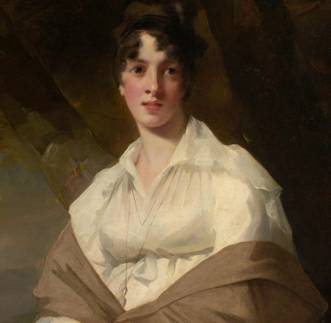
Sir Henry Raeburn
Made James Maitland, son of brother Charles, his heir.
Extract From Peerage of Scotland, 1813 by John Phillip Wood.
"... who was appointed captain of the Royal Navy, 1801; signalised himself
highly when as commander of the Loire Frigate, 1803-06, particularly in Muros
Bay, 4/6/1805; a circumstantial detail of which appeared in the London
Gazette, justly entitling him to the distinction of one of the 1st officers in
the service. He married at Cork, April 1804, Catherine, second daughter of D.
Connor of Ballybricken.
* Footnote in O'Byrne (1849):
Sir Fred. Lewis Maitland was born in 1776. He served as Midshipman of the
SOUTHAMPTON 32 in Lord Howe's action 1 June 1794; was employed, while holding
the rank of Commander, in the expedition to Egypt in 1801; attained Post-rank
in the course of that year; and had command, during the late war, of the LOIRE
and EMERALD frigates (see Capt Charles Bertram), GOLIATH 58, BOYNE 98, and
BELLEROPHON 74. In the ship last mentioned, he had the honour of receiving
Napoleon Buonaparte when he surrendered after the battle of Waterloo. During
the peace, he commanded the VENGEUR, GENOA, and WELLESLEY 74's. He was
nominated a C.B. in 1815; advanced to Flag-rank in July 1830; and created a
K.C.B. in the following November. He filled the office of
Admiral-Superintendent at Portsmouth from July, 1832, until July, 1837; and
that of Commander-in-Chief in the East Indies from the latter period until the
date of his death, 30 November, 1839.
Bellerophon was next commanded by Capt James Water Isaac Dallamore.
FLM Son Fredrick Lewis Maitland Expanded Details:
1795 Andromeda (Lt) 1806 Voluntaire
Venerable (6:4) 1806 Emerald
1797 Kingfisher Brig (1) 1813 Goliath
1798 Victory 1815 Boyne
1799 Camelion Sloop Bellerophon
1800 Wassinair (sp?) 1819 Vengeur
Dragon 1821 Genoa
1801 Carrere 1827 Wellesley
1802 Loire 1837 Wellesley
Lt 3/4/1795, CR 14/6/1799, CA 21/3/1801, RAB 22/7/1830 (@
Portsmouth 32-37), RAR 10/1/1837, D 30/11/1839. CB 1815, KCB
23/1/1831.
Also John Maitland 1794-1814 RA 20/1/1821
ADM107/19 f57.
FLM jnr passed for Lt 2/4/1795:
.... he has served six years at sea, and has been rated two of the said six
years as midshipman, or mate, in some of his majesties ships; and that he does
produce regular journals, and with good Certificates from the Commanders he
has served with, of his sobriety, Diligence and Qualifications of an Able
Seaman; and that upon your own examination, you find he has obtained to a
sufficient knowledge, both in the Practick Part and Theory of Navigation, and
you shall be satisfied that he is not under twenty years of age, you are then
to give him a certificate, expressing therein his particular Qualifications.
Service: Entry Discharge Y M W D
Pr Augusta 16/7/85 Capt Svnt 16/12/86 1 5 2 0 (father's ship)
Ganges 20/4/87 " 15/12/87 8 2 2
Elizabeth 24/1/88 " 1/5/89 1 3 2
Martin 3/5/92 Ord 26/1/93 9 2 3
Nemesis 27/1/93 Ord 14/2/93 2 5
Royal William 16/2/93 Supern 19/3/93 1 4
Falcon 24/3/93 Mid 17/4/93 3 4
Southampton 22/4/93 Mid 30/3/95 1 12 1 0
6 3 4
This Certificate shows ch at Collesie 14/9/73, then 8 days old,
signed by Andrew Walker, minister, and Math. Walker, Elder.
Similar Lieutenant exams show that others had similarly varied
experiences and applied for Lt as soon as they had completed 6 years.
http://www.gleaden.plus.com/landmarks/keppel.htm
EXTRACTS:
(Internet http://www.st-and.ac.uk/~md4/maitland.html)
Frederick Lewis Maitland was born at
Rankeillour, near Cupar in Fife, on the 7th of September 1777, the third son of
Captain the Hon. Frederick Lewis Maitland and his wife Margaret Dick.
The family had a tradition of Royal service which stretched back to Mary Queen
of Scots. His father, had commanded the Elizabeth, 74, during the
American revolution and when Lewis entered the Navy in July 1785, aged eight ,
it was aboard the Royal Yacht Princess Augusta captained by his father.
[There was a practice at this period of entering boys on ships books even
though they weren't actually on board. This was to make it appear that they had
seen sea service for a longer period than they had -to sit a Lt. exam you had
to have had 6 years sea service]
His career as Lieutenant of the Kingfisher
sloop of war started well, but ended in disaster. In January 1798 acting as
prize master he took the French privateer La Betsey safely in to Lisbon,
and out of the prize proceeds the Kingfishers crew presented him with a
sword. However in December of the same year he had risen to the command of the Kingfisher,
and was taking her down the River Tagus, at Lisbon, when she ran aground and
was wrecked.
The court-martial which followed, court-martials always followed the loss of a
vessel even there was obviously no blame attached to the commander, found him
not guilty and he was immediately appointed flag-lieutenant to Lord St.Vincent.
The evidence given in the court-martial stated that instead of passing an
island, in the Tagus, by the usual south channel that Maitland, desiring to get
to sea as fast as possible, there was a French privateer off the coast,
suggested to the pilot they take the faster northern passage, which they did,
with the subsequent wrecking of the vessel. The Portuguese authorities wouldn't
let the pilot appear before the court, presumably because they felt he wouldn't
get a fair hearing. If indeed Maitland was at fault, and reading the evidence
it appears so, then he redeemed himself for he was commended for
"conducting himself with great skill and prudence in saving the crew
and attempting to save the brig and stores"
His subsequent career fully justified the confidence the court- martial board
had in him. The next incident of note occurred in the following July and is a
demonstration not only of the sense of honour but of the chivalry which was
still present in warfare of the period.
On the 7th July 1799, while the French and
Spanish combined fleets were passing the Straits of Gibraltar, some of the
ships amused themselves with firing at two vessels belonging to the Algerines,
and then steering close in with the African shore.
Lord St. Vincent who was on board the 44-gun ship Argo, at anchor in the
bay of Gibraltar, dispatched the hired cutter Penelope, of 16 or 18
guns, Lieutenant Frederick Lewis Maitland, to ascertain the cause of the
firing. Having stretched across the bay with very light winds during the night,
Lieutenant Maitland, at daybreak on the 8th, found himself nearly within
gunshot of Admiral Massaredo's advanced ships, the boats of which in the
prevailing calm, were ordered to tow the 14-gun brig-corvette Vivo
towards the Penelope. The latter, however, on approaching the British
cutter, received so warm a salute, that she soon dropped astern. A breeze now
springing up, the Spanish 34-gun frigate Del Carmen ran down, and
placing herself about a cable's length on the Penelope's weather beam,
opened a heavy fire, by which the cutter was soon unrigged and compelled to
surrender. An officer from the Vivo now boarded the Penelope, and
demanded her commander's sword; but Lieutenant Maitland refused to deliver it,
alleging that the British colours had been struck to the frigate. Shortly
afterwards, one of the Carmen's boats boarded and took possession of the
Penelope, and sent away the boat of the Vivo. The Penelope,
when thus suddenly ordered from Gibraltar, had on board a considerable sum of
specie, intended for the Island of Minorca, but which had not been removed. "When
her crew found there was no chance of escape from the combined fleets, they
made an attempt to plunder the treasure, which Lieutenant Maitland most
honourably and successfully resisted, alleging that, as public property, it was
lawful prize of the captors" Such was the temper of the times that the
Spanish Admiral was so impressed by Maitland's behaviour that he gave him his
freedom without the need to be exchanged.
Lord St. Vincent returned to England in August 1799, accompanied by Maitland.
On reaching England he heard of the explosion of shells which had taken place
in May on board the Theseus , 74, resulting in the death of her
commander Captain Ralph Willet Miller.
A vacancy had thus occurred in the Mediterranean before the admiral had quitted
that station. He used his privilege as commander -in-chief and promoted
Maitland to the rank of commander in the Cameleon sloop-of-war, the
promotion dated from June 14. Maitland at once went out to join his new ship,
which was then on the coast of Egypt under Sir Sidney Smith. After the signing
of the convention of El Arish he was sent home with despatches.
He returned and regained his ship, in which he made several captures.
On December 10, 1800, he was appointed by Lord Keith to the Wassenaar,
64. As she was then lying at Malta unfit for service, he obtained permission to
accompany Sir Ralph Abercromby’s expedition to Egypt.
The fleet anchored in Aboukir bay on the 2nd March 1801. On the 8th, Abercromby
effected a landing in face of a large and strongly posted French force.
To Maitland fell the duty of commanding the armed launches employed to cover
the landing. The enemy were driven from their positions, and retired towards
Alexandria with the loss of seven guns. Abercromby at once followed them up,
and advanced on the neck of land lying between the sea and the Lake of Aboukir,
leaving a distance of about four miles between the British and French camps.
On the 13th he again attacked the French, and forced them back upon their lines
before Alexandria. The right flank of the British force rested upon the sea,
the left on the Lake of Aboukir, and the flanks were covered by a naval
flotila, the boats on the sea being under Maitland’s command, and those of the
lake under that of Captain James Hillyar.
Seven days later Sir Sydney Smith, who commanded the naval battalion serving on
shore, received from a friendly Arab sheikh a letter informing him that it was
General Menou’s intention to attack the British camp the next morning.
The news was thought too good to be true, as in a few days Abercromby would
have been compelled to attack the lines of Alexandria under every tactical
disadvantage. It was however, confirmed, and on the 21st of March the battle of
Alexandria was fought, and the fate of Egypt was decided, and Abercromby
received his death wound.
Maitland again covered the British right flank from the sea.
In the detailed plan of the battle given in Sir Robert Wilson’s History of
the British Expedition to Egypt, Maitland’s flottila is shown a little to
the west of the ruins of Nicopolis, in a position to enfilade the French attack.
For his services on the 8th, 13th, and 21st Maitland received the thanks of the
naval and military commanders-in-chief, and on March 22, the day after the
battle, Sir Sidney Smith wrote to Lord Keith warmly commending Maitland’s
conduct.
Maitland’s post commission was confirmed by the Admiralty on the day of the
battle of Alexandria. In the ensuing month he was appointed to the Dragon,
74, and shortly afterwards to the Carrere, a French 40-gun frigate taken
near Elba. He remained in command of her in the Mediterranean till the Peace of
Amiens.
The Carrere was paid off on October 4, 1802. Eleven days afterwards
Maitland was appointed by Lord St.Vincent to the Loire, a fine 46-gun
frigate. War broke out again on May 18, 1803 and the Loire started on a
brilliant career of captures, which included the 10 gun brig Venteux,
cut out from under the Isle of Bas by two of the Loire’s boats, the Braave
privateer, and the 30-gun frigate Blonde, captured in August 1804
after a pursuit of 24 hours and a desperate running fight.
[The frigates offensive capability lay not only with its guns but also as a
weapons platform, using its boats to launch attacks on coastal installations
and "cutting" vessels out of harbours. A description of such an
action is given by Maitland in the following dispatch.]
Loire, Muros Road, Spain, 4 June, 1805.
To Rear-Admiral Dury, Cork.
Sir,
Being informed that there was a French privateer of 26 guns, fitting out at
Muros, and nearly ready for sea, it struck me, from my recollection of the bay,
(having been in it formerly, when Lieutenant of the Kingsfisher,) as
being practicable either to bring her out or destroy her, with the ship I have
the honour to command.
I accordingly prepared yesterday evening for engaging at anchor, and appointed
Mr.Yeo, with Lieutenants Mallock and Douglas, of the marines, and amounting,
officers included, to 50 men, (being all that could be spared from anchoring
the ship and working the guns) in landing and storming the fort, though I then
had no idea its strength was to prove so great as it has proved.
At nine this morning, on the sea breeze setting in, I stood for the bay in the
ship, the men previously prepared, being in the boats ready to shove off. On
hauling close round the point of the road, a small battery of 2 guns opened a
fire on the ship; a few shot were returned; but perceiving it would annoy us
considerably, form its situation, I desired Mr. Yeo to push on shore and spike
the guns: reminding the men of its being the anniversary of their Sovereign's birth,
and that, for his sake, as well as their own credit, their utmost exertions
must be used. Though such an injunction was unnecessary, it had a great efffect
in animating and raising the spirits of the people.
As the ship drew in, and more fully opened the bay, I perceived a very long
corvette, of 26 ports, apparently ready for sea, and a large brig of 20 ports,
in a state of fitting; but neither of them firing, led me to conclude they had
not their guns on board, and left no other object to occupy my attention, but a
heavy fort, which at this moment opened to our view, within less that a quarter
of a mile, and began a wonderfully well-directed fire, almost every shot taking
place in the hull.
Perceiving that by standing further on, more guns would be brought to bear upon
us, without our being enabled to near the fort so much as I wished, I ordered
the helm to be put down; and when from the way she had, we had gained an
advantageous position, anchored with a spring, and commenced firing. Although I
have little doubt that, before long we should have silenced the fort, yet from
the specimen they gave us, and being completely embrasured, it must have cost
us many lives, and caused great injury to the ship, had not Mr. Yeo's gallantry
and good conduct soon put an end to their fire.
I must now revert to him and the party under his command. Having landed under
the small battery on the point, it was instantly abandoned; but hardly had he
time to spike the guns, when at the distance of a quarter of a mile, he perceived
a regular fort, ditched and with a gate, which the enemy (fortunately never
suspecting our landing) had neglected to secure, open a fire upon the ship;
without waiting for orders he pushed forward, and was opposed at the inner gate
by the Governor, with such troops as were in the town, and the crews of the
French privateers.
From the testimony of the prisoners, as well as our own men, it appears that
Mr.Yeo was first to enter the fort; with one blow laid the Governor dead at his
feet, and broke his own sabre in two; the other officers were dispatched by
such officers and men of ours as were most advanced, and the narrowness of the
gate would permit to push forward: the remainder instantly fled to the further
end of the fort, and from the ship we could perceive many of them leap from the
embrasures upon the rocks, a height of above 25 feet: such as laid down their
arms received quarter.
For a more particular account of Mr. Yeo and his party, I beg leave to refer
you to his letter enclosed herewith, and I have to request you will be pleased
to recommend him to the notice of the Lords Commissioners of the Admiralty;
being a very old officer[?]; and in the two late instances he has displayed as
much gallantry as ever fell to the lot of any man. He speaks in the strongest
language of the officers and men under his commanded on shore: and I feel it
but justice to attribute our success wholly to their exertions; for, although
the fire from the ship was admirably directed, the enemy were so completely
covered by their embrasures, as to render the grape almost ineffectual.
The instant the Union was displayed at the fort, I sent and took possession of
the enemies' vessels in the Road, consisting of the Confiance French
ship privateer, pierced for 26 twelves and nines, none of which, however were
on board; the Belier, French privateer brig, pierced for 20 eighteen
pounder carronades; and a Spanish merchant brig in ballast. I then hoisted a
flag of truce, and sent to inform the inhabitants of the town, that if they
would deliver up such stores of the ship as were on shore, there would be no
further molestation. The proposal was thankfully agreed to.
I did not think it advisable to allow the people to remain long enough to
embark the guns, their being a large body of troops in the vicinity. A great
many small vessels are in the bay, and hauled up on the beach. None of them
having cargoes of any value, I conceive it an act of inhumanity to deprive the
poorer inhabitants of the means of gaining their livelihood, and shall not molest
them. On inspecting the brig, as she had only the lower rigging over head, and
was not in a state of forwardness, I found it impracticable to bring her away,
and therefore set fire to her; she is now burnt to the water's edge. I cannot
conclude my letter without giving the portion of credit that is their due to
the officers and men aboard the ship. His report continues to mention those
onboard the Loire who merited particular praise.
On November 28, 1806, Maitland was appointed to the Emerald, a 36-gun
frigate. During the whole of her commission he cruised with ceaseless activity
and made a very great number of captures. He was present with Lord Gambier’s
fleet outside Aix Roads in April 1809, when Cochrane made his famous fire-ship
attack on the French fleet. The Emerald was one of the few ships which,
on the 12th, were sent by Gambier, much against his will, to support Cochrane
in the Imperieuse. One can well imagine that her gallant commander
shared Cochrane’s indignation at seeing so daring an enterprise shorn of its
fruits by the weakness and irresolution of their chief.
Maitland’s next appointment, dated June 3, 1813, was to the Goliath, a
cut-down 74. He commanded her for twelve months on the Halifax and West Indies
stations. Having been found seriously defective, she was paid off at Catham in
October 1814.
In the following month Maitland was appointed to the Boyne, then fitting
at Portsmouth for the flag of Sir Alexander Cochrane, commander-in-chief on the
coast of America.
In January 1815 he was at Cork, and had collected a large fleet
of transports had merchant vessels bound for America. The fleet was ready to
sail, but was detained at Cove by a succession of strong westerly winds. Before
the wind changed the news came that Napoleon had escaped from Elba.
Maitland’s orders were at once countermanded, and he was
removed to the ship with which his namewill always be associated, the Bellerophon
http://www.st-and.ac.uk/~md4/bellerophon.html[origin
of name], 74. This famous old ship had fought on the First of June, at the
Nile, and at Trafalgar; she was now once more to render a conspicuous service
to the country.
She sailed from Plymouth with Sir Henry Hotham’s squadron on may 24, 1815. Her
commander’s record of the memorable events which took place on board her during
the following weeks is in the reader’s hands.
[As there is so great an interest in Napoleon I include the following lengthy extract which covers the details surrounding his surrender to Captain Maitland]
On Wednesday the 24th of May, 1815, I
sailed from Cawsand bay, in command of His Majesty’s ship Bellerophon,
and under the orders of Rear-Admiral Sir Henry Hotham, whose flag was hoisted
in the Superb. I received sealed instructions, part of which were to be
opened on getting to sea, and part only to be examined in the event of my being
separated from the Admiral. Those which I opened contained directions to
detain, and send into port, all armed vessels belonging to the government of
France.
On Sunday the 28th May, we joined His Majesty’s ships Astrea and Telegraph,
stationed off Isle Dieu, on a secret service; and the following day, three
transports, under the charge of Helicon, arrived from Britain, having on
board arms and ammunition, to supply the Royalists in La Vendee, for whose
support and assistance I now found the squadron, of which Bellerophon formed
one, was destined.
On Tuesday the 30 May, I received orders from Sir Henry Hotham, to take the Eridanus
under my command, and proceed off Rochefort, for the purpose of preventing
a corvette from putting to sea, which, according to information received by the
British Government, was to carry proposals from Buonaparte to the West India
Colonies, to declare in his favour. I had likewise orders to reconnoitre the
Roadstead of Rochefort, and report to the Admiral the number and state of the
ships of war lying there.
Accordingly, on the 31 May, I ran into Basque Roads, and found at anchor, under
Isle d’Aix, two large frigates, a ship corvette, and a large brig, all ready
for sea, which I afterwards ascertained to be the Medusa, Saale, Balladiere,
and Epervier.
Nothing occurred worth mentioning until the 9th June, when the Vesuve French
corvette came in from the northward, and got into Rochefort, notwithstanding
every effort made to prevent her; the ships under my orders having been driven
southward, during the night, by a strong northerly wind , accompanied by a
southerly current.
She was from Guadaloupe, and immediately on passing the Chasseron light-house,
hoisted the tricoloured flag.
On the 18th June, I detained and sent to Sir Henry Hotham, the Aeneas French
store-ship, commanded by a lieutenant of the navy, with a crew of fifty men,
loaded with ship-timber for the arsenal of Rochefort; but he being of the
opinion that she did not come within the intention of the order, liberated her.
On the 21st June, I detained and sent to the Admiral, under the charge of the Eridanus,
the Marianne French transport, from Martinique, having on board 220 of the 9th
regiment of light infantry, coming to France to join the army under Buonaparte.
The Eridanus was sent to England with her, and did not return to me,
being employed on other service.
On the 27th June, the Cephalus joined us, bringing with her the
declaration of war against France; after which we were employed several days,
taking and destroying chasse-marees, and other small coasting vessels.
On the 28th of June, I received intelligence, from one of the vessels captured,
of Napoleons’s defeat at Waterloo; and on the 30th, a boat came off from
Bordeaux, bringing the following letter, without date or subscription, written
on very thin paper in English, and concealed within a quill.
I give the contents verbatim.
With great degree of certainty, being informed that Buonaparte might have come
last night through this city from Paris, with the new Mayor of Bordeaux, with a
view to flight, by the mouth of the river, or La Teste, the author of the last
note sent by Mr - hastily drops these few lines, to give the British Admiral
advice of such intention, that he may instantly take the necessary steps, in
order to seize the man.
His ideas will certainly have brought him to think it natural, that the British
stations will be less upon their guard in this quarter than any where else.
The writer benefits by this opportunity to inform the Admiral that, since the
last note, some alteration has taken place with regard to the troops spread in
these two divisions; in lieu of 800 to 1000 in the city, there are now 5000,
which is supposed owing to the intention of compressing the minds of this
populace in this decisive instant.
It is supposed that the British Admiral is already informed that the Grand Army
being totally defeated and destroyed, the abdication of Buonaparte, and the
arrival of the allies near the capital.
An attempt should be made on this Coast, with no less than 8000 men altogether.
Immediate steps are wanted to put a stop to the supposed flight.
Should the attempt be made on the Coast from La Teste to Bordeaux, an immediate
diversion should be made on this side; the success is beyond any doubt.
A sharp eye must be kept on all American vessels, and particularly on the Susquehannah,
of Philadelphia, captain Caleb Cushing; Generla Bertand and another goes with
him. The two entrances of Bordeaux and La Teste must be kept close; a line or
two is expected, on return of the bearer from the Admiral, or Chief Officer on
the Station.
As this is writing, the news is spread generally, that the Duc de Berri and
Lord Wellington are in Paris.
The note alluded to had been received, and forwarded unopened, to the Admiral
in Quiberon Bay.
Though my attention was called so strongly to Bordeaux, or La Teste d’Arcasson,
as the parts of the coast from whence Buonaparte would probably attempt to
escape, it was my decided opinion that Rochefort was much more likely to be the
port where the trial would be made. I therefor sent the Myrmidon off to
Bordeaux, the Celhalus to Arcasson, and remained with only the Bellerophon,
off Rochefort.
From this period, until my return to England, the ship was never, by day or
night, more than three miles from land.
Considering it of much importance to communicate the intelligence contained in
the letter from Bordeaux, to my commanding officer with as little delay as
possible; as I had no vessel left with me, after detaching the two ships under
my orders, I sent the Bellerophon’s barge, under the charge of a
lieutenant, with directions to endeveour to join some one of the cruisers stationed
off Isle Dieu. I gave him an order, addressed to the Captain of any of His
Majesty’s ships he might fall in with to proceed without loss of time, to join
the Admiral in Quiberon Bay, with the despatch accompanying it.
This boat was fortunate enough to fall in with His Majesty’s ship Cyrus,
Captain Carrol; who, in consequence, after hoisting in the barge, Proceeded to
Quiberon Bay.
[He then relates how they spotted a object in the sea which turned out to be
two boys who had drifted out to sea in a punt. They had been at sea for 36
hours and were in a bad way - they were taken aboard and both they and the punt
returned to overjoyed parents.]
On the first of July, we spoke with a ship from Rochefort, the master of which
gave information, that the frigates in Aix Roads had taken in their powder, and
were in all respects ready to put to sea; also, that several gentlemen in plain
clothes, and some ladies, supposed to form part of Buonaparte’s suite, had
arrived at Isle d’Aix: in short, upon the whole, that there was little doubt of
its being his attention to effect his escape, if possible, from that place, in
the frigates.
On receiving this information, I anchored the Bellerophon as close to
the French squadron as the batteries would permit, kept guard boats rowing all
night, and prepared my ships’s company for the description of action in which I
thought it was probable they would be engaged.
I trained one hundred of the stoutest men, selecting them from the different
stations in the ship; it being my intention, after firing into and silencing
one frigate, to run Bellerophon alongside of her, throw that party in, and
then, leaving her in charge of the first lieutenant, to have proceeded in chase
of the other.
His Majesty’s ship Phoebe joined us this evening, and brought with her Bellerophon’s
barge. Captain Hillyar having orders to take station off Bordeaux, I
recalled Myrmidon from that service.
On the 7th July, I received a letter from Sir Henry Hotham, together with fresh
orders, from which the following are extracts:
from Rear Admiral Henry Hotham to Captain Maitland HMS Bellerophon,
dated Quiberon Bay, July 6, 1815.
It is impossible to tell which information respecting Buonaparte’s flight may
be correct; but, in the uncertainty, it is right to attach a certain degree of
credit to all: that which I now act on, is received this morning, from the
chief of the Royalists, between the Loire and the Vilaine.
Although the force of the Bellerophon would be sufficient for the ships
at Isle d’Aix, if they were to give you an opportunity of bringing them to
action together, you cannot stop them both, if the frigates separate; I am,
therefore, now anxious you should have a frigate with you: therefore if any of
them should be with you, keep her for the time I have specified; but if you
have no frigate, and this should be brought to you by a twenty-gun ship, keep
her with you for the same time; she will do to keep sight of the French
frigate, although she could not stop her.
If this is brought to you by Lord John Hay of the Opossum, do not detain
him, as her force would be of no use to you, and I want him particularly, to
examine vessels which sail from the Loire.
From Rear Admiral Henry Hotham to Captain Maitland HMS Bellerophon,
dated Superb, Quiberon Bay, July 6, 1815.
Having this morning received information that it is believed Napoleon
Buonaparte has taken road from Paris for Rochefort, to embark from thence for
the United States of America, I have to direct you will use your best
endeavours to prevent him from making his escape in either of the frigates at
Isle d’Aix; for which purpose you are not withstanding former orders, to keep
any frigate which may be with you, at the time you receive this letter, in
company with the ship you command, for the space of ten days, to enable you to
intercept them in case they should put to sea together: but if you should have
no frigate with you at the above time, you will keep the ship delivering this,
( which will probably be the Slaney or Cyrus,) in company with
the Bellerophon, ten days, and then allow her to proceed in execution of
the orders her Captain has received from me.
The Slaney brought the letter and order, parts of which are extracted
above, and having no frigate in company, I detained her as part of the force
under my command, though she was, on the 8th, sent down to the Mamusson
passage, with orders for Captain Green of the Daphne, and did not return
until the evening of the 11th.
On the 8th July, I was joined by a chasse-maree bringing a letter from Sir
Henry Hotham, part of which is as follows:
from Rear Admiral Henry Hotham to Captain Maitland HMS Bellerophon,
dated Superb Quiberon Bay, July7, 1815. Having sent every ship and
vessel out from this bay, to endeavour to intercept Buonaparte, I am obliged to
send the chasse-mareer, which has been employed in my communications with the
Royalists, with this letter, to acquaint you that the Ferret brought me
information last evening, after the Opossum had left me, from Lord
Keith, that Government had received, on the night of the 30th, an application
from the rulers of France, for a passport and safe conduct for Buonaparte to
America, which had been answered in the negative, and therefore, directing an
increase of vigilance to intercept him: but it remains uncertain where he will
embark; and, although it would appear by the measures adopted at home, that its
is expected he will sail from one of the northern ports, I am of the opinion he
will go from one of the southern places, and I think the information I sent you
yesterday by the Opossum is very likely correct; namely, that he had
taken the road to Rochefort; and that he will probably embark in the frigates
at Isle d’Aix; for which reason I am very anxious you should have force enough
to stop them both, as the Bellerophon could only take one, if they
separated, and that might not be the one he would be on board of. I have no
frigate to send you; if one should join me in time, I will send her to you, and
I hope you will have two twenty gun ships with you.
I imagine, from what you said in your letter by your barge, that you would not
have kept the Edymion with you, especially as the Myrmidon would
have rejoined you, by the arrangements I sent down by Phoebe for Sir John
Sinclair to take her place off the Mamusson; therefore, I trust that my last
order to Captain Hope will not have deprived you of his assistance, but hope it
may have put him a better situation than before.
The Liffey is seventy or eighty miles west from Bordeaux, and the
Pactolus, after landing some person in the Gironde, goes off Cape Finisterre,
where the Swiftsure is also gone; and many ships are looking out in the
Channel and about the latitude of Ushant.
Buonaparte is certainly not yet gone; and I presume he would naturally await
the answer from our Government, which only left London on the 1st; my own
opinion is, that he will either go with a force which will afford him some kind
of security, or in a merchant vessel to avoid suspicion.
The orders from the Admiralty, received last evening, are, that the ships which
are looking out for him, should remain on that service till further orders, or
til they know he is taken, and not regard the time of ten days or a fortnight,
which they first named: therfore you will govern yourself by that, and keep any
ship you have with you till one of those evenys occurs, with out attending to
the ten days I specified in my letter to you by Opossum yesterday, and make the
same known to any ship you may communicate with.
The information you sent me, which had been transmitted from Bordeaux, is now
proved to be erroneous, by our knowing that Buonaparte was at Paris as late as
the 30th June, and that paper must have been written on the 29th, as you
received it on the 30th. The Eridanus will not rejoin you; she has been
stationed, by Lord Keith, off Brest.
Let me know by return of the chasse-maree, particularly, what ships you have
with you, and where the other ships are, as far as you know, and what position
you keep in. If you had ships enough to guard Basque Roads, and the Channel between
Isle d’Oleron and the long sand (where a frigate may pass), you would be sure
of keeping them in, by anchoring; but that would afford you little chance of
taking Buonaparte, which is the thing to be desired; therefore I think you
would be better off the light-house, where I dare say you keep your-self; and
on that particular subject I do not think it necessary to give you any
instructions, as I depend on your using the best means that can be adopted to
intercept the fugitive; on whose captivity the repose of Europe appears to
depend.
If he should be taken, he is to be brought to me in this bay as I have orders
for his disposal; he is to be removed from the ship in which he may be found,
to one of His Majesty’s ships.
Nothing of consequence occurred on the 9th; but on the 10th July at daylight,
the officer of the watch informed me that a small schooner was standing out
from the French squadron towards the ship: upon which I ordered everything to
be ready for making sail in chase, supposing she might be sent for the purpose
of reconnoitring.
On approaching, she hoisted a flag of truce, and joined us at seven a.m. She
proved to be the Mouche, tender to the ships of war at Isle d’Aix and
had on board, general Savary Duc de Rovigo, and Count Las Cases, chamberlain to
Buonaparte, charged with a letter from Count Bertrand (Grand Marechal de
Palais) addressed to the Admiral commanding the British cruisers before the
port of Rochefort.
Soon after the Mouche arrived, I was joined by the Falmouth,
bringing me a letter from Sir Henry Hotham, some extracts from which I shall
insert for the better understanding what follows, previous to entering into
what passed with Buonaparte’s attendants.
From Rear Admiral Henry Hotham to Captain Maitland HMS Bellerophon,
undated, but must have been written, July 8, 1815.
I sent a chasse-maree to you yesterday with a letter, and you will now receive
by the Falmouth, officially, the orders which I therein made you acquainted
with.
I send you four late and very interesting French papers, by which you will see
all that has been done and said on the subject of providing for Buonaparte’s
escape from France: you will see that the Minister of Marine had been directed
to prepare ships of war for that purpose; that they were placed at Buonaparte’s
disposal; and that two frigates in particular had been provided for him: also
that it was announced to the two Chambers, that he left Paris at four o’clock
on the 29th; likewise that it was believed in Paris, he had taken the road by
Orleans to Rochefort; and I have no doubt that the two frigates at Isle d’Aix
are intended for him, and I hope you will think so too, and I am sure you will
use your utmost endeavours to intercept him.
I am sorry I have not a frigate to send you; I have literally none but the Endymion
under my orders.
Captain Paterson is off Brest, by Lord Keith’s order; and the Phoebe is
also ordered to that station, when the Hebrus arrives off the Gironde.
The attention at home appears to be pain chiefly to ports in the Channel, but I
have received no additional means whatever to guard those of the bay. I have
long been expecting a frigate from the Irish station, but none has yet
appeared; and I have written to Lord Keith for two frigates; but they cannot
join me in time, I fear.
Order from Rear Admiral Henry Hotham to Captain Maitland HMS Bellerophon,
dated Superb Quiberon Bay, July 8, 1815.
The Lords Commissioners of the Admiralty having every reason to believe that
Napoleon Buonaparte meditates his escape, with his family, from France to
America, you are hereby required and directed, in pursuance of orders from
their Lordships, signified to me by Admiral the Right Honourable Viscount
Keith, to keep the most vigilant look-out for the purpose of intercepting him;
and to make the strictest search of any vessel you may fall in with; and if you
should be so fortunate as to intercept him, you are to transfer him and his
family to the ship you command, and keeping him in careful custody, return to
the nearest port in England (going into Torbay in preference to Plymouth) with
all possible expedition; and on your arrival you are not to permit any
communication whatever with the shore, except as herein after directed; and you
will be held responsible for keeping the whole transaction a profound secret,
until you receive their Lordship’s further orders.
In case you should arrive at a port where there is a flag-officer, you are to
send to acquaint him with the circumstances, strictly charging the officer sent
on shore with your letter, not to divulge its contents: and if there should be
no flag-officer at the port where you arrive, you are to send one letter
express to the Secretary of the Admiralty, and another to Admiral Lord Keith,
with strict injunctions of secrecy to each officer who may be the bearer of
them.
Messrs Savary and Las Cases, who came on board, from the schooner above
mentioned, at seven o’clock on the 10th of July presented the following letter
to me.
Translation
Sir
The Emperor Napoleon having abdicated the throne of France, and chosen the
United states of America as a retreat, is, with his suite, at present embarked
on board the two frigates which are in this port, for the purpose of proceeding
to his destination. He expects a passport from the British government, which
has been promised to him, and which induces me to send the present flag of
truce, to demand of you, Sir, if you have any knowledge of the above mentioned
passport, or if you think it is the intention of the British Government to
throw any impediment in the way of our voyage to the United States.
I shall feel much obliged by your giving me any information you may possess on
the subject.
I have directed the bearers of this letter to present to you my thanks, and to
apologise for the trouble it may cause.
I have the honour to be,
Your Excellency’s most obedient,
Grand Marschal Count Bertrand
The bearers of the letter had instructions
to demand of me, whether I would prevent Buonaparte from proceeding in a
neutral vessel, provided I could not permit the frigates to pass with him on
board.
Having received, in my orders, the strictest injunctions to secrecy, and
feeling that the force on the coast, at my disposal, was insufficient to guard
the different ports and passages from which an escape might be effected,
particularly should the plan be adopted of putting to sea in a small vessel; I
wrote the following reply to the above communication; hoping, by that means, to
induce Napoleon to remain for the Admiral’s answer, which would give time for
the arrival of reinforcements.
H.M.S. Bellerophon off Rochefort, July 10th 1815.
Sir,
I have to acknowledge the receipt of your letter of yesterday’s date, addressed
to the Admiral commanding the English cruisers before Rochefort, acquainting me
that the Emperor, having abdicated the throne of France, and chosen the United
States of America as an asylum, is now embarked on board the frigates, to
proceed for that destination, and awaits a passport from the English
Government; and requesting to know if I have any knowledge of such passport; or
if I think it is the intention of the English Government to prevent the
Emperor’s voyage.
In reply, I have to acquaint you, that I cannot say what the intentions of my
Government may be; but, the two countries being at present in a state of war, it
is impossible for me to permit any ship of war to put to sea from the port of
Rochefort.
As to the proposal made by the Duc de Rovigo and Count Las Cases, of allowing
the Emperor to proceed in a merchant vessel; it is out of my power, - without
the sanction of my commanding officer, Sir Henry Hotham, who is at present in
Quiberon bay, and to whom I have forwarded your despatch, - to allow any
vessel, under whatever flag she may be, to pass with a personage of such
consequence.
I have the honour to be.
Sir,
Your very humble servant,
Captain Fred. L, Maitland, Captain of HMS Bellerophon
The Duke of Rovigo and Count Las Cases remained on board between two and three
hours, during which time I had a great deal of conversation with them, on the
state of affairs in France; in which they did all they could to impress me with
the idea that Buonaparte was not reduced to the necessity of quitting Europe;
but that, in doing so, he was actuated solely by motives of humanity; being
unwilling, they said, that any further effusion of blood should take place on
his account.
They declared also, that his party was still very formidable in the centre and
south of France, and that, if he chose to protract the war, he might still give
a great deal of trouble; and that, although his ultimate success might not be
probable, there was still a possibility of fortune turning in his favour, and
therefore they argued it was in the interest of England to allow him to proceed
to America.
To all this I could give little or no reply, being quite ignorant of what had
occurred in France, further than the decisive victory obtained by the Duke of
Wellington at Waterloo. During the time the Frenchmen were with me, I received
some French newspapers from Sir Henry Hotham; but my time was so fully occupied
in writing to him.
And in discussions with my visitors, that it was not in my power to read them;
I therefore drew them back to the subject that occasioned their visit, and said
"Supposing the British Government should be induced to grant a passport
for Buonaparte’s going to America, what pledge could he give that he would not
return, and put England, as well as all Europe, to the same expense of blood
and treasure that has just been incurred?"
General Savary made the following reply:
"When the Emperor first abdicated the throne of France, his removal was
brought about by a faction, at the head of which was Talleyrand, and the sense
of the nation was not consulted: but in the present instance he has voluntarily
resigned the power. The influence he once had over the French people is past; a
very considerable change has taken place in their sentiments towards him since
he went to Elba; and he could never again regain the power he had over their
minds: therefore he would prefer retiring into obscurity, where he might end
his days in peace and tranquillity; and where he solicited to ascend the throne
again, he would decline it."
"If that is the case", I said "why not ask an asylum
in England?" he answered, "There are many reasons for his not wishing
to reside in England: the climate is too damp and cold; it is too near France;
he would be, as it were, in the centre of every change and revolution that
might take place there, and would be subject to suspicion; he has been
accustomed to consider the English as his most inveterate enemies, and they
have been induced to look upon him as a monster, without one of the virtues of
a human being."
This conversation took place while I was writing my despatches to Sir Henry
Hotham; and the Frenchmen were walking in the cabin, frequently interrupting
me, to enforce their statement of Buonaparte’s situation being by no means so
desperate as might be supposed; from which I took the liberty of drawing a
conclusion directly opposite to the one they were desirous of impressing on my
mind.
Captain Knight, of Falmouth, who carried my despatches to the Admiral,
was present during the whole of this conversation, but did not join in it. This
was the first certain information I had received of Buonaparte’s position since
the battle of Waterloo.
Tuesday, the 11th.[July] About noon, a small boat came off from the Island of
Oleron, to where the ship was at anchor in Basque Roads, rowed by four men, in
which sat two respectable-looking countrymen, who asked for the Captain; and
upon my being pointed out to them, requested to speak to me in private.
When shown into the cabin, where I went accompanied by Captain Gambier, of the Myrmidon,
they acquainted me, that a message had been sent from Isle d’Aix, early that
morning, for a man who was considered the best pilot on the island for the
Mamusson passage, being the only person that had ever taken a frigate through;
that a large sum of money had been offered to him to pilot a vessel to sea from
that passage, and that it certainly was Buonaparte’s intention to escape from
thence; either in the corvette, which had moved down some days before, or in a
Danish brig, which was then lying at anchor near the entrance.
On receiving this information, I immediately got under weigh, and though the
flood-tide had just made in, beat the ships out of the Pertuis d’Antioche
before it was dark, when I sent the Myrmidon off the Mamusson, with
orders to anchor close in with the entrance, when the weather would admit of
it; while I remained with the Bellerophon and Slaney, which
rejoined me that evening, under weigh between the light-houses.
On the 12th of July, the Cyrus being seen in the offing, I ordered her
by telegraph to take a position close in with the Baleine light-house, and to
examine strictly every vessel that might attempt to put to sea from the Pertuis
de Breton, as Buonaparte was on the spot, endeavouring to escape to America.
The same evening, the white flag made its appearance for the first time on the
towers of Rochelle; on seeing which, I felt it my duty to run into Basque
Roads, accompanied by the Slaney; and having anchored, I hoisted the Bourbon
colours at the main-top-gallant mast-head, and fired a royal salute.
During the whole of this afternoon, however, two tri-coloured flags were kept
flying in Rochelle; and before sun-set all the white flags were struck and
every where replaced by those of Buonaparte.
On the 13th July, nothing of importance occurred, except the white flag being
once more hoisted all over Rochelle, as well as on the Isle of Oleron, to the
entire exclusion of the tri-coloured ensign.
We could plainly perceive, that the frigates, from whom we were distant about
three miles, were perfectly ready to put to sea, should an opportunity offer;
having their sterns covered with vegetables, their top-gallant yards across,
studding sail gear rove, and numerous boats passing between them and the island
the whole day:- all indications, well known to professional men, of preparing
for sea.
The ships under my command were accordingly kept with slip buoys on their
cables, and, as soon as it was dark, the top-sail and top-gallant yards were
swayed to the mast-heads, the sails stopt with rope yarns, and every thing kept
ready to make sail at a moment's warning.
Guard-boats were also kept rowing all night, as near the frigates as they could
venture, having signals established to show in the enemy getting under sail.
On the 14th of July, at day-break, the
officer of the watch informed me, that the Mouche was standing out from
the Isle d’Aix, bearing a flag of truce, which I ordered to be accepted. Here
it is necessary to mention, that the British flag of truce, being a white flag
at the fore-top-gallant mast-head, which was also hoisted as a matter of course
when Buonaparte was received on board, has by some persons been construed as
the Bourbon flag, and thence into an intentional insult to him. It never was my
intention, nor do I believe it could have been that of any British officer, to
treat with insult any fallen enemy, much less one who had shown such confidence
as to throw himself on the protection of his former foe.
When the schooner, the Mouche, reached the ship, Count Las Cases came on
board, attended by General Count Lallemand.
This meeting was highly interesting to me, as Lallemand had been a prisoner for
three weeks in the Camelion under my command in Egypt, with Junot, whose
Aid-de-Camp he then was; and General Savary, who accompanied Count Las Cases in
his first visit to the Bellerophon, had lived nearly as long at Sir
Sydney Smith’s table with me, at the Turkish camp at El Arish, when the
convention, which takes its name from that place, was under discussion, being
Aid-de-Camp to General Desaix, who negotiated on the part of the French.
On their coming on board, I made the signal for the captain of the Slaney,
being desirous of having a witness to any conversation that might pass, as our
communications were chiefly verbal: he arrived while we were at breakfast.
When Count Las Cases came on the quarter-deck, he informed me that he was sent
off to learn wheter I had received a answer from the Admiral to the letter he
had brought off on the 10th instant. I told him I had not, but, in consequence
of the despatch which I had forwarded to him, I had not a doubt he would
immediately repair here in person, and I was hourly in expectation of seeing
him, adding, "If that was the only reason you had for sending off a
flag of truce, it was quite unnecessary, as I informed you, when last here,
that the Admiral’s answer, when it arrived, should be forwarded to the frigates
by one of the Bellerophon’s boats; and I did not approve of frequent
communications with an enemy by means of flags of truce"
I then went into the cabin and ordered breakfast, to prevent further disussion
until the arrival of Captain Sartorius.
When breakfast was over, we retired to the after cabin. Count Las Cases then
said, "The Emperor is so anxious to spare the further effusion of human
blood, that he will proceed to America in any way the British Government
chooses to sanction, either in a French ship of war, a vessel arned en flute, a
merchant vessel, or even in a Britsih ship of war." To this I
answered, "Ihave no authority to agree to any arrangement of that sort,
nor do I believe my Government would consent to it; but I think I may venture
to receive him into this ship, and convey him to England: if, however, "I
added," he adopts that plan, I cannot enter into any promise, as to the
reception he may meet with, as even in the case I have mentioned, I shall be
acting on my own responsibility , and cannot be sure that it would meet with
the approbation of the British Government."
There was a great deal of conversation on this subject, in the course Lucien
Buonaparte’s name was mentioned, and the manner in which he had lived in England
alluded to; but I invariably assured Las Cases most explicitly, that I had no
authority to make conditions of any sort, as to Napoleon’s reception in
England.
In fact I could not have done otherwise, since, with the exception of the order
inserted at page 24, [see earlier], I had no instructions for my
guidance, and was, of course, in total ignorance of the intentions of His
Majesty’s ministers as to his future disposal.
One of the last observations Las Cases made before quitting the ship was, "Under
all circumstances, I have little doubt that you will see the Emperor on board
the Bellerophon;" and, in fact, Buonaparte must have determined on
that step before Las Cases came on board, as his letter to His Royal Highness
the Prince Regent is dated the 13th of July, the day before this conversation.
During the above-mentioned conversation, I asked Las Cases where Buonaparte
then was ? He replied, "At Rochefort; I left him there yesterday
evening". Generral Lallemand then said, "The Emperor lives at
the Hotel in the Grand Palace, and is now so popular there, that the
inhabitants assemble every evening in front of the house, for the purpose of
seeing him," and crying "Vive L’Empereur!"
I then asked how long it would take to go there: Las Cases answered, "As
the tide will be against us, it will require five or six hours."
Why these false statements were made, I cannot pretend to say; but it is very
certain that Buonaparte never quitted the frigates or Isle d’Aix, after his
arrival there on the 3rd of July.
General Lallemand took occasion to ask me if I thought there would be any risk
of the people, who might accompany Buonaparte, being given up to the Government
of France: I replied, "Certainly not; the British Government never
could think of doing so, under the circumstances contemplated in the present
arrangement."
They left me about half-past nine A.M. In the course of the day, I was joined
by the Myrmidon, Captain Gambier, who had been sent to me by Captain
Green, of the Daphne, with a letter he had received from Captain Aylmer,
of Pactolus, in the Grionde, bringing information that it was the
intention of Buonaparte to escape from Rochefort in a Danish sloop, concealed
in a cask stowed in the ballast, with tubes so constructed as to convey air for
his breathing.
I afterwards inquired of General Savary, if there had been any foundation for
such a report; when he informed me that the plan had been thought of, and the
vessel in some measure prepared; but it was considered too hazardous; for had
we detained the vessel for a day or two, he would have been obliged to make his
situation known, and thereby forfeited all claims to the good treatment he
hoped to ensure by a voluntary surrender.
The two Captains dined with me, and afterwards went on board the Myrmidon,
to take up position to the north-east of the Bellerophon, to prevent
vessels from passing close inshore, and thus to render the blockade of the port
more complete.
Soon after they left me, a barge was perceived rowing off from the frigates
towards the Bellerophon with a flag-of-truce up; on which I recalled
Captains Sartorius and Gambier, by signal, that they might be present at any
communication that was made.
The boat got along-side about seven P.M and brought Count Las Cases,
accompanied by General Baron Gourgaud, one of Buonaparte’s Aid-de-Camps. On
their coming on deck, I immediately addressed Las Cases, saying, "It is
impossible you could have been at Rochefort, and returned, since you left me
this morning." He replied, "No; it was not necessary; I found
the Emperor at Isle d’Aix, on my arrival there." He then told me, he
was charged with a letter from General Bertrand. We walked into the cabin, when
he delivered it to me; it was as follows:-
Translation.
Sir,
Count Las Cases has reported to the Emperor the conversation which he had with
you this morning. His Majesty will proceed on board your ship with the ebb tide
to-morrow morning, between four and five o’clock. I send the Count Las Cases,
Counsellor of State, doing the duty of Marchel de Logis, with the list of
persons composing His majesty’s suite.
If the Admiral, in consequence of the despatch you forwarded to him, should
send the paassport fro the United States therein demanded, His Majesty will be
happy to repair to America; but should the passport be withheld, he will
willingly proceed to England, as a private individual, there to enjoy the
protection of the laws of your country.
His Majesty has despatched Major-General Baron Gourgaud to the Prince Regent
with a letter, a copy of which I have the honour to enclose, requesting that
you will forward it to such one of the ministers as you may think it necessary
to send that general officer, that he may have the honour of delivering the
letter with which he is charged to the Prince Regent.
I have the honour to be, Sir,
Your humble servant,
Count Bertrand
[list of those who comprised the suite]
Enclosed was likewise a copy of the well-known letter addressed by Buonaparte
to His Royal Highness the Prince Regent.
Translation.
Rochefort, July 13th, 1815.
Your Royal highness,
A victim to the factions which distract my country, and to the enmity of the
greatest powers of Europe, I have terminated my political career, and I come,
like Themistocles, to throw myself upon the hospitality of the British people.
I put myself under the protection of their laws; which I claim from your Royal
Highness, as the most powerful, the most constant, and the most generous of my
enemies.
Napoleon.
On reading the above, I told Monsieur Las Cases that I would receive Buonaparte
on board, and immediately forward General Gourgaud to England by the Slaney,
along with my despatches to the Admiralty; but that he would not be allowed to
land until permission was received from London, or the sanction of the Admiral
at the port he might arrive obtained.
I assured him, however, that the copy of the letter with which he was charged
would be forwarded without loss of time, and presented by the Ministers to His
Royal highness, Count Las Cases then asked fro paper, that he might communicate
by letter to Bertrand my acquiescence in the proposal he had brought, for my
receiving, and conveying to England, Buonaparte and his suite.
When General Gourgaud was about to write the letter, to prevent any future
misunderstanding, I said, "Monsieur Las Cases, you will recollect that
I am not authorised to stipulate as to the reception of Buonaparte in England,
but that he must consider himself entirely at the disposal of His Royal
Highness the Prince Regent." He answered, "I am perfectly aware of
that, and have already acquainted the Emperor with what you said on that
subject".
It might, perhaps, have been better if this declaration had been given in an
official written form; and could I have foreseen the discussions which
afterwards took place, and which will appear in the sequel, I undoubtedly
should have done so; but as I repeatedly made it in the presence of witnesses,
it did not occur to me as being necessary; and how could a stronger proof be
adduced, that no stipulations were agreed to respecting the reception of
Buonaparte in England, than the fact of their not being in writing? Which
certainly would have been the case had any favourable terms been demanded on
the part of Monsieur Las Cases, and agreed to by me.
The French boat was soon after despatched with the letter from Bertrand, in
charge of a French naval officer, who had attended Las Cases on board; and as
soon as I had finished the following despatch to the Secretary of the
Admiralty, I sent Captain Sartorious, of the Slaney, to England, accompanied
by General Gourgaud.
Extract of a letter from Captain Maitland, of His Majesty’s ship Bellerophon,
addressed to the Secretary of the Admiralty, dated in Basque Roads, 14th July,
1815.
For the information of the Lords Commissioners of the Admiralty, I have to
acquaint you that the Count Las Cases and General Lallemand this day came on
board His Majesty’s ship under my command, with a proposal from Count Bertrand
for me to receive on board Napoleon Buonaparte, for the purpose of throwing
himself on the generosity of the Prince Regent.
Conceiving myself authorised by their Lordships’ secret order, I have accede to
the proposal, and he is embark on board this ship tomorrow morning.
That no misunderstanding should arise, I have explicitly and clearly explained
to Count Las Cases, that I have no authority whatever for granting terms of any
sort, but that all I can do is to carry him and his suite to England, to be
received in such a manner as his Royal Highness may deem expedient.
At Napoleon Buonaparte’s request, and that their Lordships may be in possesion
of the transaction at as early a period as possible, I despatch the Slaney (
with General Gourgaud, his Aid de Camp), directing Capatin Sartorious to put
into the nearest port, and forward this letter by his first lieutenant, and
shall in compliance with their Lordships’ orders proceed to Torbay, to await
such directions as the Admiralty shall think proper to give.
Enclosed, I transmit a copy of the letter with which General Gourgaud is
charged, to his Royal Highness the Prince Regent, and request that you will
acquaint their Lordships, that the General informs me, he is entrusted with
further particulars, which he is anxious to communicate to his Royal Highness.
When these gentlemen had left the ship, as well as the Saale’s barge, I said to
Monsieur Las Cases, I propose dividing the after-cabin in two, that the ladies
may have the use of part of it. "If you allow me to give an
opinion," said he, "the Emperor will be better pleased to have the
whole after cabin to himself, as he is fond of walking about, and will by that
means be able to take more exercise." I answered, "As it is my wish
to treat him with every possible consideration while he is on board the ship I
command, I shall make any arrangement you think will be most agreeable to
him."
This is the only conversation that ever passed on the subject of the cabin; and
I am the more particular in stating it, as Buonaparte has been described, in
some public Journals, as having taken possession of it in the most brutal way,
saying, "Tout ou rien pour moi:"- All or nothing for me.
I here therefore, once for all, beg to state most distinctly, that, from the
time of his coming on board my ship, to the period of his quitting her, his
conduct was invariably that of a gentleman; and in no one instance do
Irecollect him to have made use of a rude expression, or to have been guilty of
ill-breeding.
As the ship had for some time been kept clear for action, with all the
bulkheads down, it became necessary to prepare for the reception of so many
guests, by putting the cabins up again: inconsequence of making the requisite
arrangements, it was past one o’clock in the morning before I could get to bed.
About ten at night, the officer of the watch informed me that a boat from the
shore had asked permission to come alongside. A man being allowed to come on
board from her; "I am sent off from Rochelle," said he, "to
inform you that Buonaparte this morning passed that town in a chassee-maree,
with another in company, for the purpose of escaping to sea by the Pertuis de
Breton: he is now in that passage, and means to set sail this night."
I told him, "that I doubted his information, having at that moment one
of his attendants on board, who had come with a proposal for me to receive him
into the ship. I then asked him how he came by his intelligence ? he
answered, "The vessels passed close to a boat I was in; and I saw a man
wrapped up in a sailor’s great coat, whom one of the people with me asserted to
be him: for my part, I am not aquatinted with his appearance, never having seen
him; but when the owner of the vessels attempted to go on board one of them, he
was kept off, and told that they would be required for two or three days, when
they would be restored with ample payment."
He told his story so circumstantially, and with such confidence, that I feared
there must be just grounds for what he stated; and the anxiety of my situation
can easily be conceived, when it is recollected that I had sent off a ship for
England with despatches, announcing the intention of Buonaparte to embark the
following morning in the Bellerophon.
After a little consideration, I determined to inform Las Cases abruptly of the
intelligence I had received, and endeavour to judge by the effect it had on his
countenance, whether there was any truth in the report or not.
I accordingly went into the cabin and did so; he seemed perfectly calm and
collected, saying, "pray at what hour does your informant state the
Emperor to have passed Rochelle ?"
"At ten A.M."
"Then I can safely assert, on my honour, that he was not in either of
these vessels. I left him at half-past five this evening, when it was his full
intention to come on board this ship tomorrow morning; what he may have done
since that hour, I cannot be responsible for." I answered, "As
you give your word of honour that Buonaparte had not left the Isle d’Aix when
you quitted it, I shall trust to what you say, and take no steps in consequence
of the information that has been brought to me, but concluded it has originated
in some mistake."
About three in the morning, the officer of the watch awoke me,
and said that another boat wished to come alongside. I rose and found that she
brought the same intelligence from another quarter; and they both eventually
proved correct, to a certain extent; for two chasee-marees, as I was afterwards informed, had been prepared, manned, and
officered from the frigates, to be used as a last resource to attempt an escape
in, in the event of Las Cases’ mission to the Bellerophon not being
successful; and they had actually passed Rochelle, in their way to Pointeau
d’Aguillon, at the hour specified, and were there to wait his joining them
should it prove necessary.
After I had determined to abide by Las Cases’ evening, assurance, that
Buonaparte had not quitted Isle’dAix, I enquired of the person who brought off
the information in the evening "What was the state of Rochelle, and
whether I might with safety send a boat there to purchase refreshments ?"
as the white flag was then hoisted all over the town; he said, "he
would not rccomend it, as, though the towns people were well inclined towards
the Bourbon family, the garrison, consisting of four thousand men, were all
attached to Buonaparte; but if he were once on board the ship, there would be
no risk in doing so, as their fear of his meeting with bad treatment would keep
the soldier in awe."
At break of day, on the 15th July, 1815, L’Epervier French brig of war
was discovered under sail, standing out towards the ship, with a flag of truce
up; and at the same time the Superb, bearing Henry Hotham’s flag, was
seen in the offing.
By half-past five the ebb-tide failed, the wind was blowing right in, and the
brig, which was within a mile of us, made no further progress; whilst the Superb
was advancing with the wind and tide in her favour.
Thus situated, and being most anxious to terminate the affair I had brought so
near to conclusion, previous to the Admiral’s arrival, I sent off Mr Mott, the
first lieutenant, in the barge, who returned soon after six o’clock, bringing
Napoleon with him.
On coming on board the Bellerophon, he was received without any of the honours
generally paid to persons of high rank; the guard was drawn out on the break of
the poop, but did no present arms.
His Majesty’s Government had merely given directions, in the event of his being
captured, for his being removed into any one of his Majesty’s ships that might
fall in with him; but no instructions had been given as to the light in which
he was to be viewed.
As it is not customary, however, on board a British ship of war, to pay any
such honours before the colours are hoisted at eight o’clock in the morning, or
after sunset, I made the early hour an excuse for with-holding them upon this
occasion.
Buonaparte’s dress was an olive-coloured great coat over a green uniform, with
scarlet cape and cuffs, green lapels turned back and edged with scarlet, skirts
hooked back with bugle horns embroidered in gold, plain sugar-loaf buttons and
gold epaulettes; being the uniform of the Chasseur a Cheval of the Imperial
Guard.
He wore the star or grand cross of the legion of Honour, and the small cross of
that order; the iron Crown; and the Union, appended to the button-hole of his
left lapel. He had on a small cocked hat, with a tri-coloured cockade; plain
gold-hilted sword, military boots, and white waistcoat and breeches. The
following day he appeared in shoes, with gold buckles, and silk stocking -the
dress he always wore afterwards, while with me.
On leaving the Epervier, he was cheered by her ship’s company as long as
the boat was in hearing; and Mr Mott informed me that most of the officers and
men had tears in their eyes
Napoleon on board the Bellerophon
W.Q.Orchardson,Tate Gallery.
Left to Right.
Planat,Montholon,Maingaut,Las Cases,Savary,Lallemand,Bertrand and young Las
Cases. <>
[The narrative continues with details of
the period spent on board the Bellerophon prior to Napoleon being transferred
to the Northumberland for the passage to St Helena. There is considerable
detail concerning the views of Napoleon’s suite particularly concerning the
rumour of exile to St. Helena. However for that I recommend the reader to the
volume from which this extract has been taken:
The Surrender of Napoleon: being the narrative of the surrender of
Buonaparte, and of his residence on board H.M.S. Bellerophon, with a detail of
the principal events that occurred in that ship between the 24th of May and the
8th August 1815.
Author:
Rear Admiral Sir Frederick Lewis Maitland , K.C.B. a new edition edited, with a
memoir of the author, by William Kirk Dickson.
Published: Edinburgh and London, 1904.]
FREDERICK LEWIS MAITLAND'S SHIPS
ANDROMEDA,32 (1784 Liverpool. HS 1808) 1787 Capt. H.R.H. Prince WILLIAM HENRY.
ANDROMEDA anchored at Port Royal on 15 November 1788. The whole House of
Assembly waited on him with its congratulations and on 2nd of December they
voted 1000 pounds for the purchase of an elegant star encrusted with diamonds
"as a humble testimony to the very high respect and esteem the island
entertained for his eminent virtues." (Subsequently the same body voted
3000 guineas for a piece of plate for H.R.H. for "his great parliamentary
services relative to the African slave trade.") On 19 May 1789 he was
created Duke of Clarence and moved to command VALIANT.
1793 Capt. J. SALISBURY. 1794 Capt. J. SOTHERBY. North Sea. He was appointed to
the BOMBAY CASTLE on 1 June 1795.
1795 Capt. William TAYLOR, who served on the coast of Scotland, at
Newfoundland, at Halifax and in the Channel until the spring of 1799 when he
moved to MAGNANIME.
1799 Capt. Henry INMAN, 1/99, Sheerness. During the evening of 4 May 1800,
while ANDROMEDA was saluting in Margate Roads, some powder blew up in the
cabin, wounding fourteen men and depriving them of their sight. Some of them
recovered
After spending some time blockading Dunkirk Capt. INMAN decided that it was
possible to destroy or capture the enemy ships at anchor there. His plan was
approved and he was joined by the necessary reinforcements on 27 June 1800. Due
to contrary winds the attack did not take place until 7 July and this gave the
French an opportunity to prepare to receive the large squadron of fire ships,
cutters and luggers ranged against them. Mr. SCOTT, first Lieutenant of
ANDROMEDA took command of the boats in a gig with Mr COCHRANE, third
Lieutenant, in another boat. The second Lieutenant, Mr Andrew KING was left in
charge of ANDROMEDA. The French frigate DESIREE, mounting 40 guns, with long 24-pounders
on the main deck, and a complement of 30 men was captured by Cdr. Patrick
CAMPBELL of the DART sloop but, although the captains of the fire ships
remained on board until their vessels were enveloped in flames, the other four
escaped by cutting and standing down the inner channel inside the Braak sands.
They regained their old anchorage in the morning. (See DART for more details.)
To observe the atttack Capt. INMAN had boarded the VIGILANT cutter and during
the night he had a narrow escapo when his vessel was mistaken for a French
gunboat. Fortunately the broadside fired at him was aimed too high and the crew
lost no time in calling out the pass-word.
Capt. INMAN sent a cutter with some of the more badly wounded officers and men
from DESIREE under flag of truce to the commander of the French squadron.
ANDROMEDA sailed from Portsmouth for the West Indies on 1 December 1800 with
Lord Lavington on board. 1801 Capt. J. BRADBY, West Indies. Capt. Edward
Durnford KING removed to ANDROMEDA from LEVIATHAN and commanded her until the
end of the war when he was obliged to return home due to bad health
1802 Capt. Charles FEILDING brought ANDROMEDA home. She sailed from Fort Royal,
Martinique, on 21 August 1802 and arrived in Portsmouth on 24 September. She
paid off on 8 October and was laid up. 1803- out of commission at Portsmouth.
VENERABLE,74. (1784 Blackwall. Wrecked 1804) 1794 Capt. Sir John 0RDE. 1795
Capt. W. H0PE, 1/95. Shortly after Vice Ad. A. DUNCAN hoisted his flag in her.
Capt. J. BISSET was appointed his flag captain in September. 1796 Capt. Sir
W.G. FAIRFAX, 11/96.
At the beginning of 0ctober 1797 VENERABLE anchored off Yarmouth after a cruise
which had lasted nineteen weeks. 0n the 9th the SPECULAT0R lugger brought the
news that the Dutch were at sea and Ad. DUNCAN sailed with 11 of his
line-of-battle ships. He met with VESTAL and ACTIVE who confirmed that De
WINTER had sailed two days earlier from the Texel with 16 sail of the line, 5
frigates and 5 brigs and had followed a course along the Dutch coast.
CAMELEON,18. (1795 Rotherhithe. BU 1811) 1799 J STILES, Spithead for Lisbon.
With TIGRE,80 and THESEUS,74, formed Lord Nelson's squadron off Alexandria
under Sir Sidney Smith. 1800 Lieut. J. DALYRIMPLE. On 28 April 1800 he joined
Nelson off Malta with dispatches.
CAMELEON, under Lieut. JACKSON as acting captain, was employed with the 5th
Rate SANTA DOROTEA and the Neapolitan brig STROMBOLO on the blockade of Savona.
Their boats rowed guard for 41 nights before the 800 men in the fortress
capitulated due to famine.
1801 Edward O'BRYEN, Mediterranean. With TARTARUS, FURY, PETREL, MINORCA and a
number of cutters and gun vessels, CAMELEON covered the landings at Abourkir
Bay which started at 9 AM on 8 March 1801. Lieut. SPENCER of CAMELION commanded
one of the armed launches which followed up the lake on the flank of the army.
The initial assault by 60OO troops and 100O seamen drove back the French from
the beach.
1801 Frederick Lewis MAITLAND. In September 1801 CAMELEON's cutter and jolly
boat commanded by Lieut. Charles SPENCER and master's mate Charles ROYER
succeeded in bringing off from the beach near Tarragona a Spanish felucca
mounting two 6-pdr guns and two swivels. The guns of two others were thrown
overboard when it was found impossible to get them afloat under musket fire
from soldiers on the beach. The three had run themselves ashore when threatened
by the single 6-oared cutter, Mr ROYER not having come up with Lieut. SPENCER
at the time.
1803 Thomas STAINES, 5/02, (confirmed 7/02) Mediterranean. On 28 June 1803
CAMELEON joined Lord Nelson off Toulon and was then sent to Barcelona,
ostensibly to buy bullocks, but actually to obtain information on Spanish
intentions. She returned to the Toulon blockade on 2 August and captured 9
merchantmen and also a French packet which was sailing from Corsica to Toulon.
On 29 August her boats attempted to capture 5 vessels protected by batteries at
Rimasol. Lieut. Thomas BENNETT had his clothes and hat shot through and every
person in his boat, except for himself, two men and a boy, was either killed or
wounded.
On 16 November, while lying nearly becalmed off Cape Corse, Capt. STAINES
discovered an armed schooner escorting a transport. CAMELEON's boats were
manned and succeeded in capturing the schooner, the 12-gun RENARD, which was
afterwards commissioned as a British cruiser. From this period until August
1804 CAMELEON was employed on the coast between Genoa and Marseilles. Off the
later place she chased a large corvette and a brig back to their anchorage.
During the cruise she captured 10 vessels, one was destroyed at Port Maurice
and she assisted at the capture of 3 others.
From September 1804 she spent an unproductive 3 months cruising in the Adriatic
and from December 1804 to April 1805 she was employed protecting the Levant
trade and escorted a large convoy from the eastern Mediterranean to Gibraltar.
On 15 June 1805, while lying becalmed, she was attacked by a flotilla of
gunboats but they retreated when CAMELEON got out her sweeps. When stationed
off Cartagena with BEAGLE, Capt. STAINES tried to cut out 6 merchantmen
protected by a guarda-costa but they were too well armed and his boats had to
return with 5 killed wounded and missing. On 15 August 1805 Capt. STAINES was
forced to throw carronades, shot and stores overboard to escape from a Spanish
74-gun ship. When capture seemed imminent he was saved by the appearance of
four British brigs. In the summer of 1805 CAMELEON, being worn out, was ordered
home and she paid off at Portsmouth in September. 1806- out of commission at
Portsmouth.
WASSANAER,64. (Captured at Camperdown on
11 0ct. 1797 by Ad. DUNCAN's fleet. BU 1818) 1798 Capt. C. CRAVEN, 6/98.
Flagship of Ad. PEYT0N in 0ctober. 1800 armed en flutes, Chatham for Lisbon.
1803-
Powder hulk at Chatham
DRAGON,74. (1798 Rotherhithe. BU 1850) 1798- Capt. G.
CAMPBELL, 4/98, with the Channel fleet. On
11 June 1800 she sailed with KENT for the Straits with a large supply of naval
and military stores. 1801 Capt. John AYLMER, Plymouth for the Cadiz station
with Sir John WARREN's squadron. Early in the year Rear Ad. Gautheaume sailed
from Brest and arrived safely in Toulon on 19 February. Sir John, supposing
they were heading for Egypt, followed them through the Straits, refitted at Minorca
and sailed from there on 24 February but was forced to put back again after his
ships were damaged in a storm the following night. On 4 March the squadron
sailed for Palermo and Naples then for Toulon. On passage for the latter
destination the Admiral learned from the SALAMINE brig that the French had
sailed on the 19th, six days earlier, with 4000 troops. He immediately altered
course to the eastward and, on the 26th, gave chase to the enemy between
Sardinia and Maritimo. The following night was foggy and the French were no
longer in sight in the morning so Sir John made for Alexandria.
In October 1801 Capt. Frederick Lewis MAITLAND was appointed to the temporary
command of DRAGON and he remained in her until the following August.
On 6 October 1802 DRAGON, in company with GIBRALTAR, SUPERB and TRIUMPH, was on
passage from Gibraltar to Malta to rejoin Ad. BICKERTON, when mutineers took
possession of GIBRALTAR and ran her under the sterns of the other vessels,
cheering them, in the hope that the crews would join. Disappointed, the
mutineers became panic-struck and were easily overpowered by the ship's
officers assisted by the detachment of marines.
L0IRE,40. (Taken by Capt. DURHAM in ANS0N off
Cape Clear on 18 0ctober 1798. BU 1818) Capt. James N. NEWMAN, 5/99. (From
MERMAID) Channel. 0n 10 December 1799 she sailed from Plymouth for a cruise 0n
7 January 1800 L0IRE was coming in to Plymouth when ATLAS, using a jury rudder,
went ashore near the east ridge of Drake's Island. Capt. NEWMAN, who was ill, directed
his first lieutenant, Mr RAYNER, to get a hawser aboard ATLAS and she was swung
off into deep water. L0IRE sailed on a cruise on 30 January with DANAE and
RAILLEUR to search for a frigate escorting a convoy from St. Marlo to Brest and
on 6 February the sloops FAIRY and HARPY decoyed the French frigate PALLAS
towards them off Cape Frehel. She was captured after a close action of over two
hours. Two seamen aboard L0IRE were killed and sixteen wounded, one of whom
died of his wounds. Midshipmen Watkins 0liver PELL, Francis William EVES and
John Allen MEDWAY were also wounded. PALLAS lost sixty men killed and wounded
and was badly disabled with her top-main- mast over the side. Lieut. RAYNER
went on board as prizemaster and L0IRE and RAILLEUR accompanied PALLAS towards
Plymouth. 0n the 7th they fell in with a trawler off the Eddystone. The master
put a pilot on board PALLAS and the three ships bore away for Falmouth. With
the wind blowing hard from the south-east PALLAS finished up at Penzance and
L0IRE and RAILLEUR were driven as far as C0RK. L0IRE arrived back in Plymouth
on the 20th and three days later she went into the Barnpool to repair the
damage she had received in the action with PALLAS.
0n 1 April L0IRE sailed for Torbay with stores for the fleet and was back in
Plymouth on the 11th. 0n 18 April she sailed from Plymouth with 150 French
prisoners for Portsmouth. With a good S.W. wind she arrived the following day.
L0IRE sailed on 3 May to escort a large convoy for the Mediterranean through
the Channel and At the end of July she brought the Lisbon and 0porto fleet back
up the Channel. After her arrival at Spithead she was cleared of quarantine on
31 July After her arrival at Spithead she was cleared of quarantine on 31 July
and went into harbour on Friday 1 August. A fine privateer schooner she had
captured arrived in Plymouth on 2 August.
0n 15 0ctober L0IRE refitted at Plymouth and sailed for Guernsey on the
afternoon of the 21st. At the beginning of November a hurricane caused a great
deal of damage in the Channel Islands. L0IRE parted all her cables and during a
pitch dark night passed over a ridge of rocks at high tide, she arrived safely
at Spithead on the 6th. (HAVICK, PELICAN and LI0N were all driven ashore)
L0IRE and T0PAZE left Portsmouth on 28 December to cruise off L'Havre and L0IRE
returned for ten days on 3 January. She arrived in Plymouth on 18 February.
Three days later she sailed to return to Portsmouth. 0n the morning of 11 April
L0IRE sighted a vessel making signals of distress and Capt. NEWMAN sent a boat
to investigate. She proved to be the BEAVER, Capt. 0'Connor, bound for London
with wine from 0porto. She had been captured by the French privateer BRAAVE the
previous day and 0'Connor and boy had been left on board with a prize-master
and four privateers. The captain had managed to lock the prize-master in the
cabin, knocked the steersman overboard and, by threatening them with a gun,
forced the other three to remain in the rigging. Thus he spent an anxious
night, BEAVER being leaky and making little headway. An officer and eight men
from L0IRE brought her safely into Plymouth on the 15th. Towards the end of
June there were reports that L0IRE had gone ashore on the French coast and been
captured. She had actually been reconnoitering close in shore and had missed
one tide before returning.
1803 Capt. Frederick MAITLAND, 15/10/02, from CARRERE, a French frigate taken
near Elba on 3 0ctober 1801.
L0IRE sailed from Portsmouth for Guernsey late on the night of 11 March 1803.
0n the evening of the 27 June a French national gun-brig was discovered at
anchor under a shore battery in the Isle de Bas Roads. Two boats manned with
volunteers from L0IRE and commanded by Lieuts. Francis TEMPLE and John B0WEN
managed to get alongside before daylight and, although they came under heavy
fire from both ship and shore, after an hour and a half's hard fighting they
brought off their prize. Several of the French officers were killed and about
17 of the crew were killed or wounded for no loss to L0IRE save for one warrent
officer and 5 men wounded. The wounded from both ships were landed at Plymouth
on 2 July. The prize, the VENT0UR armed with four long 18-pounders and six
42-pound carronades, was taken up the Hamoaze. After a refit L0IRE returned to
her station off the Isle de Bas on the 14th. She sent the MARIA of Hamburg from
Havana into Plymouth on 20 August.
L0IRE arrived in Plymouth on 9 January 1804 after a severe overnight gale with
the loss of her mizen-mast, carried away during the chase of a large French
frigate off Scilly. During a further severe gale on Thursday the 21st, B0ADICEA
ran foul of L0IRE in Cawsand Bay. L0IRE had to cut away her fore-mast and
bowsprit and L0IRE let go another anchor before being brought up safely under
Withy Hedge although she was rolling gunnel and sometimes head under water. The
following day she got up a stump of a jury fore-mast and went up to the harbour
to refit. She was full of naval stores of all descriptions for the squadron on
the Irish station and these had to be taken off for transfer to another
frigate. After the refit she sailed on a cruise on 22 February. 0n the night of
16 March 1804 L0IRE captured the French ship privateer BRAAVE after a chase of
seven hours. She was armed with sixteen 12- and 6- pounders and carried a crew
of 110 men. In the three weeks she had been cruising out of L'0rient she had
made no captures. L0IRE returned to Plymouth from her cruise off the coast of
Ireland on 10 May for a refit.
0n her next cruise in August L0IRE captured the French ship privateer BL0NDE of
Bordeaux after a chase of 36 hours. Armed with thirty 9-pounder guns she
carried a crew of 260 men and had sailed from Vigo but had not made any
captures in the few days she had been at sea. L0IRE had a midshipman and five
of her crew wounded during the running fight, two seriously. She brought her
prize into Plymouth on 29 August. (The BL0NDE was frigate built and belonged to
Bordeaux. 0n 28 March 1804 she sank the 13 gun W0LVERENE, which was escorting a
convoy to Newfoundland, with the loss of 5 killed and 10 wounded.)
In the summer of 1805 L0IRE was stationed off Cape Finisterre and on 12 May
when she was some 500 miles out into the Atlantic she sighted a squadron of 10
French vessels including one 3-decker, four 2-deckers and three frigates. At
dark Capt. MAITLAND made for Ferrol and four days later joined Sir Robert
CALDER in an unsuccessful search for the enemy. 0n 17 May L0IRE was ordered to
join the fleet off Brest.
0n 1 June 1805, while regaining her station after delivering dispatches from
Lord GARDNER to Sir Rober CALDER, L0IRE sighted a small vessel standing into
the Bay of Camarinas to the eastward of the Cape. Capt. MAITLAND sent in the
launch and two cutters under the first lieutenant, Mr James Lucas YE0, with
Marine Lieut. MALL0CK, master's mate, Mr Charles CLINCH and Messrs. HERBERT and
MILDRIDGE, midshipmen, numbering 35 in all. to bring her out. At daybreak they
found two small privateers moored under a battery of 10 guns. The launch under
Mr CLINCH boarded and carried the smaller, a lugger, but since she was close
under the guns she had to be abandoned. The two cutters carried the larger, a
felucca armed with three 18-pounders and four 4-pounders and fifty men. 0nly
three men from L0IRE, William TURNER, Quarter Master James GARDNER and Marine
John MAYNES, were wounded. Nineteen of the enemy were missing, some had jumped
overboard, the others killed. The felucca was the ESPERAMZA (alias SAN PEDR0)
of Corunna, victualled for a cruise of one month. Three small merchant vessels
carrying wine for the enemy squadron at Ferrol were destroyed on the way out.
0n the morning of the 4 June L0IRE stood into the bay at Muros to engage a
French privateer fitting out there. Mr YE0, Marine Lieuts. MALL0CKS and
D0UGLAS, and Mr CLINCH with a force of about fifty were ready to land and storm
any forts. As they entered the bay two guns in a small battery opened fire on
them and Mr YE0 landed to spike the guns. Further on they found a corvette with
26 ports apparently ready for sea and a brig with 20 ports neither of which
opened fire so it was assumed that they had no guns on board, however they came
under accurate fire from a large fort with twelve 18-pounders at a range of
less than a quarter of a mile. Mr CLEVERLY, the master, brought L0IRE to anchor
with a spring so that her broadside could return the fire, the purser, Mr SHEA,
being in charge of the quarter deck carronades.
Meanwhile Lieut. YE0, hearing the firing, pushed forward the quarter of a mile
to the fort and entered it through a gate that the enemy had left open. Here he
killed the governor who had brought troops from the town and the crews of the
privateers to the inner gate. Those that were not killed fled into the fort and
some jumped from the embrazures on to the rocks. Twelve of the enemy were
killed and 30 wounded. As soon as the fort was taken, Capt. MAITLAND took
possession of the C0NFIANCE, 116 ft long and about 450 tons, a French ship
privateer pierced for 26 guns but having none on board, which was due to sail
for India in a few days. He then arranged with the inhabitants of the town to
deliver up the guns and stores of the ship in return for a promise of no
further molestation.
The BELIER brig, a privateer pierced for twenty 18-pounders was in an early stage
of refitting so he burnt her. The small vessels in the bay and on the beach
that belonged to the local inhabitants he left unmolested. The guns in the fort
were spiked and thrown over the parapet, forty barrels of gunpowder, two small
brass guns and some small arms were brought on board and L0IRE sailed out of
the bay as soon as a land wind sprang up.
The wounded in the shore party were:- Lieut. LE0; Mr CLINCH, seamen Henry GRAY,
Martin HENDRICKS0N, John PAYNE and marine John LE0NARD. 0n board seamen James
CALDWELL and John WITEC0MB were seriously wounded; Magnus J0HNS0N lost his
right leg above the knee and Christian WILS0N had the calf of his leg shot off.
Seamen John PLUMMER, Mark ARCHER, Thomas LL0YD, John M0ULDS and James GILLETT
were also wounded. The Spanish and French privateers were brought into Cork by
L0IRE on 13 June.
0n 25 June she gave chase to the VALIANT of Bordeaux, a privateer frigate,
about 200 miles west of Cape Clear. After 12 hours the enemy was forced to bear
up by the appearance of MELAMPUS and BRILLIANTon the weather bow. VALIANT was
very fast and carried twenty-four 18-pounders on the main deck but the six
6-pounders on the quarter deck had been thrown overboard during the chase.
Victualled for a four month's cruise she had made only one capture, the Halifax
packet SIR CHARLES SPENCER. L0IRE brought her in to Cork on 29 June.
0n 13 December 1805 L0IRE and ALCMENE fell in with the French squadron from
Rochefort consisting of six sail of the line and six frigates and corvettes. Capt.
MAITLAND sent ALCMENE to the fleet off Brest and shadowed the French ships, at
times during the night being so close that he could hear orders being passed.
He was chased away during the following day but closed up again at night.
During the night of 16/17th. he found himself between two enemy squadrons and
had to make sail to escape from them. The new ships were from Brest and reached
San Domingo in February, they had apparently not recognised the Rochefort ships
which returned to port soon after.
L0IRE and EGYPTIENNE captured the French 40-gun frigate LIBRE off Rochefort on
24 December after an obstinate resistance. The French lost 20 men killed and
wounded, L0IRE had no casualties and EGYPTIENNE had 8 wounded, one mortally.
LIBRE was badly damaged and lost her masts so Loire took her in tow and reached
Plymouth with her on 4 January 1806. The Spanish privateer schooner PRINCESS 0F
PEACE was captured on the evening of 22 April 1806 about 100 miles south-west
of Cape Clear. Although pierced for 14 guns she was only carrying one large
24-pounder. She was five days out on her first cruise without taking any
prizes. L0IRE brought her in to Cork on the 28th.
0n 24 July 1806 L0IRE attempted to close with a squadron of four French
frigates but the enemy hauled to the wind so Capt. MAITLAND made for Sir
Richard KEATS squadron 150 miles west of Belleisle. He reported the enemy on
the 27th and the following evening MARS was able to cut off the French frigate
RHIN,44.
Capt. MAITLAND was appointed to EMERALD on 28 November.
L0IRE was in ordinary at Deptford at the beginning of 1807 and later in the
year Capt. Alexander Wilmot SCH0MBERG, 10/07, was appointed to her as she
fitted out at Woolwich. Early in the spring of 1808 he was sent, with Capt.
AYSC0UGH in SUCCESS under his orders, to protect the fisheries in Arctic
waters. Although the ships were only fitted for service in the Channel they
pressed on to the edge of the ice north of Spitzbergen. 0n 4 June they reached
77 deg 30 min N.
V0LUNTEER,14. gun vessel. (Purchased 1804. Sold 1812) 1805-
Sheerness
EMERALD,36. (1795 Northfleet. BU 1836) Capt. V.C. BERKLEY,
12/95. Capt. Jacob WALLER, Mediterranean.
On 26 April 1797 EMERALD accompanied IRRESISTABLE when two Spanish 36-gun
frigates, ELENA and NIMFA, were captured in Conil Bay, near Cape Trafalgar.
ELENA ran ashore, she was got off but was so damaged that she had to be
destroyed. In July 1797 THESEUS, CULLODON, ZEALOUS, LEANDER, SEAHORSE, EMERALD,
TERPSICHORE and the FOX, cutter, were detached by Earl ST. VINCENT to join Sir
Horatio NELSON in an attack on Santa Cruz, where it was rumoured that some
treasure ships had arrived from South America on their way to Cadiz.
The attack took place on the night of the 24th. Capt. WALLER landed with Capt.
TROUBRIDGE of CULLODEN under a battery close to the south end of the citadel.
Most of their ammunition was ruined in the surf and they lost their scaling
ladders for attacking the citadel. They were unable to find the Rear Admiral
but did join up with Capts. HOOD and MILLER of ZEALOUS and THESEUS, 80 marines,
80 seamen with pikes and 150 with small arms. The streets were commanded by
field pieces, with several thousand Spanish and 100 French troops, so Capt.
TROUBRIDGE sent to say that he would set the town on fire if his people were
not allowed to re-embark. The Spanish acceded to his proposal and agreed to
take the wounded into hospital.
After the battle in Aboukir Bay EMERALD was part of a squadron detached by Lord
Nelson to watch the coast of Egypt for supplies being brought in from France.
On 2 September 1798 EMERALD made a signal for a sail bearing E by S, and a
cutter was seen standing towards the shore. EMERALD fired several shot to bring
her to but she persisted and ran aground near the tower of Marabou. On board
were General Carmin, Capt. Valette, a courier, some soldiers and a crew of 60
under Capt. Gardon. As soon as they landed they were attacked by Arabs who
stripped them and slaughtered several including the three first mentioned.
EMERALD`s boats immediately pulled inshore and her people, including midshipman
Francis FANE, swam ashore with a ropes and barrels, and managed to save Capt.
Gardon and four of the crew, who had escaped naked to the beach. The rest of
the Frenchmen were taken off as prisoners by the Arabs.Capt. Lord PROBY, 12/97.
Capt.T.M. WALLER, 4/98. On 7 April 1800 LEVIATHAN and EMERALD captured the
Spanish frigates CARMEN and FLORENTIA, bound for Lima with 3000 qintals of
mercury, and took them into Gibraltar on the 10th. INCENDIARY captured two of
the ships they were convoying.
1803 Captain James O`BRYEN. On 10 August 1803 EMERALD and HEUREUX captured the
Dutch ship SURINAM PLANTER, from Surinam to Amsterdam, laden with 922 hogsheads
of sugar, 342 bales of cotton and 70,000 lb of coffee. In 1804 EMERALD was off
St. Pierre in Martinique. On the morning of 13 March he sent his first
lieutenant, Mr Forrest, with 30 volunteers on board the armed sloop FORT
DIAMOND to weather the Pearl rock and bear down on an armed schooner anchored
under the battery at Seron. The ship`s boats were sent in the opposite
direction as a distraction. The schooner, the privateer MOSAMBIQUE of ten
18-pdr carronades from Guadaloupe, was boarded under heavy fire and taken. Her
crew of 60 escaped ashore.
On the evening of 20 April Lieut. GREGORY, with EMERALD`s boats, attempted to
bring out a sloop and a schooner from Port-au-Diable. When he was unable, he
set them on fire and destroyed them.
On 26 April EMERALD was lying off the bar at Surinam and Capt. O`BRYEN was
ordered, in conjunction with Brigadier-General Hughes, to gain possession of
Braam`s Point. He pushed over the bar and anchored close to a battery of seven
8-pounders, followed by PANDOUR and DRAKE. The fort was silenced by a few
broadsides from EMERALD and 43 officers and men were captured. EMERALD then
forced her way though the mud of the river in three feet less than she drew, to
bring up near the forts covering the Colony. The governor of Surinam agreed to
surrender.In August she captured the Leghorn ship AUGUSTA laden with
merchandise.5 April 1805 EMERALD was with the SWIFTSURE,74, and the
LEVIATHAN,74 bearing the flag of Rear Ad. DUCKWORTH, near the Gut of Gibraltar.
During the following two days they captured two Spanish 36-gun frigates, both
having on board 3000 quintals of quicksilver, and eleven sail of merchantmen.
The prizes were all taken into Gibraltar.
1805 Portsmouth. 1806 Frederick Lewis MAITLAND. He was appointed on 28
November. In April 1807 he captured the French privateer AUSTERLITZ of 14 guns and
60 men and a Spanish polacre from La Guira. He also recaptured the ZULEMA, an
American ship which had been taken by a French privateer. The following July he
took an American ship having 90 men belonging to the French ships in the
Chesapeake.
On 13 March 1808 Capt. MAITLAND attempted to cut a large French schooner out of
Vivero harbour. They came under heavy fire from the forts before they were
taken by landing parties and the guns spiked. The schooner was captured but
went on shore at high water and a large body of infantry opened fire on the men
trying to get her off. Lieut. BERTRAM persevered for several hours but, finally
had to blow her up. She was the French corvette APROPOS mounting eight 12-pdr
carronades. EMERALD had nine killed and sixteen wounded.
EMERALD was with Rear Ad. STOPFORD`s squadron (CEASAR, DEFIANCE, DONEGAL and
NAIAD) anchored off the Chassiron lighthouse on 23 February 1809, with AMETHYST
acting as lookout to the N.W., when eight sail of the line and two frigates,
flying French colours, were seen in the eastward. STOPFORD chased them into the
Pertuis d`Antioche and sent NAIAD to warn Ad. GAMBIER. Leaving EMERALD and
AMETHYST to watch the enemy, he attacked three French frigates, ITALIENNE,
CALYPSO and CYBELE, which had anchored in the Sable d`Olonne under shore
batteries. They were driven ashore and wrecked. More British ships arrived and
the French squadron of 11 sail of the line and 4 frigates was blockaded in the
Basque Roads by 7 sail of the line and 5 frigates. Four French ships were
destroyed and others driven ashore in an attack on 11 April. More would have
been accomplished if GAMBIER had supported Lord COCHRANE when he signalled that
the enemy ships ashore could be easily destroyed.
EMERALD captured the French privateer brig INCOMPARABLE of St Malo, with eight
6-pounders and 60 men, on the morning of 8 October 1809. She had been out four
days without making any captures but was running down to take an English brig
when sighted.
At half past nine on the morning of 22 March 1810 a sail was sighted from the
masthead and after a chase in a strong breeze which lasted for nearly 12 hours
a fine letter of marque ship, the BELLE ETOILE of Marseilles, was captured. She
had left Bayonne four days previously bound for the Isle of France with a cargo
of wine, oil and flour. She was carrying 56 men and 8 guns (although pierced
for 20), four of these, her water and some of her provisions were thrown
overboard in the latter part of the chase. She was 350 tons, 15 months old and
had made one trip to Guadaloupe.
On 6 April 1811 EMERALD captured the French ship privateer AUGUSTO, with 18
guns and 126 men. She had been three days out from Brest without making any
captures.
1812- Portsmouth, as a hulk until she was broken up in 1836
G0LIATH,74. (1781 Deptford. 58 gun in 1812. BU 1815)
Commanded in February 1796 and 1797 by
Capt. Sir Charles Henry KN0WLES. 1797 Capt. T. F0LEY, 8/97. 1799
Mediterranean. 1800 Portsmouth - Channel fleet. She, with ELEPHANT, CAPTAIN,
GANGES and BRUNSWICK, was detached from the Channel fleet and they arrived at
Port Royal, Jamaica, on 26 November. G0LIATH returned to be docked for
repairs.
1802 Capt. C. BRISBANE, 7/02, Jamaica station. G0LIATH and CALYPS0 escorted a
homeward bound convoy in the summer. The fleet was dispersed in a gale off the
Western isles on 30 July during which CALYPS0 was sunk after being run down by
one of the merchantmen with the loss of all on board. G0LIATH delivered her
charges to the Downs and arrived at Portsmouth on 26 August.
0n 7 November G0LIATH made the signal for a convoy to the Mediterranean. 1803 In the West Indies, with a squadron under Commodore H.W. BAYTUN in CUMBERLAND. 0ff San Domingo on 28 June Capt. BRISBANE gave chase to two ships which had been sighted by the squadron and was fortunate enough to carry up the breeze to the sternmost, which had got becalmed close under Cape St. Nicholas. She hauled down hwer colours after exchanging a few shot and proved to be a remarkably fast-sailing ship corvette, the MIGN0NNE, of sixteen long 18-pounders (six of which she had landed), commanded by a Capitaine de Fregate J.P. BARGEAUD, with 80 men. She was two days from Les Cayes and on her way to France. The previous evening he sent a boat, manned and armed, after a small schooner and found her to be a Frenchman, sailing from Santiago de Cuba to Port-au-Prince with a cargo of sugar and some 2476 dollars in cash. She had three guns and some swivels mounted.
In January 1804 G0LIATH was selected by the
Admiralty to join HIBERNIA, THUNDERER, PRINCESS R0YAL, PRINCE 0F 0RANGE and
RAIS0NABLE in protecting the coast of Ireland. A Dutch West Indiaman with a
cargo of coffee, prize to G0LIATH arrived in Plymouth on 30 January 1804.
G0LIATH, Capt. DIX0N, warped out of Cawsand Bay on 23 March and sailed with
DEFIANCE to join the fleet off Ferrol. She returned to refit on 18 July. 0n 31
July the officers of G0LIATH gave Capt. BRISBANE a grand dinner at the Pope's
Head Inn Hotel. After a round of loyal toasts the evening concluded with 'Rule
Britannia' and 'God save the King.'
1805 Capt. Robert BART0N, Channel fleet. At the end of 1804 she, with HIBERNIA, THUNDERER, PRINCESS R0YAL, PRINCE 0F 0RANGE and RAIS0NABLE, was employed in the defence of the coast of Ireland.
0n 15 August 1805 while standing in for
Ferrol in accordance with the orders she had received from Ad. C0RNWALLIS on
the 11th, G0LIATH fell in with and captured the brig corvette FAUNE,16. She had
been chased by CAMILLA, which was in company, since the previous evening and
was from Martinique bound to any part of the coast she could make. She had on
board 22 men belonging to the BLANCHE,36, which had been taken and burnt by a
French squadron in the West Indies on 19 July. The prize was sent into
Portsmouth under the charge of CAMILLA.
The following morning, while standing in for Cape Prior, three sail were seen
to be in chase of them so G0LIATH tacked and stood towards them. By eight in
the evening they had captured the French national corvette T0RCHE,18, carrying
another 52 of BLANCHE's crew. The 44-gun T0PAZE escaped in the gathering
darkness. The other vessel was probably the DEPARTEMENT DES LANDES, all four
had taken part in the capture of BLANCHE.
1807 Repairing at Plymouth. Capt. P. PUGET, Sheerness. 1808 ditto, Baltic expedition. 1811- out of commission at Chatham. 0riginally a 74 of the smallest class, she was cut down in 1812 to mount twenty-eight long 32-pounders, the same number of 42-pounder carronades, and two long 12-pounders, making 58 guns on two decks.
1813 Capt. Frederick Lewis MAITLAND, 6/13, Halifax and West Indies stations for 12 months, before G0LIAH was found to be very defective and was paid off at Chatham in 0ctober 1814.
BOYNE,98. (1810 Portsmouth. 1834
EXCELLENT. BU 1861) 1811
Capt. Henry Hume SPENCE, Portsmouth. Flagship of Vice Ad. G. BERKELY.
Capt. J.M. HANCHETT, Basque Roads. Flagship of Rear Ad. Sir H. NEALE.
1812 Capt. O. JONES, Channel fleet. Flagship of Rear Ad. Harry NEALE off
Ushant.
1814 Capt. J. BURTON, Mediterranean. In November 1813 BOYNE was with Sir Edward PELLEW's squadron off Toulon. For eight days the beginning of the month they were blown off station by gales and it was only on the 5th that they could get back inshore. The French, with 14 sail-of-the-line and 7 frigates came out for exercise and a sudden change of wind gave hope that it would be possible to bring the rear to action. CALEDONIA, BOYNE and SAN JOSEF tried to reach the leewardmost ship but only a partial firing took place as they passed on opposite tacks. BOYNE had one man slightly wounded.
A few minutes after daylight on 13 February three French sail-of-the-line and three frigates standing to the southward were seen by the squadron off Toulon. BOYNE led CALEDONIA in chasing after them as the enemy stood towards Porquerolle and pressed to go through the Grand and Petit passes to Toulon.
BOYNE brought ROMULUS, the sternmost ship, to action, and also received the fire of the other ships crossing her ahead. Since the enemy was running before the wind at 10 knots near the rocks, Sir Edward PELLEW was forced to signal Capt. BURTON to haul to the wind and break off the action although ROMULUS was obviously disabled. BOYNE lost George TERRY, midshipman, and William COLLINS, armourers mate, killed and 40 wounded, including Samuel SAUNDERS, midshipman.
On 17 April Vice Ad. Sir Edward PELLEW
arrived off Genoa with CALEDONIA, BOYNE, UNION, PRINCE OF WALES and PEMBROKE,
as the attack was launched to drive the enemy from their positions outside the
town.
1815 Capt. Frederick MAITLAND, 11/14, Spithead, where she was fitting out as
flagship of Sir Alexander COCHRANE who was to have transferred to a two-decker
on arrival in America. BOYNE sailed for Cork in January 1815 and collected a
large fleet of transports and merchant vessels but adverse winds detained them
until Napoleon returned from Elba and her orders were countermanded. Capt.
MAITLAND removed to BELLEROPHON to watch Rochefort and he was replaced by Capt.
James BRISBANE in the Mediterranean where BOYNE became the flagship of Ad. Lord
EXMOUTH, who re-assumed the command in the Mediterranean.
Lord EXMOUTH made arragements to co-operate with the allied army approaching
Naples. BOYNE arrived off Civita Vecchia on the evening of the 18 May and
reached Naples on the 20th to find TREMENDOUS and ALCMENE at anchor close to
the mole. The following day the marines were landed and took possession of the
forts and the Castle of St. Elmo. With the help of the civic guard they
maintained the peace in the city until the Austrians arrived on the 23rd, when
the marines were re-embarked.
BOYNE sailed north with IMPREGNABLE, BOMBAY and PILOT, landed the first division of the Austrian troops at Livorno, and arrived off Genoa on 3 July. 3500 troops from the garrison embarked in the transports while BOYNE with Major Gen. Sir Hudson Lowe sailed for Marseilles with IMPREGNABLE, POMPEE and BOMBAY.
They arrived in the Roads on the 10th and the Admiral and the Major General went ashore to meet the members of the royal committee. The transports arrived on the 13th under convoy of ABOUKIR and the troops were landed, together with 500 marines from the squadron, to a general welcome from the populace
BELLEROPHON,74. (1786 Frindsbury. Hulk
1815) 1793 Capt. T. PASLEY 1794 Capt. William Johnstone HOPE, 1/94. Bearing
first the pendant and then the flag of Rear Ad. PASLEY, commanding a division
of Earl HOWE's fleet in the West Indies. On 28 May the French fleet was
discovered to windward and in the evening BELLEROPHON brought the
REVOLUTIONNAIRE,110, to action for an hour before any British ships could get
up in support. Disabled, she joined the main body of the fleet, and darkness
put an end to the partial actions that had taken place. The following day, with
the fleets drawn up in order of battle, BELLEROPHON, on the signal to break the
enemy line, passed between the 5th and 6th ships in the enemy rear. She was
accompanied by QUEEN CHARLOTTE and LEVIATHAN, the latter also crippled, with
the rest of the British fleet passing to leeward.
When the French wore to succour their disabled vessels, Lord HOWE was unable to
frustrate them and finally a thick fog prevented a renewal of the action.
BELLEROPHON took part in the Battle of the Glorious First of June and lost no
more than 4 killed and 27 wounded during the long and bloody battle. Capt. HOPE
was awarded a gold medal. Rear Ad. PASLEY lost a leg and was made a baronet
with a pension of 1000 pounds per annum. He died in 1808, aged 75 years.
Capt. HOPE continued to command BELLEROPHON
until January 1795.
1795 Capt. Lord CRANSTOUN. On 3O May 1795 Vice Ad. CORNWALLIS sailed from
Spithead to cruise off the Penmarks with a squadron of five sail of the line,
BRUNSWICK, ROYAL SOVEREIGN, BELLEROPHON, TRIUMPH and MARS, and two frigates. On
the 8th they chased eight small vessels into Palais Road, Belle Isle and
blockaded them there. On the 12th a squadron sailed from Brest and formed a
junction on the 15th with Rear Ad. Vence off Groix. When CORNWALLIS received
news from PHAETON that an enemy force was in sight to leeward, he stood on
towards them, assuming them to be frigates. The French fleet now consisted of
thirteen sail of the line, fourteen frigates, two brigs and a cutter, under the
command of Vice Ad. Joyeuse, so, when he found that he was outnumbered 3O to 7,
he immediately hauled off, hotly pursued by the enemy. At first the Admiral led
in ROYAL SOVEREIGN but with daylight he ordered BRUNSWICK and BELLEROPHON, both
heavy sailers, to lead, with MARS and TRIUMPH forming the rear. The latter two,
with the flagship, under easy sail, were constantly engaged with the French
ships which kept up a long range cannonnade, but the former two were forced to
throw anchors, launches and part of their ballast overboard to keep their
place. CORNWALLIS signalled PHAETON to send a boat and when the young Francis
BEAUMONT (later Ad. Sir Francis BEAUMONT, Hydrographer to the Admiralty) climbed
up the flagship's side he was met by the Admiral's foot in his face and ordered
to return and tell his captain, Robert STOPFORD, to run ahead of the squadron
and make signals for a fleet. Some 9 or 1O hours later PHAETON let fly her
top-gallant sheets and fired a lee gun. She then used the tabular signals, of
which the French had a copy, to announce that the approaching fleet was English
and the Dutch ensign (the recall flag) to bring them into the squadron. Some
French officers said later that they were convinced that Lord BRIDPORT's fleet
was approaching but they continued to engage MARS until she was in such a
disabled state that ROYAL SOVEREIGN had to wear out of line to protect her. The
appearance of the three-decker was decisive and after a while the French hauled
to the wind and gave up the chase. On the 22nd they did come in sight of Lord
BRIDPORT's 17 sail of the line and were brought to action.
1796 Capt. J. LORING, 5/96. Capt. Henry
D'Esterre DARBY, 1O/96, Mediterranean. On 7 June 1799 BELLEROPHON with nine
other ships-of-the-line joined Rear Ad. NELSON off Toulon and five days later
he steered for Corsica in search of the French fleet which had sailed from
Toulon in May. On 19 July, still without news, they put into Syracuse to water.
The French were discovered near Alexandria on 1 August.
BELLEROPHON was ninth in line as they attacked the French in Aboukir Bay. She
brought up by the stern close to the French admiral's ship, the ORIENT, and
became exposed to that ships tremendous broadsides. Capt. DARBY was wounded
early in the action and forced to quit the deck, Lieut. DANIEL was killed by
the falling mainmast and command devolved on the 24 year old Lieut. Robert
CATHCART.
ORIENT caught fire and, after an hour, blew up. Only about seventy of her
people were saved, mainly picked up by British boats. When the fire spread to
BELLEROPHON Lieut. CATHCART cut her cable and, totally dismasted, she drifted
some miles before being brought up with the kedge, her only anchor. She
received a broadside from TONNANT and a few distant shots from HEUREUX as she
drifted along the rear of the French line. Her losses were 49 killed and 148
wounded. By using wreckage floating around in Aboukir Bay for the contruction
of jury masts she was ready for action three days after the Battle.
At one point during the battle, when BELLEROPHON was standing out of action
under her fore-sail and fore-top-sail, and with no lights displayed, she was
mistaken for an enemy by SWIFTSURE. Capt. HALLOWELL, being aware of the
difficulty of breaking men off from the guns once they have begun to use them,
refrained from firing into her, having decided to wait until he was anchored in
his station.
BELLEROPHON went to Gibraltar for a refit. She returned to Portsmouth on 2
April 1800 and remained under quarantine for three days before being cleared.
Some 400 miles west of Lisbon she had met the ship REGULUS of London on 20
March and taken out of her Capt. GRANGER and Lieut. Tudor TUCKER who were
carrying dispatches from the Cape. She went into harbour to paid off on the
16th.
1801 Capt. Lord Viscount GARLIES. (later Earl of Galloway) She sailed to join
the Channel fleet on 21 August. BELLEROPHON was employed in the blockade of
Brest until the end of hostilities. 1802 Capt. J. LORING, 11/O1. At the end of
January, along with five other 747s BELLEROPHON was ordered to be victualled
and stored for six months. The PRINCE OF WALES discharged all her spare
provisions into BELLEROPHON and IRRESISTABLE. They sailed with sealed orders
from Torbay in February and on 7 March the fleet was becalmed off the Eddystone
as they sailed to the westward. When the wind freshened they were clear of the
land by sunset. They arrived in the West Indies at the end of March and on 5
April BELLEROPHON and AUDACIOUS sailed from Martinique to Jamaica to join Vice
Ad. Sir T. DUCKWORTH with 15 sail-of-the- line. BELLEROPHON, GOLIATH and
MAJESTIC overshot Plymouth in a gale on 12 September 1802 and finished up in
Torbay as they returned from Jamaica after a passage of six weeks. They were
paid off at Plymouth. 18O3 Back in Jamaica with Rear Ad. Sir John DUCKWORTH.
While at Jamaica she lost several officers and more than 1OO of her crew from
fever. The officers who died included Mr John HEWITT, Mr MAXWELL, midshipman
and Mr YOUNG, surgeon.
On 9 September 1803 BELLEROPHON captured the American schooner LITTLE SARAH
laden with coffee, and on 13 October she and the squadron took the American
ship ELK.
BELLEROPHON was off Cape Francois in San Domingo in November 18O3 when she
received a communication from General Rochambeau who commanded the French
forces besieged there by the black General Dessalines. He proposed to evacuate
his four of five hundred men if they could be sent to France without being
considered prisoners of war. This was rejected by Capt. LORING who sent Capt.
MOSS of DESIREE ashore. He found that the French general had entered into a
prior capitulation with Dessalines to deliver up the Cape to him reckoning that
the tremendous weather that the British squadron had been experiencing would
offer an opportunity for escape.
On 23 November Lieut. Robert PILCH commanded the launches of BELLEROPHON and
ELEPHANT at the capture of the French national schooner DECOUVERTE, armed with
six long 6-pounders and six swivels, lying in the Caracol Passage near Cape
Francois. In spite of being under fire from both great guns and small arms
there were no British casualties. The French had two wounded.
On 30 November Capt. LORING sent Capt. BLIGH to see Dessalines but, as he
entered the harbour, the French Commodore Barre pressed him to go on board
SURVEILLANTE and enter into a form of capitulation that would put the French
under British protection and prevent the blacks from sinking them with red-hot
shot. Capt. BLIGH accepted their proposals with some small modifications and
informed Dessalines that all the vessels in the harbour had surrendered to his
Majesty. As soon as the wind was favourable they sailed out under French
colours but, on a shot being fired across them, the warships emptied their
broadsides and lowered their colours. CLORINDE, a 38-gun frigate, took the
ground and damaged her rudder. She was forced to throw most of her guns
overboard before she was saved by Lieut. WILLOUGHBY and the boats of HERCULE.
Capt. LORING, after securing the prizes, left THESEUS and HERCULE to attend to
CLORINDE. The French ships were overcrowded and without provisions so he sailed
with them to Jamaica, arriving on 5 December. The schooner OLIVE BRANCH was
recaptured by BELLEROPHON in the spring of 1804.
1805 Capt. John COOKE (1), Mediterranean. BELLEROPHON was in Vice Ad.
COLLINGWOOD's Lee Division at the Battle of Trafalgar. BELLEROPHON broke through
the Spanish line under the stern of the MONARCA,74, and, while hauling up to
engage her to leeward, she ran on board the French AIGLE in the smoke. The
French ship being much higher and full of troops, BELLEROPHON suffered a lot of
casualties from musket fire and, by depressing the guns on the main and lower
decks, efforts were made to blow up the enemy's decks. Capt. COOKE was killed
by a shot in the right breast while he was reloading his pistols and Lieut.
William Price CUMBY took over command. He fired several broadsides into AIGLE's
stern as she fell of and then forced MONARCA to surrender. BELLEROPHON lost 27
officers and men killed and 123 wounded.
In the gales after the battle the badly damaged BELLEROPHON rolled so much that
the wounded were suffering as they were thrown around. A midshipman, Mr Daniel
WOODRIFF, nailed capstan bars along the deck of the captain's cabin to hold the
beds until the wounded could be moved to the hospital in Gibraltar.
Capt. Edward ROTHERAM of ROYAL SOVEREIGN was appointed to succeed Capt. CUMBY.
BELLEROPHON was employed in the blockade of Brest. In October 18O7 the petty
officers and crew of BELLEROPHON were turned over to the BEDFORD,74, so that
she could sail for Lisbon. Later in year BELLEROPHON was the flagship of Rear
Ad. BERTIE at Plymouth. 18O8 Capt. Samuel WARREN, flagship of Rear Ad. GARDNER
off Flushing. 18O9 Baltic under Ad. SAUMAREZ. The fleet left Gothenburg on 24
May and reached Karlskrona on 4 June. BELLEROPHON and MINOTAUR sailed for the
Gulf of Finland where they were joined by the rest of the fleet on the 29th.
On 2O June BELLEROPHON, following a signal from MINOTAUR, discovered a lugger
and two other vessels at anchor within the islands at Hango. Her boats under
Lieut. PILCH took possession then abandoned them when they were found to be
worthless. However they were found to be under the protection of four strong
Russian batteries. To ensure a safe return to the ship, the nearest battery
mounting four 24-pounders was attacked and the garrison of 103 men forced to
retreat to the other side of the island where they escaped in boats. The guns
were spiked and the magazine destroyed. BELLERPHON lost five wounded. Lieuts.
SHERIDAN and BENTHAM, the carpenter, Mr MART, and Lieut. Carrington of the
royal marines took part. A flotilla of Russian ships under Percola Point at
Aspo near Fredrikshamm was attacked by the boats of IMPLACABLE, BELLEROPHON,
MELPOMENE and PROMETHEUS on the night of 7 July. The enemy had taken up a
position with two rocks to cover their wings from which they could pour a
destructive fire of grape on the attackers. Nevertheless, out of 8 gunboats,
each mounting a 32 and a 24-pounder with 46 men, six were brought out and one
sunk. The 12 vessels laden with powder and provisions that they were protecting
were also captured. Lieut. HAWKEY of IMPLACABLE, who led the attack, was killed
by grape while boarding a second gunboat and his place was taken by Lieut.
Charles ALLEN of BELLEROPHON who was promoted immediately after the action.
Lieut. John SKEKEL commanded one of BELLEROPHON's boats. The four ships lost 17
killed and 37 wounded, two thirds of the Russians were killed, wounded or
driven overboard.
1811 Capt. John HALSTED, flagship of Rear Ad. John FERRIER, on the North Sea
station.
1813 Capt. Edward HAWKER, Vice Ad. Sir R.G. KEATS, Spithead for Newfoundland.
While proceeding there in December she captured the French privateer GENIE of
16 guns and 73 men. In the Downs in the spring of 1815.
181 Capt. F.W. MAITLAND.After escaping from the field of Waterloo on 18 June
Napoleon arrived in in Rochefort on 3 July hoping to find a passport for the
United States. On the 8th he boarded the SAALE frigate. Meanwhile the Royal
Navy was searching for him. BELLEROPHON had been sent with a squadron to Quiberon
Bay and on 10 July messengers from Napoleon arrived on board her to enquire
about passports. MAITLAND informed them that there were none and that no French
ships would be permitted to sail. While the emissaries were still on board
FALMOUTH arrived with orders that Napoleon should be brought to Torquay. On 15
July MAITLAND, seeing HOTHAM`s flagship SUPERB coming in, sent his barge to
bring Napoleon on board BELLEROPHON. BELLEROPHON reach Torbay on 24 July and
two days later was ordered round to Plymouth where Ad. KEITH came on board to
inform Napoleon that he would now be addressed as General Bonaparte. and that
no communication would be permitted with the shore. BELLEROPHON anchored off
the breakwater and was surrounded by small craft packed with people hoping to
catch a glimpse of the prisoner. On 6 August BELLEROPHON, TONNANT, EUROTAS,
NORTHUMBERLAND, CEYLON and BUCEPHALUS anchored off Berry Head. The following
day Napoleon removed to NORTHUMBERLAND and BELLEROPHON took those of his staff
who did not wish to follow him round to Spithead. 1816 out of commission at
Sheerness.
VENGEUR,74.
(1810 Harwich. BU 1843) 1811 Capt. Thomas
BR0WN, Lisbon. 0ff Cherbourg in 0ctober. 1812 Capt. James BRISBANE, off
Cherbourg. 1814 Capt. T.R. RICKETS, with Commodore P. MALC0LM in the Channel
fleet. 1815 Capt. RICKETS, to America with troops. 1816 Capt. Thomas ALEXANDER,
8/15, Portsmouth. 1819 Capt. Frederick Lewis MAITLAND, 9/18, South America. In
1820 VENGEUR took Lord BERESF0RD from Rio to Lisbon and the King of the Two
Sicilies from Naples to Livorno. 1824- Receiving ship at Sheerness.
GEN0A,78. Taken 1814 at Genoa. BU 1838) 1821 Capt. Frederick
Lewis MAITLAND commissioned GEN0A as
guardship at Sheerness on 18 May.
Capt. Sir Thomas LIVINGST0NE, 10/21, Sheerness.
1827 Capt. Walter BATHURST, Mediterranean. In the summer of 1827 an
Anglo-Franco-Russian fleet assembled in the Mediterranean. Their purpose was to
ensure that the Greeks were protected from the cruelties practised on them by
the Turks. 0n 3 September an Egyptian fleet entered the harbour of Navarinand
on the 25th a conference Ibrahim Pasha agreed that hostilities should be
suspended and that the fleet would remain in Navarin. Part of the allied
squadron went to Malta to refit, the French to Milo, Vice Ad. C0DRINGT0N took
his ships to Zante but had to return when DARTM0UTH signalled that the Turks
had put to sea. ARMIDE managed to turn back the French and the Turkish and
Egyptian frigates returned to Navarin. 0n the evening of the 19 0ctober Vice
Ad. C0DRINGT0N issued instructions for the allied ships to enter the harbour.
The combined fleet fleet stood into the harbour at about half past one on the
afternoon of the 20th. The flagship ASIA anchored alongside a ship of the line
flying the flag of the Capitan Bey. The GEN0A, next astern, brought up
alongside a double-banked frigate and was closely engaged during the whole of
the battle. The Turks fired high and so many marines were killed on her poop
that it considered prudent to remove the remainder to the quarter deck.
Capt. BATHURST was wounded early on by a
splinter which lacerated his face but later was mortally wounded by a shot
which passed through his body and and hit the opposite bulwark. The command
devolved on Commander Richard DICKINS0N after the captain was taken down to the
cockpit. Captain BATHURST died at about 3 o'clock on 21 April.
GEN0A lost Messrs. P. BR0WN and Charles BUSSELL, midshipmen, Mr A.J.T. R0WE,
master's assistant, and 22 seamen and marines killed. Lieut. Richard STURT,
Capt. Thomas Moore, R.M., Mr Herbert Blatchford GREY, midshipman, Mr James
CHAMBER, 1st class volunteer, and 29 men wounded, many severely.
0n the 11th day after the battle the petty officers, seamen and marines of
GEN0A petitioned the Commander in Chief to allow Cdr. DICKINS0N to remain in
command and take the ship home, but Cdr. Lewis DAVIES of R0SE was appointed to
the vacancy but ordered to continue in command of R0SE and take dispatches to
Smyrna. GEN0A returned home under the command of Capt. Hon Charles Leonard
IRBY, 15/11/27, and she paid off at Plymouth on 21 January 1828.
WELLESLEY,74. (1815 Bombay. Sunk 1940)
WINCHESTER,52. (1822 Woolwich. C0NWAY 1861. Sold 1921) 1822- Chatham. 1829 Capt. Charles J. AUSTEN, 10/29, Jamaica. 1831 Capt. Lord William PAGET, 5/31, West Indies. 1833 out of commission at Chatham. 1834 Capt. Edward SPARSH0TT, 6/34, East Indies. 1837 Flagship of Rear Ad. Sir Frederick MAITLAND, East Indies.
She was ordered home in 1838.
1840 Capt. John PARKER, flagship of Vice Ad. Sir Thomas HARVEY, N.A.W.I.
station. 1842 Capt. Thomas W. CARTER, 8/41, N.A.W.I. station. 1844 Capt.
Charles EDEN, 3/42, Cape of Good Hope.
CAMELEON,18. (1795 Rotherhithe. BU 1811) 1799 J STILES,
Spithead for Lisbon. With TIGRE,80 and THESEUS,74, formed Lord Nelson's
squadron off Alexandria under Sir Sidney Smith. 1800 Lieut. J. DALYRIMPLE. On
28 April 1800 he joined Nelson off Malta with dispatches. CAMELEON, under
Lieut. JACKSON as acting captain, was employed with the 5th Rate SANTA DOROTEA
and the Neapolitan brig STROMBOLO on the blockade of Savona. Their boats rowed
guard for 41 nights before the 800 men in the fortress capitulated due to
famine.
1801 Edward O'BRYEN, Mediterranean. With TARTARUS, FURY, PETREL, MINORCA and a
number of cutters and gun vessels, CAMELEON covered the landings at Abourkir
Bay which started at 9 AM on 8 March 1801. Lieut. SPENCER of CAMELION commanded
one of the armed launches which followed up the lake on the flank of the army.
The initial assault by 6000 troops and 1000 seamen drove back the French from
the beach.
1801 Frederick Lewis MAITLAND. In September 1801 CAMELEON's cutter and jolly
boat commanded by Lieut. Charles SPENCER and master's mate Charles ROYER
succeeded in bringing off from the beach near Tarragona a Spanish felucca
mounting two 6-pdr guns and two swivels. The guns of two others were thrown
overboard when it was found impossible to get them afloat under musket fire
from soldiers on the beach. The three had run themselves ashore when threatened
by the single 6-oared cutter, Mr ROYER not having come up with Lieut. SPENCER
at the time.
1803 Thomas STAINES, 5/02, (confirmed 7/02) Mediterranean.
On 28 June 1803 CAMELEON joined Lord Nelson off Toulon and was then sent to
Barcelona, ostensibly to buy bullocks, but actually to obtain information on
Spanish intentions. She returned to the Toulon blockade on 2 August and
captured 9 merchantmen and also a French packet which was sailing from Corsica
to Toulon. On 29 August her boats attempted to capture 5 vessels protected by
batteries at Rimasol. Lieut. Thomas BENNETT had his clothes and hat shot
through and every person in his boat, except for himself, two men and a boy,
was either killed or wounded.
On 16 November, while lying nearly becalmed off Cape Corse, Capt. STAINES
discovered an armed schooner escorting a transport. CAMELEON's boats were
manned and succeeded in capturing the schooner, the 12-gun RENARD, which was
afterwards commissioned as a British cruiser.
From this period until August 1804 CAMELEON was employed on the coast between
Genoa and Marseilles. Off the later place she chased a large corvette and a
brig back to their anchorage. During the cruise she captured 10 vessels, one
was destroyed at Port Maurice and she assisted at the capture of 3 others.
From September 1804 she spent an unproductive 3 months cruising in the Adriatic
and from December 1804 to April 1805 she was employed protecting the Levant
trade and escorted a large convoy from the eastern Mediterranean to Gibraltar.
On 15 June 1805, while lying becalmed, she was attacked by a flotilla of
gunboats but they retreated when CAMELEON got out her sweeps. When stationed
off Cartagena with BEAGLE, Capt. STAINES tried to cut out 6 merchantmen
protected by a guarda-costa but they were too well armed and his boats had to
return with 5 killed wounded and missing. On 15 August 1805 Capt. STAINES was
forced to throw carronades, shot and stores overboard to escape from a Spanish
74-gun ship. When capture seemed imminent he was saved by the appearance of four
British brigs. In the summer of 1805 CAMELEON, being worn out, was ordered home
and she paid off at Portsmouth in September. 1806- out of commission at
Portsmouth.
DRAGON,74. (1798 Rotherhithe. BU 1850) 1798- Capt. G. CAMPBELL, 4/98, with
the Channel fleet. On 11 June 1800 she sailed with KENT for the Straits with a
large supply of naval and military stores.
1801 Capt. John AYLMER, Plymouth for the Cadiz station with Sir John WARREN's
squadron. Early in the year Rear Ad. Gautheaume sailed from Brest and arrived
safely in Toulon on 19 February. Sir John, supposing they were heading for
Egypt, followed them through the Straits, refitted at Minorca and sailed from
there on 24 February but was forced to put back again after his ships were
damaged in a storm the following night. On 4 March the squadron sailed for
Palermo and Naples then for Toulon. On passage for the latter destination the
Admiral learned from the SALAMINE brig that the French had sailed on the 19th,
six days earlier, with 4000 troops. He immediately altered course to the
eastward and, on the 26th, gave chase to the enemy between Sardinia and
Maritimo. The following night was foggy and the French were no longer in sight
in the morning so Sir John made for Alexandria.
In October 1801 Capt. Frederick Lewis MAITLAND was appointed to the temporary
command of DRAGON and he remained in her until the following August.
On 6 October 1802 DRAGON, in company with GIBRALTAR, SUPERB and TRIUMPH, was on
passage from Gibraltar to Malta to rejoin Ad. BICKERTON, when mutineers took
possession of GIBRALTAR and ran her under the sterns of the other vessels,
cheering them, in the hope that the crews would join. Disappointed, the
mutineers became panic-struck and were easily overpowered by the ship's officers
assisted by the detachment of marines.
EGYPTIENNE,40.
(Taken at the capitulation of Alexandria on 2 September 1801. Sold 1817) 1803
Capt. Hon C.E. FLEMING, fitting out at Chatham. On 22 July 1805 the frigates
EGYPTIENNE and SYRIUS were with Vice Ad. Sir Robert CALDER's fleet of 15
sail-of-the-line off Cape Finisterre when he encountered the combined fleets of
France and Spain with 0O sail- of-the-line, three 50-gun ships armed en flute
and five frigates.The Admiral immediately stood towards the enemy and attacked
the centre.
Two French ships, St. RAFAEL and FIRME, were captured but at times the fog was
so thick that the ship ahead or astern was barely visible and he found it
impossible to make the necessary signals for a more complete victory.
On 24 December LOIRE, Capt. MAITLAND, and EGYPTIENNE, then commanded by Lieut.
P.C. HANDFIELD, captured the French frigate LIBRE off Rochefort after an action
lasting half an hour. LIBRE, Capt. Descorches, had sailed from Flushing on 14
November and mounted twenty-four 18-pounders on the main deck, six 36-pounder
carronades and ten 9-pounder guns on the quarter-deck and forecastle with a
complement of 280 men. She lost 20 men killed and wounded and all her masts
went overboard soon after she surrendered. The LOIRE took the prize in tow and
EGYPTIENNE parted from them the following day.
EGYPTIENNE lost William THINN, seaman, who was mortally wounded. The other
wounded were Mr Thomas ROBINSON, boatswain; John STRUTTON, quarter-master; John
WILLIAMS,John DAVIS, Thomas LUCAS, seamen, and James M'GUIRE and James EVANS,
royal marines.
1806 Capt. Charles PAGET. On the night of 8 March the boats of EGYPTIENNE,
commanded by Lieut. HANDFIELD assisted by Lieuts. Alleyn and Garthwaite of the
marines, cut out the ALCIDE of Bordeaux, a frigate built French privateer, from
under two batteries in the harbour of Muros where she was fitting out for sea.
Pierced for 38 guns on the main deck and 1O guns on the quarter-deck and
forecastle, she was only two years old and normally carried a crew of 24O men.
Capt. PAGET sent the prize into Plymouth.
Mr HANDFIELD, not having received any official communication of his promotion
prior to sailing, had volunteered to remain in the ship as first lieutenant.
1811 Receiving Ship in the Hamoaze.
EMERALD,36.
(1795 Northfleet. BU 1836) Capt. V.C. BERKLEY, 12/95. Capt. Jacob WALLER,
Mediterranean. On 26 April 1797 EMERALD accompanied IRRESISTABLE when two
Spanish 36-gun frigates, ELENA and NIMFA, were captured in Conil Bay, near Cape
Trafalgar. ELENA ran ashore, she was got off but was so damaged that she had to
be destroyed.
In July 1797 THESEUS, CULLODON, ZEALOUS, LEANDER, SEAHORSE, EMERALD,
TERPSICHORE and the FOX, cutter, were detached by Earl ST. VINCENT to join Sir
Horatio NELSON in an attack on Santa Cruz, where it was rumoured that some
treasure ships had arrived from South America on their way to Cadiz.
The attack took place on the night of the 24th. Capt. WALLER landed with Capt.
TROUBRIDGE of CULLODEN under a battery close to the south end of the citadel.
Most of their ammunition was ruined in the surf and they lost their scaling
ladders for attacking the citadel. They were unable to find the Rear Admiral
but did join up with Capts. HOOD and MILLER of ZEALOUS and THESEUS, 80 marines,
80 seamen with pikes and 150 with small arms. The streets were commanded by
field pieces, with several thousand Spanish and 100 French troops, so Capt.
TROUBRIDGE sent to say that he would set the town on fire if his people were
not allowed to re-embark. The Spanish acceded to his proposal and agreed to
take the wounded into hospital.
After the battle in Aboukir Bay EMERALD was part of a squadron detached by Lord
Nelson to watch the coast of Egypt for supplies being brought in from France.
On 2 September 1798 EMERALD made a signal for a sail bearing E by S, and a
cutter was seen standing towards the shore. EMERALD fired several shot to bring
her to but she persisted and ran aground near the tower of Marabou. On board
were General Carmin, Capt. Valette, a courier, some soldiers and a crew of 60
under Capt. Gardon. As soon as they landed they were attacked by Arabs who
stripped them and slaughtered several including the three first mentioned.
EMERALD`s boats immediately pulled inshore and her people, including midshipman
Francis FANE, swam ashore with a ropes and barrels, and managed to save Capt.
Gardon and four of the crew, who had escaped naked to the beach. The rest of
the Frenchmen were taken off as prisoners by the Arabs.Capt. Lord PROBY, 12/97.
Capt.T.M. WALLER, 4/98. On 7 April 1800 LEVIATHAN and EMERALD captured the
Spanish frigates CARMEN and FLORENTIA, bound for Lima with 3000 qintals of
mercury, and took them into Gibraltar on the 10th. INCENDIARY captured two of
the ships they were convoying.
1803 Captain James O`BRYEN. On 10 August 1803 EMERALD and HEUREUX captured the
Dutch ship SURINAM PLANTER, from Surinam to Amsterdam, laden with 922 hogsheads
of sugar, 342 bales of cotton and 70,000 lb of coffee. In 1804 EMERALD was off
St. Pierre in Martinique. On the morning of 13 March he sent his first
lieutenant, Mr Forrest, with 30 volunteers on board the armed sloop FORT
DIAMOND to weather the Pearl rock and bear down on an armed schooner anchored
under the battery at Seron. The ship`s boats were sent in the opposite
direction as a distraction. The schooner, the privateer MOSAMBIQUE of ten
18-pdr carronades from Guadaloupe, was boarded under heavy fire and taken. Her
crew of 60 escaped ashore.
On the evening of 20 April Lieut. GREGORY, with EMERALD`s boats, attempted to
bring out a sloop and a schooner from Port-au-Diable. When he was unable, he
set them on fire and destroyed them.
On 26 April EMERALD was lying off the bar at Surinam and Capt. O`BRYEN was
ordered, in conjunction with Brigadier-General Hughes, to gain possession of
Braam`s Point. He pushed over the bar and anchored close to a battery of seven
8-pounders, followed by PANDOUR and DRAKE. The fort was silenced by a few
broadsides from EMERALD and 43 officers and men were captured. EMERALD then
forced her way though the mud of the river in three feet less than she drew, to
bring up near the forts covering the Colony. The governor of Surinam agreed to
surrender. In ugust she captured the Leghorn ship AUGUSTA laden with
merchandise.
5 April 1805 EMERALD was with the SWIFTSURE,74, and the LEVIATHAN,74 bearing
the flag of Rear Ad. DUCKWORTH, near the Gut of Gibraltar. During the following
two days they captured two Spanish 36-gun frigates, both having on board 3000
quintals of quicksilver, and eleven sail of merchantmen. The prizes were all
taken into Gibraltar.
1805 Portsmouth. 1806 Frederick Lewis MAITLAND. He was appointed on 28
November. In April 1807 he captured the French privateer AUSTERLITZ of 14 guns
and 60 men and a Spanish polacre from La Guira. He also recaptured the ZULEMA,
an American ship which had been taken by a French privateer. The following July
he took an American ship having 90 men belonging to the French ships in the
Chesapeake.
On 13 March 1808 Capt. MAITLAND attempted to cut a large French schooner out of
Vivero harbour. They came under heavy fire from the forts before they were
taken by landing parties and the guns spiked. The schooner was captured but
went on shore at high water and a large body of infantry opened fire on the men
trying to get her off. Lieut. BERTRAM persevered for several hours but, finally
had to blow her up. She was the French corvette APROPOS mounting eight 12-pdr
carronades. EMERALD had nine killed and sixteen wounded.
EMERALD was with Rear Ad. STOPFORD`s squadron (CEASAR, DEFIANCE, DONEGAL and
NAIAD) anchored off the Chassiron lighthouse on 23 February 1809, with AMETHYST
acting as lookout to the N.W., when eight sail of the line and two frigates,
flying French colours, were seen in the eastward. STOPFORD chased them into the
Pertuis d`Antioche and sent NAIAD to warn Ad. GAMBIER. Leaving EMERALD and
AMETHYST to watch the enemy, he attacked three French frigates, ITALIENNE,
CALYPSO and CYBELE, which had anchored in the Sable d`Olonne under shore
batteries. They were driven ashore and wrecked. More British ships arrived and
the French squadron of 11 sail of the line and 4 frigates was blockaded in the
Basque Roads by 7 sail of the line and 5 frigates. Four French ships were
destroyed and others driven ashore in an attack on 11 April. More would have
been accomplished if GAMBIER had supported Lord COCHRANE when he signalled that
the enemy ships ashore could be easily destroyed.
EMERALD captured the French privateer brig INCOMPARABLE of St Malo, with eight
6-pounders and 60 men, on the morning of 8 October 1809. She had been out four
days without making any captures but was running down to take an English brig
when sighted.
At half past nine on the morning of 22 March 1810 a sail was sighted from the
masthead and after a chase in a strong breeze which lasted for nearly 12 hours
a fine letter of marque ship, the BELLE ETOILE of Marseilles, was captured. She
had left Bayonne four days previously bound for the Isle of France with a cargo
of wine, oil and flour. She was carrying 56 men and 8 guns (although pierced
for 20), four of these, her water and some of her provisions were thrown
overboard in the latter part of the chase. She was 350 tons, 15 months old and
had made one trip to Guadaloupe.
On 6 April 1811 EMERALD captured the French ship privateer AUGUSTO, with 18
guns and 126 men. She had been three days out from Brest without making any
captures.
1812- Portsmouth, as a hulk until she was broken up in 1836
GEN0A,78. Taken 1814 at Genoa. BU 1838) 1821 Capt. Frederick Lewis MAITLAND
commissioned GEN0A as guardship at Sheerness on 18 May. Capt. Sir Thomas
LIVINGST0NE, 10/21, Sheerness.
1827 Capt. Walter BATHURST, Mediterranean. In the summer of 1827 an
Anglo-Franco-Russian fleet assembled in the Mediterranean. Their purpose was to
ensure that the Greeks were protected from the cruelties practised on them by
the Turks. 0n 3 September an Egyptian fleet entered the harbour of Navarinand
on the 25th a conference Ibrahim Pasha agreed that hostilities should be
suspended and that the fleet would remain in Navarin. Part of the allied
squadron went to Malta to refit, the French to Milo, Vice Ad. C0DRINGT0N took
his ships to Zante but had to return when DARTM0UTH signalled that the Turks
had put to sea. ARMIDE managed to turn back the French and the Turkish and
Egyptian frigates returned to Navarin. 0n the evening of the 19 0ctober Vice
Ad. C0DRINGT0N issued instructions for the allied ships to enter the harbour.
The combined fleet fleet stood into the harbour at about half past one on the
afternoon of the 20th. The flagship ASIA anchored alongside a ship of the line
flying the flag of the Capitan Bey. The GEN0A, next astern, brought up
alongside a double-banked frigate and was closely engaged during the whole of
the battle. The Turks fired high and so many marines were killed on her poop
that it considered prudent to remove the remainder to the quarter deck.
Capt. BATHURST was wounded early on by a splinter which lacerated his face but
later was mortally wounded by a shot which passed through his body and and hit
the opposite bulwark. The command devolved on Commander Richard DICKINS0N after
the captain was taken down to the cockpit. Captain BATHURST died at about 3
o'clock on 21 April. GEN0A lost Messrs. P. BR0WN and Charles BUSSELL,
midshipmen, Mr A.J.T. R0WE, master's assistant, and 22 seamen and marines
killed. Lieut. Richard STURT, Capt. Thomas Moore, R.M., Mr Herbert Blatchford
GREY, midshipman, Mr James CHAMBER, 1st class volunteer, and 29 men wounded,
many severely. 0n the 11th day after the battle the petty officers, seamen and
marines of GEN0A petitioned the Commander in Chief to allow Cdr. DICKINS0N to
remain in command and take the ship home, but Cdr. Lewis DAVIES of R0SE was
appointed to the vacancy but ordered to continue in command of R0SE and take
dispatches to Smyrna. GEN0A returned home under the command of Capt. Hon
Charles Leonard IRBY, 15/11/27, and she paid off at Plymouth on 21 January
1828.
GLENM0RE,36. (1796 Woolwich. Sold 1814) Built of fir. Capt. George DUFF, 5/96.
West Indies. Irish station in 1800. In December 1799 GLENM0RE and AIMABLE were
escorting the West India convoy from Cork when, on the 17th, they encountered
two French ships SYRENE,44, and BERGERE,18, bound for France from Cayenne
together with the CALCUTTA East Indiaman which they had captured the same
morning. GLENM0RE bore down and recaptured the CALCUTTA while AIMABLE brought
the Frenchmen to an action which lasted for thirty-five minutes before they
made off taking with them Capt. Haggay, the first and second mates, and 50
lascars and seamen of CALCUTTA on board SYRENE. CALCUTTA had sailed with a
convoy from Spithead on 20 November but had become separated off Cape
Finisterre. She arrived in Plymouth on 12 January 1800.
GLENM0RE returned to Plymouth from Cork on 6 February and on the 12th she went
into harbour for a refit. She was docked on 19 March and Robert Seppings, the
surveyor, introduced a plan for laying diagonal riders fore and aft to provide
extra strength during her repair. She sailed to join the Channel fleet on 10
June.
Capt. DUFF removed into the VENGEANCE,74, early in 1801.
1802 Capt. MAITLAND. In June she escorted to Plymouth the ENGAGEANTE,38, Lieut.
D0N0CLIFF, which had been the receiving ship at Cork during the war. In August
GLENM0RE,GALATEA, AMELIA and 0ISEAU were employed taking back to the Helder
Dutch emigrant troops who had been in British service. Between 2 and 14 0ctober
1802 GLENM0RE was cruising in the Channel, then on the morning of 30 0ctober,
at a signal from the CENTAUR in the Hamoaze, all the launches of the fleet
attended at Mutton Cove to embark the 26th or Cameron's regiment of foot on
board GLENM0RE, which had been anchored in Cawsand Bay since the 15th, 0ISEAU
and ESC0RT. They sailed for the Firth of Forth the following day and the
frigates were clear of the eastern headlands by sunset. She returned to
Plymouth on 1 December and on the 18th, at sunset, she was warped into the
Barnpool. The following morning on the flood tide she was got safely to her moorings
in the Hamoaze preparatory to going into dock to be stripped and examined for
soundness. The B0ADICEA was to be fitted for commission and given to Capt.
MAITLAND. By the 28th she was stripped and all her stores landed. 0rders came
down that B0ADICEA was not to be commissioned and the GLENM0RE's crew were put
to rigging the D0RIS and the BEAULIEU before being paid off. Capt. MAITLAND was
to have BEAULIEU. Two days later orders were reversed; B0ADICEA was to be
commissioned and Capt. M. hoisted his pendant on board her.
1803- out of commission at Plymouth.
G0LIATH,74.
(1781 Deptford. 58 gun in 1812. BU 1815) Commanded in February 1796 and 1797 by
Capt. Sir Charles Henry KN0WLES.
1797 Capt. T. F0LEY, 8/97. 1799 Mediterranean. 1800 Portsmouth - Channel fleet.
She, with ELEPHANT, CAPTAIN, GANGES and BRUNSWICK, was detached from the
Channel fleet and they arrived at Port Royal, Jamaica, on 26 November. G0LIATH
returned to be docked for repairs.
1802 Capt. C. BRISBANE, 7/02, Jamaica station. G0LIATH and CALYPSO escorted a
homeward bound convoy in the summer. The fleet was dispersed in a gale off the
Western isles on 30 July during which CALYPS0 was sunk after being run down by
one of the merchantmen with the loss of all on board. G0LIATH delivered her charges
to the Downs and arrived at Portsmouth on 26 August.
0n 7 November G0LIATH made the signal for a convoy to the Mediterranean.
1803 In the West Indies, with a squadron under Commodore H.W. BAYTUN in
CUMBERLAND. 0ff San Domingo on 28 June Capt. BRISBANE gave chase to two ships
which had been sighted by the squadron and was fortunate enough to carry up the
breeze to the sternmost, which had got becalmed close under Cape St. Nicholas.
She hauled down hwer colours after exchanging a few shot and proved to be a
remarkably fast-sailing ship corvette, the MIGN0NNE, of sixteen long
18-pounders (six of which she had landed), commanded by a Capitaine de Fregate
J.P. BARGEAUD, with 80 men. She was two days from Les Cayes and on her way to
France. The previous evening he sent a boat, manned and armed, after a small
schooner and found her to be a Frenchman, asailing from Santiago de Cuba to
Port-au-Prince with a cargo of sugar and some 2476 dollars in cash. She had
three guns and some swivels mounted.
In January 1804 G0LIATH was selected by the Admiralty to join HIBERNIA,
THUNDERER, PRINCESS R0YAL, PRINCE 0F 0RANGE and RAIS0NABLE in protecting the
coast of Ireland.
A Dutch West Indiaman with a cargo of coffee, prize to G0LIATH arrived in
Plymouth on 30 January 1804.
G0LIATH, Capt. DIX0N, warped out of Cawsand Bay on 23 March and sailed with
DEFIANCE to join the fleet off Ferrol. She returned to refit on 18 July. 0n 31
July the officers of G0LIATH gave Capt. BRISBANE a grand dinner at the Pope's
Head Inn Hotel. After a round of loyal toasts the evening concluded with 'Rule
Britannia' and 'God save the King.'
1805 Capt. Robert BART0N, Channel fleet. At the end of 1804 she, with HIBERNIA,
THUNDERER, PRINCESS R0YAL, PRINCE 0F 0RANGE and RAIS0NABLE, was employed in the
defence of the coast of Ireland.
0n 15 August 1805 while standing in for Ferrol in accordance with the orders
she had received from Ad. C0RNWALLIS on the 11th, G0LIATH fell in with and
captured the brig corvette FAUNE,16. She had been chased by CAMILLA, which was
in company, since the previous evening and was from Martinique bound to any
part of the coast she could make. She had on board 22 men belonging to the
BLANCHE,36, which had been taken and burnt by a French squadron in the West
Indies on 19 July. The prize was sent into Portsmouth under the charge of
CAMILLA.
The following morning, while standing in for Cape Prior, three sail were seen
to be in chase of them so G0LIATH tacked and stood towards them. By eight in
the evening they had captured the French national corvette T0RCHE,18, carrying
another 52 of BLANCHE's crew. The 44-gun T0PAZE escaped in the gathering
darkness. The other vessel was probably the DEPARTEMENT DES LANDES, all four
had taken part in the capture of BLANCHE.
1807 Repairing at Plymouth. Capt. P. PUGET, Sheerness. 1808 ditto, Baltic
expedition. 1811- out of commission at Chatham. 0riginally a 74 of the smallest
class, she was cut down in 1812 to mount twenty-eight long 32-pounders, the
same number of 42-pounder carronades, and two long 12-pounders, making 58 guns
on two decks.
1813 Capt. Frederick Lewis MAITLAND, 6/13, Halifax and West Indies stations for
12 months, before G0LIAH was found to be very defective and was paid off at
Chatham in 0ctober 1814.
L0IRE,40. (Taken by Capt. DURHAM in ANS0N off Cape Clear on 18 0ctober 1798.
BU 1818) Capt. James N. NEWMAN, 5/99. (From MERMAID) Channel. 0n 10 December
1799 she sailed from Plymouth for a cruise 0n 7 January 1800 L0IRE was coming
in to Plymouth when ATLAS, using a jury rudder, went ashore near the east ridge
of Drake's Island. Capt. NEWMAN, who was ill, directed his first lieutenant, Mr
RAYNER, to get a hawser aboard ATLAS and she was swung off into deep water.
L0IRE sailed on a cruise on 30 January with DANAE and RAILLEUR to search for a
frigate escorting a convoy from St. Marlo to Brest and on 6 February the sloops
FAIRY and HARPY decoyed the French frigate PALLAS towards them off Cape Frehel.
She was captured after a close action of over two hours. Two seamen aboard
L0IRE were killed and sixteen wounded, one of whom died of his wounds.
Midshipmen Watkins 0liver PELL, Francis William EVES and John Allen MEDWAY were
also wounded. PALLAS lost sixty men killed and wounded and was badly disabled
with her top-main- mast over the side.
Lieut. RAYNER went on board as prizemaster and L0IRE and RAILLEUR accompanied
PALLAS towards Plymouth. 0n the 7th they fell in with a trawler off the
Eddystone. The master put a pilot on board PALLAS and the three ships bore away
for Falmouth. With the wind blowing hard from the south-east PALLAS finished up
at Penzance and L0IRE and RAILLEUR were driven as far as C0RK. L0IRE arrived
back in Plymouth on the 20th and three days later she went into the Barnpool to
repair the damage she had received in the action with PALLAS.
0n 1 April L0IRE sailed for Torbay with stores for the fleet and was back in
Plymouth on the 11th. 0n 18 April she sailed from Plymouth with 150 French
prisoners for Portsmouth. With a good S.W. wind she arrived the following day.
L0IRE sailed on 3 May to escort a large convoy for the Mediterranean through
the Channel and At the end of July she brought the Lisbon and 0porto fleet back
up the Channel. After her arrival at Spithead she was cleared of quarantine on
31 July After her arrival at Spithead she was cleared of quarantine on 31 July
and went into harbour on Friday 1 August. A fine privateer schooner she had
captured arrived in Plymouth on 2 August. 0n 15 0ctober L0IRE refitted at
Plymouth and sailed for Guernsey on the afternoon of the 21st. At the beginning
of November a hurricane caused a great deal of damage in the Channel Islands.
L0IRE parted all her cables and during a pitch dark night passed over a ridge
of rocks at high tide, she arrived safely at Spithead on the 6th. (HAVICK,
PELICAN and LI0N were all driven ashore) L0IRE and T0PAZE left Portsmouth on 28
December to cruise off L'Havre and L0IRE returned for ten days on 3 January.
She arrived in Plymouth on 18 February. Three days later she sailed to return
to Portsmouth. 0n the morning of 11 April L0IRE sighted a vessel making signals
of distress and Capt. NEWMAN sent a boat to investigate. She proved to be the
BEAVER, Capt. 0'Connor, bound for London with wine from 0porto. She had been
captured by the French privateer BRAAVE the previous day and 0'Connor and boy
had been left on board with a prize-master and four privateers. The captain had
managed to lock the prize-master in the cabin, knocked the steersman overboard
and, by threatening them with a gun, forced the other three to remain in the
rigging. Thus he spent an anxious night, BEAVER being leaky and making little
headway. An officer and eight men from L0IRE brought her safely into Plymouth
on the 15th. Towards the end of June there were reports that L0IRE had gone ashore
on the French coast and been captured. She had actually been reconnoitering
close in shore and had missed one tide before returning.
1803 Capt. Frederick MAITLAND, 15/10/02, from CARRERE, a French frigate taken
near Elba on 3 0ctober 1801.
L0IRE sailed from Portsmouth for Guernsey late on the night of 11 March 1803.
0n the evening of the 27 June a French national gun-brig was discovered at
anchor under a shore battery in the Isle de Bas Roads. Two boats manned with
volunteers from L0IRE and commanded by Lieuts. Francis TEMPLE and John B0WEN
managed to get alongside before daylight and, although they came under heavy
fire from both ship and shore, after an hour and a half's hard fighting they
brought off their prize. Several of the French officers were killed and about
17 of the crew were killed or wounded for no loss to L0IRE save for one warrent
officer and 5 men wounded. The wounded from both ships were landed at Plymouth
on 2 July. The prize, the VENT0UR armed with four long 18-pounders and six 42-pound
carronades, was taken up the Hamoaze. After a refit L0IRE returned to her
station off the Isle de Bas on the 14th. She sent the MARIA of Hamburg from
Havana into Plymouth on 20 August.
L0IRE arrived in Plymouth on 9 January 1804 after a severe overnight gale with
the loss of her mizen-mast, carried away during the chase of a large French
frigate off Scilly. During a further severe gale on Thursday the 21st, B0ADICEA
ran foul of L0IRE in Cawsand Bay. L0IRE had to cut away her fore-mast and
bowsprit and L0IRE let go another anchor before being brought up safely under
Withy Hedge although she was rolling gunnel and sometimes head under water. The
following day she got up a stump of a jury fore-mast and went up to the harbour
to refit. She was full of naval stores of all descriptions for the squadron on
the Irish station and these had to be taken off for transfer to another
frigate. After the refit she sailed on a cruise on 22 February.
0n the night of 16 March 1804 L0IRE captured the French ship privateer BRAAVE
after a chase of seven hours. She was armed with sixteen 12- and 6- pounders
and carried a crew of 110 men. In the three weeks she had been cruising out of
L'0rient she had made no captures. L0IRE returned to Plymouth from her cruise
off the coast of Ireland on 10 May for a refit.
0n her next cruise in August L0IRE captured the French ship privateer BL0NDE of
Bordeaux after a chase of 36 hours. Armed with thirty 9-pounder guns she
carried a crew of 260 men and had sailed from Vigo but had not made any
captures in the few days she had been at sea. L0IRE had a midshipman and five
of her crew wounded during the running fight, two seriously. She brought her
prize into Plymouth on 29 August. (The BL0NDE was frigate built and belonged to
Bordeaux. 0n 28 March 1804 she sank the 13 gun W0LVERENE, which was escorting a
convoy to Newfoundland, with the loss of 5 killed and 10 wounded.)
In the summer of 1805 L0IRE was stationed off Cape Finisterre and on 12 May
when she was some 500 miles out into the Atlantic she sighted a squadron of 10
French vessels including one 3-decker, four 2-deckers and three frigates. At
dark Capt. MAITLAND made for Ferrol and four days later joined Sir Robert
CALDER in an unsuccessful search for the enemy. 0n 17 May L0IRE was ordered to
join the fleet off Brest.
0n 1 June 1805, while regaining her station after delivering dispatches from
Lord GARDNER to Sir Rober CALDER, L0IRE sighted a small vessel standing into
the Bay of Camarinas to the eastward of the Cape. Capt. MAITLAND sent in the
launch and two cutters under the first lieutenant, Mr James Lucas YE0, with
Marine Lieut. MALL0CK, master's mate, Mr Charles CLINCH and Messrs. HERBERT and
MILDRIDGE, midshipmen, numbering 35 in all. to bring her out. At daybreak they
found two small privateers moored under a battery of 10 guns. The launch under
Mr CLINCH boarded and carried the smaller, a lugger, but since she was close
under the guns she had to be abandoned. The two cutters carried the larger, a
felucca armed with three 18-pounders and four 4-pounders and fifty men. 0nly
three men from L0IRE, William TURNER, Quarter Master James GARDNER and Marine
John MAYNES, were wounded. Nineteen of the enemy were missing, some had jumped
overboard, the others killed. The felucca was the ESPERAMZA (alias SAN PEDR0)
of Corunna, victualled for a cruise of one month. Three small merchant vessels
carrying wine for the enemy squadron at Ferrol were destroyed on the way out.
0n the morning of the 4 June L0IRE stood into the bay at Muros to engage a French
privateer fitting out there. Mr YE0, Marine Lieuts. MALL0CKS and D0UGLAS, and
Mr CLINCH with a force of about fifty were ready to land and storm any forts.
As they entered the bay two guns in a small battery opened fire on them and Mr
YE0 landed to spike the guns. Further on they found a corvette with 26 ports
apparently ready for sea and a brig with 20 ports neither of which opened fire
so it was assumed that they had no guns on board, however they came under
accurate fire from a large fort with twelve 18-pounders at a range of less than
a quarter of a mile. Mr CLEVERLY, the master, brought L0IRE to anchor with a
spring so that her broadside could return the fire, the purser, Mr SHEA, being
in charge of the quarter deck carronades. Meanwhile Lieut. YE0, hearing the
firing, pushed forward the quarter of a mile to the fort and entered it through
a gate that the enemy had left open. Here he killed the governor who had
brought troops from the town and the crews of the privateers to the inner gate.
Those that were not killed fled into the fort and some jumped from the
embrazures on to the rocks. Twelve of the enemy were killed and 30 wounded. As
soon as the fort was taken, Capt. MAITLAND took possession of the C0NFIANCE,
116 ft long and about 450 tons, a French ship privateer pierced for 26 guns but
having none on board, which was due to sail for India in a few days. He then
arranged with the inhabitants of the town to deliver up the guns and stores of
the ship in return for a promise of no further molestation. The BELIER brig, a
privateer pierced for twenty 18-pounders was in an early stage of refitting so
he burnt her. The small vessels in the bay and on the beach that belonged to
the local inhabitants he left unmolested. The guns in the fort were spiked and
thrown over the parapet, forty barrels of gunpowder, two small brass guns and
some small arms were brought on board and L0IRE sailed out of the bay as soon
as a land wind sprang up. The wounded in the shore party were:- Lieut. LE0; Mr
CLINCH, seamen Henry GRAY, Martin HENDRICKS0N, John PAYNE and marine John
LE0NARD. 0n board seamen James CALDWELL and John WITEC0MB were seriously
wounded; Magnus J0HNS0N lost his right leg above the knee and Christian WILS0N
had the calf of his leg shot off. Seamen John PLUMMER, Mark ARCHER, Thomas
LL0YD, John M0ULDS and James GILLETT were also wounded. The Spanish and French
privateers were brought into Cork by L0IRE on 13 June.
0n 25 June she gave chase to the VALIANT of Bordeaux, a privateer frigate,
about 200 miles west of Cape Clear. After 12 hours the enemy was forced to bear
up by the appearance of MELAMPUS and BRILLIANT on the weather bow. VALIANT was
very fast and carried twenty-four 18-pounders on the main deck but the six
6-pounders on the quarter deck had been thrown overboard during the chase.
Victualled for a four month's cruise she had made only one capture, the Halifax
packet SIR CHARLES SPENCER. L0IRE brought her in to Cork on 29 June.
0n 13 December 1805 L0IRE and ALCMENE fell in with the French squadron from Rochefort
consisting of six sail of the line and six frigates and corvettes. Capt.
MAITLAND sent ALCMENE to the fleet off Brest and shadowed the French ships, at
times during the night being so close that he could hear orders being passed.
He was chased away during the following day but closed up again at night.
During the night of 16/17th. he found himself between two enemy squadrons and
had to make sail to escape from them. The new ships were from Brest and reached
San Domingo in February, they had apparently not recognised the Rochefort ships
which returned to port soon after.
L0IRE and EGYPTIENNE captured the French 40-gun frigate LIBRE off Rochefort on
24 December after an obstinate resistance. The French lost 20 men killed and
wounded, L0IRE had no casualties and EGYPTIENNE had 8 wounded, one mortally.
LIBRE was badly damaged and lost her masts so Loire took her in tow and reached
Plymouth with her on 4 January 1806. The Spanish privateer schooner PRINCESS 0F
PEACE was captured on the evening of 22 April 1806 about 100 miles south-west
of Cape Clear. Although pierced for 14 guns she was only carrying one large
24-pounder. She was five days out on her first cruise without taking any
prizes. L0IRE brought her in to Cork on the 28th.
0n 24 July 1806 L0IRE attempted to close with a squadron of four French
frigates but the enemy hauled to the wind so Capt. MAITLAND made for Sir
Richard KEATS squadron 150 miles west of Belleisle. He reported the enemy on
the 27th and the following evening MARS was able to cut off the French frigate
RHIN,44.
Capt. MAITLAND was appointed to EMERALD on 28 November.
L0IRE was in ordinary at Deptford at the beginning of 1807 and later in the
year Capt. Alexander Wilmot SCH0MBERG, 10/07, was appointed to her as she
fitted out at Woolwich. Early in the spring of 1808 he was sent, with Capt.
AYSC0UGH in SUCCESS under his orders, to protect the fisheries in Arctic
waters. Although the ships were only fitted for service in the Channel they
pressed on to the edge of the ice north of Spitzbergen. 0n 4 June they reached
77 deg 30 min N.
Changes:
24/9/2001: edited, added ship data, added life history above.
29/10/2015: shipping extracts moved to
here.
2/1/2017: edited layout.
26/2/2020: printed pps 35-42 for paper file.
I
NARRATIVE OF THE
10 SURRENDER OF BUONAPARTE
AND OF HIS
RESIDENCE ON BOARD H.M.S. BELLEROPHON;
WITH A DETAIL OF
THE PRINCIPAL EVENTS THAT OCCURRED IN THAT’SHIP,
BETWEEN THE 24th OF MAY AND THE 8th OF AUGUST, 1815.
BY
CAPTAIN F. L: MAITLAND, C. B.
SECOND EDITION.
LONDON:
PUBLISHED BY HENRY COLBURN,
NEW BURLINGTON STREET.
1826.
PRINTED BY S. AM) K. BENTLEY. DORSET STREET.
10.1PREFACE.
Some explanation seems called for, when, after a lapse of eleven years, I present to the Public my Narrative of the reception and residence of Napoleon Buonaparte on board H. M. S. Bellerophon; as it will naturally' be asked, why it has been so many years in seeing the light, and from what cause it makes its appearance at this particular period.
Immediately after the extraordinary and interesting events took place which are here recorded, I was, by the earnest solicitations of my friends, induced to throw together the notes and memoranda in my possession, of the proceedings in which I bore so prominent a part. I was further led to undertake this task, so foreign to my usual occupations, in consequence of the many misrepresentations that appeared at that time, respecting the conduct of Buonaparte while on board the ship I commanded, as well as my treatment of him.
The following Narrative was then written solely for the private perusal of my friends, and not with a view to publication: many reasons combining, at that time, in my opinion, to render such a measure inexpedient.
I made it my study to state events exactly as they occurred, and, in doing so, to avoid, as much as possible, all prejudice, either against or in favour of the extraordinary man whom it was my fortune to secure and bring to this country. It may appear surprising, that a possibility could exist of a British officer being prejudiced in favour of one who had caused so many calamities to his country; but to such an extent did he possess the power of pleasing, that there are few people who could have sat at the same table with him for nearly a month, as I did, without feeling a sensation of pity, allied perhaps to regret, that a man possessed of so many fascinating qualities, and who had held so high a station in life; should be reduced to the situation in which I saw him.
Although many of the causes for withholding my Narrative from the public eye have long been removed, I had no intention of bringing it forward, until by accident it fell into the hands of a most celebrated literary character. He did me the honour, on returning it, to express an opinion which I was not at all prepared to expect, and so strongly to recommend its being published, that however averse to appearing as an author, I have been induced, under the sanction of such high authority, to present it to the public.
The habits of my life, since I entered my profession at a very early age, have been very different from those of a literary man; and therefore the following Narrative has no pretensions to any other merit, than what arises from the interest of the subject, and is nearly verbatim as originally written in the Autumn of 1815.
FRED*. L. MAITLAND.
Lindores, 1826.
PAGE
Captain Maitland sets sail in the Bellerophon, with sealed Instructions . . .1
He arrives off l’lsle Dieu. Proceeds off Rochefort . 2
Reconnoitres the French Ships of war under l’lsle d’Aix . . . .3
Is joined by the Cephalus . . . 4
Captain Maitland hears of the Victory of Waterloo.
On June 80, receives a communication, sent from Bourdeaux within a quill, respecting the probable Flight of Buonaparte by Sea . . 5
Blockades Rochefort, Bourdeaux, and la Teste d’Ar- casson . . . .8
Destroys his Prizes . . .9
A Man and Boy in a flat Punt saved . .10
Captain Maitland watches the Frigates at ITsle d’Aix closely . . ... 12
Receives Sir Henry Hotham’s Instructions . 18, 15, 16
X
FAOK.
The Mouche Schooner, with Savary and Las Cases with a Flag of Truce, approaches the Bellerophon 22 Secret Orders from Sir Henry Hotbam . 22, 25
Letter of Count Bertrand, announcing Napoleon’s Intention of sailing to North America . . 27
The Captain’s Answer to Bertrand . . 30
Conversation with Savary and Las Cases . 32
Receives private Information by a Row-boat . 36
Captain Maitland guards the Mamusson Passage . 37
The White Flag is hoisted at Rochelle . 38, 39
The Bellerophon fires a Royal Salute . 38
The French Frigates appear ready to put to Sea . 39
English Guard-boats continue to row near the Frigates 40 British Flag of Truce, its colour . . ib
The Mouche Schooner, with Las Cases and General Lallemand, returns to the Bellerophon . • 41
Communication delivered Trom Napoleon . 43
Captain Maitland's Reply . . 43, 44
Buonaparte stated to be at Rochefort, but is at l’lsle d’Aix .... 45,46
Design for effecting the Escape of Buonaparte in a Cask on board of a Danish Vessel . . 47
Las Cases, with General Gourgaud, returns to the Bellerophon . . . .48
They bring an important Letter from Bertrand . 49
List of Napoleon’s Suite . . .52
The Emperor’s Letter to H. R.- H. the Prince Regent 56 Captain Maitland promises to receive Buonaparte . 57
Captain Sartorius is despatched to England, with a Letter from Captain Maitland, and with General Gourgaud . . . 59, 60
Advice of Buonaparte’s wish to escape repeatedly given ..;;66
July 15, Napoleon reaches the Bellerophon, in.the Barge of that Ship. He cornea on board. His uniform described .... 69, 70
Napoleon cheered by the Crew of l’Epervier . .71
His Address to Captain Maitland . . ib#
The Ship’s Officers are introduced to him . 72
His small knowledge of English . . 73
He examines the Bellerophon . . 74
Conversations between Napoleon and Captain Maitland . . . 74, 76,77, 92, 96* 9®, 108
Buonaparte’s Naval Opinions . • 75,76* 79
Breakfast on board the Bellerpphon . 80
Rear-Admiral Sir Henry Hotham, arrives off Roche
fort; his Conference with Captain Maitland . . 81
The Admiral comes on board the Bellerophon . 83
Conversation at Dinner . . . . 84
Buonaparte’s Portable Library and Camp-Bed • 83, 86
He breakfasts on board the Admiral’s Ship . 87, 91
Attachment for him evinced by the Officers of his Suite . . . . . 93,231
The Bellerophon sets sail for Torbay . . . 95, 97
Buonaparte speaks of Sir Sidney. Smith , 98
The Passage to England described . . 99,109
Card Parties . . . . 100
The Captain’s Despatch to Lord Keith . 102
His Conversation with Countess Bertrand relative to a Portrait of Napoleon . . . .105
Speaks with the Swiftsure, Captain Webley . 106
Count Las Cases . . .108
English Coast in sight . 109
The Bellerophon anchors in Torbay .110
Buonaparte's Exclamation on viewing the Shore . ib. Admiral Lord Keith’s Orders . . • ib.
English Newspapers read by Napoleon . .114
Observations of Madame Bertrand . . 115,116
Persons refused Admission on board the Bellerophon .117 Lord Keith’s Approval of Captain Maitlapd’s Line of Conduct . . . . 118, 119
Concourse of Spectators in Boats . . . 117, 120
Remarks of Buonaparte respecting the Fishermen . 120 The Ships sail for Plymouth . . 121, 123
Observations on the Breakwater . . .123
Communications of Civility interchanged between Buonaparte and Lord Keith . 119,124
Lord Keith’s Precautions . . 125, 127
Buonaparte complains of the Guard-ships . .129
The Lords of the Admiralty approve of Captain Maitland’s Proceedings . . .130
Napoleon’s Letter to the Regent is forwarded . 131
He is considered as a General Officer . .132
Orders received from the Admiralty . .133
Napoleon’s Compliment on seeing Mrs. Maitland . 134 Sir Richard and Lady Strachan come alongside the Ship • . • • • ib.
Admiral Lord Keith is introduced to Napoleon . 186
Repugnance of the Prisoners to their Banishment to St. Helena . . • 131, 137
Crowd of Boats round the Ship . .138
Buonaparte’s Habits on board Ship . .139
CONTENTS.
xiii
PAGE.
Bertrand, Savary, and Lallemand, fear Proscrip
tion . . . 140, 143, 145
Buonaparte informed that he was to be sent to St.
Helena . . ... 14 %
Sir Henry Bunbury visits him * . ib.
He complains bitterly • • 143,144
He writes again to the Regent • .145
Captain Maitland’s Letter favourable to Savary and Lallemand , • . 148, 155
Buonaparte shows himself on deck . .150
Countess Bertrand much agitated at the thoughts of her Husband going to St. Helena . *152
Lallemand is reproved by Captain Maitland • 153
Buonaparte’s Assertion that “he would not go to St.
Helena” . . 151, 154, 157,167
Extravagant Conversation of the attendant Generals
154,155
Mr. O ’Meara . . . 156
Countess Bertrand attempts to cast herself into the Sea ... 157
Her impatience; she writes to Lord Keith • 158
Her retrospect of Buonaparte’s conduct 158, 159
She is overheard by the Generals * . 160
Buonaparte’s Inquiries as to St. Helena . . l6l
Report of an Attempt to escape • • .163
Rumour of an Intention of serving a Habeas Corpus to bring Buonaparte ashore . . *165
Ship prepared for Sea. . . . ib.
The Northumberland ordered to convey Buonaparte . ib. The Bellerophon weighs Anchor . . . L67
XIV
CONTENTS.
Service of a Subpoena on Buonaparte frustrated, by keeping the Lawyer at bay . . . . l67
Note respecting Writs of Habeas Corpus and Subpoenas .... 168, 170
Buonaparte again writes to the Regent . *171
He keeps entirely to the Cabin; prepares a Protest . 172 Buonaparte’s Protest . . . ‘. .173
He declares himself to be the Guest of England, and no Prisoner . .174
Captain Maitland’s Observations thereon . 177, 178
Conversation on this Subject with Count Las Cases • 179 Budnaparte speaks of the Army of the Loire, and of his Party ..... 181 Mr. O’Meara requested by Buonaparte to become his Surgeon . . . . .182
The Northumberland in sight . . .183
Arms required to be delivered up . . . 185
Lists of Articles essential for the French officers and Ladies forwarded to Plymouth . • . ib.
Sir George Cockbum is introduced to Buonaparte . 186 Budnaparte permitted to wear his 5word • . ib.
He requests an Interview with Captain Maitland . ib. He expresses his wish of living on a small Estate in England . . ... . 188
He speaks in favour of Savary and Lallemand . ib.
Captain Maitland’s Letter to Count Bertrand .189
Lord Keith’s Order to the Captain to deliver np General Buonaparte and others . . . 190
General Gourgaud . . . .193
CoUntess Bertrand’s Remonstrances 194, 195
A Misunderstanding and Reconciliation . .196
Napoleon returns Thanks to Captain Maitland . 197
He speaks with regard of Count Bertrand . .198
Search of the Baggage . . . .199
The Box of Money temporarily taken charge of . 200
Parting of Buonaparte with the Captain . . 203
Buonaparte, accompanying Admiral Lord Keith, quits the Bellerophon 203,204
Count Montholon’s polite Intimation to Captain Maitland . . 204
The Captain declines the Present of a Portrait . 205
Savary and Lallemand; their affecting parting with
Napoleon in the presence of Captain Maitland . 207 The Northumberland sails for St. Helena . ib.
Description of Napoleon Buonaparte . 208
His Manners and Conversation . .210
Anecdotes . . . 211,214,219,220
He speaks of his Wife and his Son . . .215
Their Pictures . . . 215,216
Conversation respecting Kleberand Dessaix . 217
Napoleon’s Resources in Money . . . ib.
The Midshipmen act Plays . . . 220
Buonaparte’s Observations on the British Cavalry, and relative to the Duke of Wellington * 221, 222
Character of Count Bertrand . . .22 5
Countess Bertrand, a daughter of Gen. Dillon • 226 Savary, Duke of Rovigo, described . . 227
Savary, Lallemand, and Planat, are sent to Malta, and allowed to go to Smyrna . . . 228
Character of Lallemand . ... 228
Count and Countess Montholon . . . 229
Count Las Cases and his Son . 230
APPENDIX.
On what Terms Captain Maitland received Buonaparte on board his Ship; and Documents relating thereto , . 233 to 248
10.2NARRATIVE,
ON Wednesday the 24th of May, 1815, I sailed from Cawsand Bay, in command of His Majesty’s ship Bellerophon, and under the orders of Rear Admiral Sir Henry Hotham, whose flag was hoisted in the Superb. I received sealed instructions, part of which were to be opened on getting to sea, and part only to be examined in the event of my being separated from the Admiral. Those which I opened contained directions to detain, and send into port, all armed vessels belonging to the Government of France.
On Sunday the 28th of May, we joined His Majesty’s ship Astrea and Telegraph, stationed off Isle Dieu, on a secret service; and the following day, three transports, under charge of the Helicon, arrived from England, having on board arms and ammunition, to supply the Royalists in La Vendee, for whose support and assistance I now found the squadron, of which the Bellerophon formed one, was destined.
On Tuesday the 30th of May, I received orders from Sir Henry Hotham, to take the Etidanus under my command, and proceed off: Rochefort, for the purpose of preventing a corvette from putting to sea, which, according to information received by the British Government, was to carry proposals from Buonaparte to the West India Colonies, to declare in his favour. I had like¬wise orders to reconnoitre the Roadstead of Rochefort, and report to the Admiral the number and state of the ships of war lying there. Accordingly, on the 31st of May, I ran into Basque Roads, and found at anchor, under Isle d’Aix, two large frigates, a ship corvette, and a large brig, all ready for sea, which I afterwards ascertained to be the Meduse, Saale, Balladiere, and Epervier. Nothing occurred worth mentioning until the 9th of June, when the Vesuve French corvette came in from the northward, and got into Rochefort, notwithstanding every effort to prevent her; the ships under my orders having been driven to the southward, during the night, .by a strong northerly wind, accompanied by a southerly current. She was from Guadeloupe, and immediately on passing the Chasseron light-house, hoisted the tricoloured flag.
On the 18th of June, I detained and sent to Sir Henry Hotham, the Aeneas French store-ship, commanded by a lieutenant of the navy, with a crew of fifty men, loaded with ship-timber for the arsenal of Rochefort; but he, being of opinion that she did not come within the intention of the order, liberated her.
On the 21st of June, I detained and sent to the Admiral, under charge of the Eridanus, the Marianne French transport, from Martinique, having on board 220 of the 9th regiment of light infantry, coming to France to join the army under Buonaparte. The Eridanus was sent to England with her, and did not return to me, being employed on other service.
On the 27th of June, the Cephalus joined us, bringing with her the declaration of war against France; after which we were employed several days, taking and destroying chasse-rarees, and other small coasting vessels.
On the 28th of June, I received intelligence, from one of the vessels captured, of Napoleon’s defeat at Waterloo; and on the 30th, a boat came off from Bourdeaux, bringing the following letter, without date or sub¬scription, written on very thin paper in English, and concealed within a quill. I give the contents verbatim.
Copy of a letter received by Captain Maitland, of H. M. S. Bellerophon, off Rochefort, on the 30th of June, 1815, without date or subscription.
“With great degree of certainty, being informed that Buonaparte might have come last night through this city from Paris, with the new Mayor of Bourdeaux, with a view to flight, by the mouth of this river, or. La Teste, the author of the last note sent by Mr. hastily drops these few lines, to give the British Admiral advice of such intention, that he may instantly take the necessary steps, in order to seize the man. His ideas will certainly have brought him to think it natural, that the British stations will be less upon their guard in this quarter than any where else. The writer benefits by this opportunity to inform the Admiral that, since the last note, some alteration has ta¬ken place with regard to the troops spread in these two Divisions; in lieu of 800 to 1000 in this city, there are now 5000, which is supposed owing to the intention of com¬pressing the minds of this populace in this decisive instant.
“It is supposed the British Admiral is already informed of the Grand Army being totally defeated and destroyed, the abdica¬tion of Buonaparte, &c. and the arrival of the allies near the Capital.
“An attempt should be made on this Coast, -with no less than 8000 men altogether. Immediate steps are wanted to put a stop to the supposed flight
“Should the attempt be made on the Coast from La Teste to Bourdeaux, an immediate diversion should be made on this side; the success is beyond any doubt.
“A sharp eye must be kept on all American vessels, and particularly on the Susquehannah, of Philadelphia, Captain Caleb Cushing; General Bertrand and another goes with him. The two entrances of Bourdeaux and La Teste must be kept close; a line or two is expected, on the return of the bearer from the Admiral, or Chief Officer on the Station. As this is writing, the news is spread generally, that the Due de Berri and Lord Wellington are in Paris.”
The note alluded to had been received, and forwarded unopened, to the Admiral in Quiberon Bay.
Though my attention was called so strongly to Bourdeaux, or la Teste d’Arcasson, as the parts of the coast from whence Buonaparte would probably attempt to escape, it was my decided opinion that Rochefort was much more likely to be the port where the trial would be made. I therefore sent the Myrmidon off Bourdeaux, the Cephalus to Arcasson, and remained with only the Bellerophon, off Rochefort. From this period, until my return to England, the ship was never, by day or night, more than three miles from the land. Considering it of much im¬portance to communicate the intelligence contained in the letter from Bourdeaux, to my commanding officer, with as little delay as possible; as I had no vessel left with me, after detaching the two ships under my orders, I sent the Bellerophon’s barge, under the charge of a lieutenant, with directions to endeavour to join some one of the cruisers stationed off Isle Dieu. I gave him an order, addressed to the Captain of any of His Majesty’s ships he might fall in with, to proceed without loss of time, to join the Admiral in Quiberon Bay, with the despatch accompanying it. This boat was fortunate enough to fall in with His Majesty’s ship Cyrus, Captain Carrol; who, in consequence, after hoisting in the barge, proceeded to Quiberon Bay.
As the coasting-vessels were not worth sending into port for condemnation, (and considering the circumstances under which the ship I commanded was placed, I should not have felt justified in weakening her com¬plement, even for a prize of value,) I was in the habit of using such captures, as marks for the men to practise firing at. The Cephalus had a chasse-marle in tow for that purpose, when the letter, inserted above, was received; and I detached her so shortly afterwards, that Captain Furneaux had no opportunity of destroying her, but was ob¬liged to cast her off. After he had left me some time, I observed the vessel drifting to sea, and determined to run down and sink her. While approaching her in this view, I was sweeping the horizon with my glass, when I discovered, at a considerable distance, a small white speck on the water, which had the appearance of a child’s boat with paper sails; but I could plainly perceive something that had motion in it; and, after firing on and destroying the chasse- Marée, I stood towards the object which had engaged my attention, and found it to be a small punt, about eight feet long, flat-bottomed, and shaped more like a butcher’s tray than a boat. In it were a young man about eighteen years of age, and a boy about twelve, who had got into the punt to amuse themselves, and, happening to lose one of their oars, were drifted to sea. They had been thirty-six hours without refreshment of any kind, and with only one oar and a bit of board, which they had formed into something like another; they were quite exhausted with fatigue, and their hands very much blistered. When we picked them up, there was a strong breeze blowing off the land, so that there cannot be a doubt, had not Providence sent us to their assistance, they must have perished. I kept the boys on board two or three days, for the purpose of recruiting their strength, and then landed them with the punt, close to their village, to the great joy and wonder of their parents and countrymen.
On the first of July, we spoke a ship from Rochefort, the master of which gave information, that the frigates in Aix Roads had taken in their powder, and were in all respects ready to put to sea; also, that several gentlemen in plain clothes, and some ladies, supposed to form part of Buonaparte's suite, had arrived at Isle d'Aix: in short, upon the whole, that there was little doubt of its being his intention to effect his escape, if possible, from that place, in the frigates. On receiving this information, I anchored the Bellerophon as close to the French squadron as the batteries would permit, kept guard- boats rowing all night, and prepared my ship’s company for the description of action in which I thought it was probable they would be engaged. I trained one hundred of the stoutest men, selecting them from the different stations in the ship; it being my intention, after firing into and silencing one frigate, to run the Bellerophon alongside of her, throw that party in, and then, leaving her in charge of the first lieutenant, to have proceeded in chase of the other.
His Majesty’s ship Phoebe joined us this evening, and brought with her the Bellerophon’s barge. Captain Hillyar having orders to take a station off Bourdeaux, I recalled the Myrmidon from that service.
On the 7th of July, I received a letter from Sir Henry Hotham, together with fresh orders, from which the following are extracts:—
Extract of a letter from Rear-Admiral Sir Henry Hotham, K. C. B. addressed to Captain Maitland of H. M. S. Bellerophon, dated Quiberon Bay, July 6, 1815.
“It is impossible to tell which information respecting Buonaparte’s flight may be correct; but, in the uncertainty, it is right to attach a certain degree of credit to all: that which I now act On, is received this morning, from the chief of the Royalists, between the Loire and the Vilaine.
“Although the force of the Bellerophon would be sufficient for the ships at Isle d’Aix, if they were to give you an opportunity of bringing them to action together, you cannot stop them both, if the frigates separate; I am, therefore, now anxious you should have a frigate with you: therefore if any of them should be with you, keep her for the time I have specified; but if you have no frigate, and this should be brought to you by a twenty-gun ship, keep her with you for the same time; she will do to keep sight of a French frigate, although she could not stop her.
“If this is delivered to you by Lord John Hay of the Opossum, do not detain him, as her force would be of no use to you, and I want him particularly, to examine vessels which sail from the Loire.”
Extract of an Order from Rear-Admiral Sir Henry Hotham, K. C. B.; addressed to Captain Maitland of H. M. S. Bellerophon, dated Superb, Quiberon Bay, 6th July, 1815.
“Having this morning received information that it is believed Napoleon Buonaparte has taken his road from Paris for Rochefort, to embark from thence for the United States of America, I have to direct you will use your best endeavours to prevent him from making his escape in either of the frigates at Isle d’Aix; for which purpose you are, notwithstanding former orders, to keep any fri¬gate which may be with you, at the time you receive this letter, in company with the ship ,you command, for the space of ten days, to enable you to intercept them in case they should put to sea together: but if you should have no frigate with you at the above time, you will keep the ship delivering this, (which will probably be the Slaney or Cyrus,) in company with the Bellerophon, ten days, and then allow her to proceed in execution of the orders her Captain has received from me.”
The Slaney brought the letter and order, parts of which are extracted above, and having no frigate in company, I detained her as part of the force under my command, though she was, on the 8th, sent down to the Mamusson passage, with orders for Captain Green of the Daphne, and did not return until the evening of the 11th.
On the 8th of July, I was joined by a chasse-Marée bringing a letter from Sir Henry Hotham, part of which is as follows:—
Extract of a letter from Rear-Admiral Sir Henry Ho¬tham, K. C. B. addressed to Captain Maitland, of H. M. S. Bellerophon, dated Superb, Quiberon Bay, July 7, 1815.
“Having sent every ship and vessel out from this bay, to endeavour to intercept Buonaparte, T am obliged to send the chasse Marée, which has been employed in my communications with the Royalists, with this letter, to acquaint you that the Ferret brought me information last evening, after the Opossum had left me, from Lord Keith, that Government received, on the night of the 30th, an application from the rulers of France, for a passport and safe conduct for Buonaparte to America, which had been answered in the negative, and, therefore, directing an increase of vigilance to intercept him: but it remains quite uncertain where he will embark; and, although it would appear by the measures adopted at home, that it is expected he will sail from one of the northern ports, I am of opinion he will go from one of the southern places, and I think the information I sent you yesterday by the Opossum is very likely to be correct; namely, that he had taken the road to Rochefort; and that he will probably embark in the frigates at Isle d’Aix; for which reason I am very anxious you should have force enough to stop them both, as the Bellerophon could only take one, if they separated, and that might not be the one he would be on board of. I have no frigate to send you; if one should join me in time, I will send her to you, and I hope you will have two twenty-gun ships with you. I ima¬gine, from what you said in your letter by your barge, that you would not have kept the Endymion with you, especially as the Myrmidon would have rejoined you, by the arrangements I sent down by the Phoebe for Sir John Sinclair to take her place off the Mamusson; therefore, I trust that my last order to Captain Hope will not have de¬prived you of his assistance, but hope it may have put him in a better situation than before. The Liffey is seventy or eighty miles west from Bourdeaux, and the Pactolus, after landing some person in the Gironde, goes off Cape Finisterre, where the Swiftsure is also gone; and many ships are looking out in the Channel and about the latitude of Ushant.
“Buonaparte is certainly not yet gone; I presume he would naturally await the answer from our Government, which only left London on the 1st; my own opinion is, that he will either go with a force that will afford him some kind of security, or in a merchant vessel to avoid suspicion.
“The orders from the Admiralty, received last evening, are; that the ships which are looking out for him, should remain on that service till further orders, or till they know he is taken, and not regard the time of ten days or a fortnight, which they first named: therefore you will govern yourself by that, and keep any ship you have with you till one of those events occurs, without attending to the ten days I specified in my letter to you by the Opossum yesterday, and make the same known to any ship you may communicate with. The information you sent me, which had been transmitted to you from Bourdeaux, is now proved to have been erroneous, by our knowing that Buonaparte was at Paris as late as the 30th of June, and that paper must have been written on the 29th, as you received it on the 30th. The Eridanus will not rejoin you; she has been stationed, by Lord Keith, off Brest.
“Let me know by the return of the chasse-Marée, particularly, what ships you have with you, and where the other ships are, as far as you know, and what position you keep in. If you had §hips enough to guard Basque Roads, and the Channel between Isle d’Oleron and the long sand (where a frigate may pass), you would be sure of keeping them in, by anchoring; but that would afford you little chance of taking Buonaparte, which is the thing to be desired; therefore I think you would be better off the light-house, where I dare say you keep yourself; and on that particular subject I do not think it necessary to give you any instructions, as I depend on your using the best means that can be adopted to intercept the fugitive; on whose captivity the repose of Europe appears to depend. If he should be taken, he is to be brought to me in this bay, as I have orders for his disposal; he is to be removed from the ship in which he may be found, to one of his Majesty’s ships.”
Nothing of consequence occurred on the 9th; but on the 10th of July, at day-light, the officer of the watch informed me that a small schooner was standing out from the French squadron towards the ship: upon which I ordered every thing to be ready for making sail in chace, supposing she might be sent for the purpose of reconnoitring. On approaching, she hoisted a flag of truce, and joined us at seven A. M. She proved to be the Mouche, tender to the ships of war at Isle d’Aix, and had on board, General Savary Due de Rovigo, and Count Las Cases, chamberlain to Buonaparte, charged with a letter from Count Bertrand (Grand Marechal de Palais) addressed to the Admiral commanding the British Cruisers before the port of Rochefort.
Soon after the Mouche arrived, I was joined by the Falmouth, bringing me a letter and secret orders from Sir Henry Hotham, some extracts from which I shall insert for the better understanding what follows, previous to entering into what passed with Buonaparte’s attendants.
Extract of a letter from Rear Admiral Sir Henry Hotham, K. C. B. addressed to Captain Maitland, of H. M. S. Bellerophon; not dated, but must have been written on the 8th of July, 1815.
“I sent a chasse Marée to you yesterday with a letter, and you will now receive by the Falmouth, officially, the orders which I therein made you acquainted with.
“I send you four late and very interesting French papers, by which you will see all that has been done and said on the subject of providing for Buonaparte’s escape from France: you will see that the Minister of the Marine had been directed to prepare ships of war for that purpose; that they were placed at Buonaparte’s disposal; and that two frigates in particular had been provided for him: also that it was announced to the two Chambers, that he left Paris at four o’clock on the 29th; likewise that it was believed in Paris, he had taken the road by Orleans to Rochefort; and I have no doubt that the two frigates at Isle d’Aix are in¬tended for him, and I hope you will think so too, and I am sure you will use your utmost endeavours to intercept him. I am sorry I have not a frigate to send you; I have literally none but the Endymion under my orders. Captain Paterson is off Brest, by Lord Keith’s order; and the Phoebe is also ordered to that station, when the Hebrus arrives off the Gironde.
“The attention at home appears to be paid chiefly to the ports in the Channel, but I have received no additional means whatever to guard those of the Bay. I have long been expecting a frigate from the Irish station, but none has yet appeared; and I have written to Lord Keith for two frigates; but they cannot join me in time, I fear.”
Extract of an order from Rear-Admiral Sir Henry Hotham, K. C. B. addressed to Captain Maitland, of H. M. S. Bellerophon, dated H. M. S. Superb, Quiberon Bay, 8th July, 1815.
“The Lords Commissioners of the Admiralty having every reason to believe that Napoleon Buonaparte meditates his escape, with his family, from France to America, you are hereby required and directed, in pursuance of orders from their Lordships, signified to me by Admiral the Right Honourable Viscount Keith, to keep the most vigilant look-out for the purpose of intercepting him; and to make the strictest search of any vessel you may fall in with; and if you should be so fortunate as to intercept him, you are to transfer him and his family to the ship you command, and there keeping him in careful custody, return to the nearest port in England (going into Torbay in preference to Plymouth) with all possible expedition; and on your arrival you are not to permit any communication whatever with the shore, except as herein after directed; and you will be held responsible for keeping the whole transaction a profound secret, until you receive their Lordships’ further orders.
“In case you should arrive at a port where there is a flag-officer, you are to send to acquaint him with the circumstances, strictly charging the officer sent on shore with your letter, not to divulge its contents: and if there should be no flag-officer at the port where you arrive, you are to send one letter express to the Secretary of the Admiralty, and another to Admiral Lord Keith, with strict injunctions of secrecy to each officer who may be the bearer of them.”
Messrs. Savary and Las Cases, who came on board, from the Schooner above mentioned, at seven o’clock on the 10th of July, presented the following letter to me:—
“Le 9 Juillet, 1815.
“Monsieur l’Amiral,
“L’Empereur Napoleon ayant abdiqul le pouvoir, et choisi les fctats Unis d’Aml- rique pour s’y refugier, s’est embarqul sur les deux frigates qui sont dans cette rade, pour se rendre k sa destination. II attend le sauf conduit du Gouvernement Anglais, qu’on lui a annoncl, et qui me porte & expldier le present parlementaire, pour vous demander, Mons. l’Amiral, si vous avez connoissance du dit sauf conduit; ou si vous pensez qu’il soit dans 1’ intention du Gouvernement Anglais de se mettre de l’eroplchement k notre voyage aux fctats Unis. Je vous serai extrlmement obligl de me donner la-dessus les renseigne- mens que vous pouvez avoir.
“Je charge les porteurs de la présente lettre de vous faire agr£er mes remercimens et mes excuses, pour la peine qu’elle a pu vous donner.”
“J’ai l’honneur d’etre,
Monsieur l’Amiral,
de Votre Excellence, &c. &c.
Le Grand Marshal Ct«. BERTRAND.”
“A' Monsieur l’Amiral commandant les Croisieres avant Rochefort."
TRANSLATION.
“SIR,
“The Emperor Napoleon having abdicated the throne of France, and chosen the United States of America as a retreat, is, with his suite, at present embarked on board, the two frigates which are in this port, for the purpose of proceeding to his destination. He expects a passport from the British Government, which has been promised to him, and which induces me to send the present flag of truce, to demand of you, Sir, if you have any knowledge of the above-mentioned passport, or if you think it is the intention of the British Government to throw any im¬pediment in the way of our voyage to the United States. I shall feel much obliged by your giving me any information you may possess on the subject.
“I have directed the bearers of this letter to present to you my thanks, and to apolo¬gize for the trouble it may cause.
“I have the honour to be,
Your Excellency’s most obedient, &c. &c.
Grand Marshal Count BERTRAND.” “To the Admiral commanding the Squadron before Rochefort.”
The bearers of the letter had instructions to demand of me, whether I would prevent Buonaparte from proceeding in a neutral vessel, provided I could not permit the frigates to pass with him on board. Having received, in my orders, the strictest injunctions to secrecy, and feeling that the force on the coast, at my disposal, was insufficient to guard the different ports and passages from which an escape might be effected, particularly should the plan be adopted of putting to sea in a small vessel; I wrote the following reply to the above communication; hoping, by that means, to induce Napoleon to remain for the Admiral’s answer, which would give time for the arrival of reinforcements.
!
“H. M. S. Bellerophon, off Rochefort, July 10th, 1815.
“SIR,
“I have to acknowledge the receipt of your letter of yesterday’s date, addressed to the Admiral commanding the English cruisers before Rochefort, acquainting me that the Emperor, having abdicated the throne of France, and chosen the United States of America as an asylum, is now embarked on board the frigates, to proceed for that desti¬nation, and awaits a passport from the English Government; and requesting to know if I have any knowledge of such passport; or if I think it is the intention of the English Government to prevent the Emperor’s voyage.
“In reply, I have to acquaint you, that I cannot say what the intentions of my Government may be; but, the two countries being at present in a state of war, it is impossible for me to permit any ship of war to put to sea from the port of Rochefort.
“As to the proposal made by the Due de Rovigo and Count Las Cases, of allowing the Emperor to proceed in a merchant vessel; it is out of my power,—without the sanction of my commanding officer, Sir Henry Hotham, who is at present in Quiberon Bay, and to whom I have forwarded your despatch,—to allow any vessel, under whatever flag she may be, to pass with a personage of such consequence.
“I have the honour to be,
Sir,
Your very humble servant, FRED. L. MAITLAND, Captain of H. M. S. Bellerophon.” “Le Grand Marechal
Comte Bertrand/'
The Duke of Rovigo and Count Las Cases remained on board between two and three hours, during which time I had a great deal of conversation with them, on the state of affairs in France; in which they did all they could to impress me with the idea that Buonaparte was not reduced to the necessity of quitting Europe; but that, in doing so, he was actuated solely by motives of humanity; being unwilling, they said, that any further effusion of blood should take place on his account. They declared also, that his party was still very formidable in the centre and south of France, and that, if he chose to protract the war, he might still give a great deal of trouble; and that, although his ulti¬mate success might not be probable, there was still a possibility of fortune turning in his favour, and therefore they argued it was the interest of England to allow him to proceed to America. To all this I could give little or no reply, being quite ignorant of what had occurred in France, further than the decisive victory obtained by the Duke of Wellington at Waterloo. During the time the Frenchmen were with me. I received some French newspapers from Sir Henry Hotham; but my time was so fully occupied in writing to him, and in discussions with my visitors, that it was not in my power to read them: I therefore drew them back to the subject that had occasioned their visit, and said, “Supposing the British Government should be induced to grant a passport for Buonaparte’s going to America, what pledge could he give that he would not return, and put England, as well as all Europe, to the same expense of blood and treasure that has just been incurred.
General Savary made the following reply: “When the- Emperor first abdicated the throne of France, his removal was brought about by a faction, at the head of which was Talleyrand, and the sense of the nation was not consulted: but in the present instance he has voluntarily resigned the power. The influence he once had over the French people is past: a very considerable change has taken place in their sentiments towards him, since he went to Elba; and he could never regain the power he had over their minds: therefore he would prefer retiring into obscurity, where he might end his days in peace and tranquillity; and were he solicited to ascend the throne again, he would decline it.”
“If that is the case,” I said, “why not ask an asylum in England?” He answered, ”There are many reasons for his not wish¬ing to reside in England: the climate is too damp and cold; it is too near France; he would be, as it were, in the centre of every change and revolution that might take place there, and would be subject to suspicion; he has been accustomed to consider the English as his most inveterate enemies, and they have been induced to look upon him as a monster, without one of the virtues of a human being.”
This conversation took place while I was writing my despatches to Sir Henry Hotham; and the Frenchmen were walking in the cabin, frequently interrupting me, to en- force their statement of Buonaparte’s situation being by no means so desperate as might be supposed; from which I took the liberty of drawing a conclusion directly opposite to the one they were desirous of impressing on my mind.
Captain Knight, of the Falmouth, who carried my despatches to the Admiral, was present during the whole of this conversation, but did not join in it. This was the first certain information I had received of Buonaparte’s position since the battle of Waterloo.
Tuesday, the 11th.—About noon, a small boat came off from the Island of Oleron, to where the ship was at anchor in Basque Roads, rowed by four men, in which sat two respectable-looking countrymen, who asked for the Captain; and upon my being pointed out to them, requested to speak with me in private. When shown into the cabin, where I went accompanied by Captain Gambier, of the Myrmidon, they acquainted me, that a message had been sent from Isle d’Aix, early that morning, for a man who was considered the best pilot on the island for the Mamusson passage, being the only person that had ever taken a frigate through; that a large sum of money had been offered to him to pilot a vessel to sea from that passage, and that it certainly was Buonaparte’s intention to escape from thence; either in the corvette, which had moved down some days before, or in a Danish brig, which was then lying at anchor near the entrance.
On receiving this information, I immediately got under weigh, and though the flood-tide had just made in, beat the ships out of the Pertuis d’Antioche before it was dark, when I sent the Myrmidon off the Mamusson, with orders to anchor close in with the entrance, when the weather would adroit of it; while I remained with the Bellerophon and Slaney, which rejoined me that evening, under weigh between the lighthouses.
On the 12th of July, the Cyrus being seen in the offing, I ordered her by telegraph to take a position close in with the Baleine light-house, and to examine strictly every vessel that might attempt to put to sea from the Pertuis de Breton, as Buonaparte was on the spot, endeavouring to escape to America.
The same evening, the white flag made its appearance for the first time on the towers of Rochelle; on seeing which, I felt it my duty to run into Basque Roads, accompanied by the Slaney; and having anchored, I hoisted the Bourbon colours at the main-topgallant mast-head, and fired a royal salute.
During the whole of this afternoon, however, two tri-coloured flags were kept flying in Rochelle; and before sun-set all the white flags were struck, and every where replaced by those of Buonaparte.
On the 13th of July, nothing of importance occurred, except the white flag being once more hoisted all over Rochelle, as well as on the Isle of Oleron, to the entire exclusion of the tri-coloured ensign. We could plainly perceive, that the frigates, from whom we were distant about three miles, were perfectly ready to put to sea, should an opportunity offer; having their sterns covered with vegetables, their top-gallant yards across, studding sail gear rove, and numerous boats passing between them and the island the whole day:—all indications, well known to professional men, of preparing for sea.
The ships under my command were accordingly kept with slip buoys on their cables, and, as soon as it was dark, the topsail and top-gallant yards were swayed to the mast-heads, the sails stopt with rope yarns, and every thing kept ready to make sail at a moment’s warning. Guard-boats were also kept rowing all night, as near the frigates as they could venture, having signals established to show in the event of the enemy getting under sail.
On the 14th of July, at day-break, the officer of the watch informed me, that the Mouche was standing out from Isle d’Aix, bearing a flag of truce, which I ordered to be accepted. Here it is necessary to mention, that the British flag of truce, being a white flag at the foretop-gallant masthead, which was also hoisted as a matter of course when Buonaparte was received on board, has by some persons been construed into Ihe Bourbon flag, and thence into an intentional insult to him. It never was my intention, nor do I believe it could have been that of any British officer, to treat with insult any fallen enemy, much less one who had shown such confidence as to throw himself on the protection of his former foe.
When the schooner, the Mouche, reached the ship, Count Las Cases came on board, attended by General Count Lallemand. This meeting was highly interesting to me, as Lallemand had been a prisoner for three weeks in the Camelion under my command in Egypt, with Junot, whose Aid-de- Camp he then was; and General Savary, who accompanied Count Las Cases in his first visit to the Bellerophon, had lived nearly as long at Sir Sydney Smith’s table with me, at the Turkish camp at El Arish, when the convention, which takes its name from that place, was under discussion, being Aid-de-Camp to General Dessaix, who negotiated on the part of the French.
On their coming on board, I made the signal for the Captain of the Slaney, being desirous of having a witness to any con¬versation that might pass, as our communications were chiefly verbal: he arrived while we were at breakfast.
When Count Las Cases came on the quarter-deck, he informed me that he was sent off to learn whether I had received an answer from the Admiral to the letter he had brought off on the 10th instant. I told him that I had not, but, in consequence of the despatch which I had forwarded to him, I had not a doubt he would immediately repair here in person, and I was hourly in expectation of seeing him, adding, “If that was the only reason you had for sending off a flag of truce, it was quite unnecessary, as I informed you, when last here, that the Admiral’s answer, when it arrived, should be forwarded to the frigates by one of the Bellerophon’s boats; and I do not approve of frequent communications with an enemy hy means of flags of truce.’’ I then went into the cabin and ordered breakfast, to prevent further discussion until the arrival of Captain Sartorius.
When breakfast was over, we retired to the after-cabin. Count Las Cases then said, “The Emperor is so anxious to spare the further effusion of human blood, that he will proceed to America in any way the British Government chooses to sanction, either in a French ship of war, a vessel armed en flute, a merchant vessel, or even in a British ship of war.” To this I answered, “I have no authority to agree to any arrangement of that sort, nor do I believe my Government would consent to it; but I think I may venture to receive him into this ship, and convey him to England: if, however,” I added, “he adopts that plan, I cannot enter into any promise, as to the reception he may meet with, as, even in the case I have mentioned, I shall be acting on my own responsibility, and cannot be sure that it would meet with the approbation of the British Government.”
There was a great deal of conversation on this subject, in the course of which Lucien Buonaparte’s name was mentioned, and the manner in which he had lived in England alluded to; but I invariably assured Las Cases most explicitly, that I had no authority to make conditions of any sort, as to Napoleon’s reception in England. In fact, I could not have done otherwise, since, with the exception of the order inserted at page 25, I had no instructions for my guidance, and was, of course, in total ignorance of the intention of His Majesty's ministers as to his future disposal. One of the last observations Las Gases made before quitting the ship was, “Under all circumstances, I have little doubt that you will see the Emperor on board the Bellerophon and, in fact, Buonaparte must have determined on that step before Las Cases came on board, as his letter to his Royal Highness the Prince Regent is dated the 13th of July, the day before this conversation.
During the above-mentioned conversation, I asked Las Cases where Buonaparte then was? He replied, “At Rochefort; I left him there yesterday evening.” General Lallemand then said, “The Emperor lives at the Hotel in the Grand Place, and is now so popular there, that the inhabitants assemble every evening in front of the house, for the purpose of seeing him, and crying, ‘Vive l’Empereur ! ”
I then asked how long it would take to go there: Las Cases answered, “As the tide will be against us, it will require five or six hours.’’ Why these false statements were made, I cannot pretend to say; but it is very certain that Buonaparte never quitted the frigates or Isle d’Aix, after his arrival there on the 3d of July.
General Lallemand took occasion to ask me if I thought there would be any risk of the people, who might accompany Buonaparte, being given up to the Government of France: I replied, “Certainly not; the British Government never could think of doing so, under the circumstances contemplated in the present arrangement.’’
They left me about half-past nine A. M. In the course of the day, I was joined by the Myrmidon, Captain Gambier, who had been sent to me by Captain Green, of the Daphne, with a letter he had received from Captain Aylmer, of the Pactolus, in the Gironde, bringing information that it was the intention of Buonaparte to escape from Rochefort in a Danish sloop, concealed in a cask stowed in the ballast, with tubes so constructed as to convey air for his breathing. I afterwards inquired of General Savary, if there had been any foundation for such a report; when he informed me that the plan had been thought of, and the vessel in some measure prepared; but it was considered too hazardous; for had we detained the vessel for a day or two, he would have been obliged to make his situation known, and thereby forfeited all claims to the good treatment he hoped to ensure by a voluntary surrender.
The two Captains dined with me, and afterwards went on board the Myrmidon, to take up a position to the north-east of the Bellerophon, to prevent vessels from passing close in shore, and thus to render the blockade of the port more complete.
Soon after they left me, a barge was per¬ceived rowing off from the frigates towards the Bellerophon with a flag-of-truce up; on which I recalled Captains Sartorius and Gambier, by signal, that they might be present at any communication that was to be made. The boat got along-side about seven P. M. and brought Count Las Cases, accompa¬nied by General Baron Gourgaud, one of Buonaparte’s Aid-de-Camps. On their coming on deck, I immediately addressed Las Cases, saying, “It is impossible you could have been at Rochefort, and returned, since you left me this morning.” He replied, “No; it was not necessary; I found the Emperor at Isle d’Aix, on my arrival there.” He then told me, he was charged with a letter from General Bertrand. We walked into the cabin, when he delivered it to me; it was as follows.
“Le 14 Jufflet, 1815.
“Monsieur le Commandant,
“Monsieur le Comte de Las Cases a rendu compte k l’Empereur de la conversation qu’il k eue ce matin k votre bord. S. M. se rendra k lac mar£e de demain, vers quatre ou cinq heures du matin, & bord de votre vaisseau. Je vous envoye Monsieur le Comte de Las Cases, Conseiller d’Etat, faisant fonction de Marlchal de Logis, avec la liste des personnes composant la suite de S. M. Si l’Amiral, en consequence de la demande que vous lui avez adress6e, vous envoye le sauf conduit demand pour les fct&ts Unis, S. M. s’y rendra avec plaisir; mais au d6faut du sauf conduit, il se rendra volontiers en Angleterre, comme simple particulier, pour y jouir de la protection des loix de votre pays.
“S. M. a exp^di6 Monsieur le Marshal de Camp Baron Gourgaud aupr&$ du
Prince Regent, avec une lettre, dont j’ai
l'honneur de vous envoyer copie, vous priant
de la faire passer au Ministre auquel vous
croyez n^cessaire d’envoyer cet officier g6n£-
ral, afin qu'il ait l’honneur de remettre au.
Prince Regent la lettre dont il est charge.
“J’ai l’honneur d'etre,
Monsieur le Commandant,
Votre tr&s humble et trfes ob6issant Serviteur,
Le Grand Marlchal,
COMTE BERTRAND.”
“'A Monsieur le Commandant des Croisieres deiant Rochefort."
TRANSLATION.
“SIR,
“Count Las Cases has reported to the Emperor the conversation which he had with you this morning. His Majesty will proceed on board your ship with the ebb tide to-morrow morning, between four and five o’clock.
“I send the Count Las Cases, Counsellor of State, doing the duty of Marechal de Logis, with the list of persons composing His Majesty’s suite.
“If the Admiral, in consequence of the despatch you forwarded to him, should send the passport for the United States therein demanded, His Majesty will be happy to repair to America; but should the passport be withheld, he will willingly proceed to England, as a private individual, there to enjoy the protection of the laws of your country.
“His Majesty has despatched Major General Baron Gourgaud to the Prince Regent with a letter, a copy of which I have the honour to enclose, requesting that you will forward it to such one of the ministers as you may think it necessary to send that general officer, that he may have the honour of delivering the letter with which he is charged to the Prince Regent.
“I have the honour to be,
Sir,
Your very humble servant,
COUNT BERTRAND.”
“To the Officer commanding the Cruizers off Rochefort."
List of persons composing the suite of Napoleon Buonaparte, enclosed in the above Letter, and the manner in which they were distributed during the passage to England.
BELLEROPHON,
Giniraux.
Le Lieutenant General Comte Bertrand, Gd. Mardchal. Le Lieutenant General Due de Rovigo.
Le Lieutenant General Baron Lallemand, Aide de Camp de S. M.
Le Mareclial de Camp Comte de Montholon, Aide de Camp de S. M.
Le Comte de Las Cases, Conseiller d’Etat.
CAPTAIN MAITLAND.S3
Dames.
Madame la Comtesse Bertrand.
Madame la Comtesse de Montholon.
Enfans.
3 Enfans de Madame la Comtesse Bertrand.
1 Enfant de Madame la Comtesse de Montholon.
Officiers.
M. de Planat, Lieutenant-Colonel.
M. Maingaut, Chirurgien de S. M.
M. Las Cases, Page.
Service de la Chambre.
|
M. M. Marchand |
1 Valet de Chambre. |
|
Gilli |
Valet de Chambre. |
|
St. Denis |
Valet de Chambre |
|
Novarra |
Idem. |
|
Denis |
Garcon de Garderobe. |
|
|
Livrie. |
|
Archambaud |
1 Valet de pied. |
|
Gaudron |
Valet de pied. |
|
Gentilini |
Id. |
Service de ia Bouche.
|
M.M. Fontain |
1 Maatre d‘Hotel. |
|
Pieron - |
Chef d'Office. |
|
La Fosse - |
Cuisinier. |
|
Le Page - |
Idem. |
2 Femmes de Chambre de Madame la Comtesse Bertrand. I Femme de Chambre de Madame la Comtesse de Mont- holon.
Suite des personnes qui accompagnent S. M.
|
1 Valet de Chambre |
du Due de Rovigo. |
|
1 do. |
du Comte Bertrand. |
|
1 do |
du Comte de Montholon. |
|
1 Valet de pied Total 7* |
du Comte Bertrand. |
Recapitulation.
|
Generaux |
. 5 |
|
Dames |
2 |
|
Enfans |
4 |
|
Officiers |
3 |
Service de la Chambre de S. M. 5
|
Livree de S. M. |
3 |
|
Service de la Bouche |
4 |
Suite des personnes qui accompagnent S. M. 7
Total
|
La Corvette, Cfficier*. Le Lieutenant Colonel |
Resign). |
|
|
Le Lieutenant |
Colonel |
Schultz. |
|
Le Capitaine |
- |
. Autrie. |
|
Le Capitaine |
- |
Mesener. |
|
Le Capitaine |
- |
Prontowski. |
|
Le Lieutenant |
- |
Riviere. |
|
Le Sous Lieutenant |
S* Catherine, |
|
|
.Capstani |
Suite de 8. M. |
Maitre d’Hfoel. |
|
Santini |
- |
Huissier. |
|
Chauvin |
- |
Id. |
|
Rousseau |
- |
Lampiste. |
|
Archambaud |
- |
Valet de pied. |
|
Joseph |
- |
id. |
|
Les Chawron |
- |
Id. |
|
Lisiaux |
- |
Garde d’Office. |
|
Ortini |
- |
Valet de pied. |
|
Fumeau |
- |
Idem. |
|
Officiers |
Recapitulation. |
7 |
|
Suite |
- |
10 |
|
|
Total |
17 |
Enclosed was likewise a copy of the well- known letter addressed by Buonaparte to His Royal Highness the Prince Regent.
“Altesse Royal,
“En butte aux factions qui divisent mon pays et k rinimiti£ des plus grandes puissances de l’Europe, J’ai termini ma carri&re politique, et je viens comme Th£mistocle m’asseoir sur le foyer du peuple Britannique. Je me mets sous la protection de ses loix, que je reclame de votre Altesse Royal, comme au plus puissant, au plus constant, et au plus g£n£reux de mes Ennemis.”
" Rochefort, 13 Juillet, 1815,
** Sign£, Napoleon.”
TRANSLATION.
“Rochefort, July 13th, 1815.
“Your Royal Highness,
“A victim to the factions which distract my country, and to the enmity of the greatest powers of Europe, I have terminated my political career, and I come, like Thernistocles, to throw myself upon the hospitality of the British people. I put myself under the protection of their laws; which I claim from your Royal Highness, as the most powerful, the most constant, and the most generous of my enemies.
“Napoleon.”
On reading the above, I told Monsieur Las Cases that I would receive Buonaparte on board, and immediately forward General Gourgaud to England by the Slaney, along with my despatches to the Admiralty; but that he would not be allowed to land until permission was received from London, or the sanction of the Admiral at the port he might arrive at obtained. I assured him, however, that the copy of the letter with which he was charged would be forwarded without loss of time, and presented by the Ministers to his Royal Highness. Count Las Cases then asked for paper, that be might communicate by letter to Bertrand my acquiescence in the proposal he had brought, for my receiving, and conveying to England, Buonaparte and his suite.
When General Gourgaud was about to write the letter, to prevent any future misunderstanding, I said, “Monsieur Las Cases, you will recollect that I am not authorized to stipulate as to the reception of Buonaparte, in England, but that he must consider himself entirely at the disposal of his Royal Highness the Prince Regent.” He answered, “I am perfectly aware of that, and have already acquainted the Emperor with what you said on the subject.”
It might, perhaps, have been better if this declaration had been given in an official written form; and could I have foreseen the discussions which afterwards took place, and which will appear in the sequel, I undoubtedly should have done so; but as I repeatedly made it in the presence of witnesses, it did not occur to me as being necessary; and how could a stronger proof be adduced, that no stipulations were agreed to respecting the reception of Buonaparte in England, than the fact of their not being reduced to writing? which certainly would have been the case had any favourable terms been demanded on the part of Monsieur Las Cases, and agreed to by me.
The French boat was soon after despatched with the letter to Bertrand, in charge of a French naval officer, who had attended Las Cases on board; and as soon as I had finished the following despatch to the Secretary of the Admiralty, I sent Captain Sartorius, of the Slaney, to England, accompanied by General Gourgaud.
Extract of a Letter from Captain Maitland, of His Majesty’s ship Bellerophon, addressed to the Secretary of the Admiralty, dated in Basque Roads, 14th July, 1815.
“For the information of the Lords Commissioners of the Admiralty, I have to acquaint you that the Count Las Cases and General Lallemand this day came on board His Majesty’s ship under my command, with a proposal from Count Bertrand for me to receive on board Napoleon Buonaparte, for the purpose of throwing himself on the generosity of the Prince Regent. Conceiving myself authorized by their Lordships’ secret order, I have acceded to the proposal, and he is to embark on board this ship tomorrow morning. That no misunderstanding might arise, I have explicitly and clearly explained to Count Las Cases, that I have no authority whatever for granting terms of any sort, but that all I can do is to carry him and his suite to England, to be received in such manner as his Royal Highness may deem expedient.
“At Napoleon Buonaparte’s request, and that their Lordships may be in possession of the transaction at as early a period as possible, I despatch the Slaney (with General Gourgaud, his Aide de Camp), directing Captain Sartorius to put into the nearest port, and forward this letter by his first Lieutenant, and shall in compliance with their Lordships’ orders proceed to Torbay, to await such directions as the Admiralty may think proper to give.
“Enclosed, I transmit a copy of the letter with which General Gourgaud is charged, to his Royal Highness the Prince Regent, and request that you will acquaint their Lord- ships, that the General informs me, he is entrusted with further particulars, which he is anxious to communicate to his Royal Highness.”
When these gentlemen had left the ship, as well as the Saale's barge, I said to Monsieur Las Cases, I propose dividing the aftercabin in two, that the ladies may have the use of one part of it. “If you allow me to give an opinion,” said he, “the Emperor will be better pleased to have the whole of the after-cabin to himself, as he is fond of walking about, and will by that means be able to take more exercise.” I answered, “As it is my wish to treat him with every possible consideration while he is on board the ship I command, I shall make any arrangement you think will be most agreeable to him.”
This is the only conversation that ever passed on the subject of the cabin; and I am the more particular in stating it, as Buonaparte has been described, in some of the public Journals, as having taken possession of it in a most brutal way, saying, “Tout ou rien pour moi—All or nothing for me.
I here therefore, once for all, beg to state most distinctly, that, from the time of his coming on board my ship, to the period of his quitting her, his conduct was invariably that of a gentleman; and in no one instance do I recollect him to have made use of a rude expression, or to have been guilty of any kind of ill-breeding.
As the ship had for some time been kept clear for action, with all the bulkheads down, it became necessary to prepare for the reception of so many guests, by putting the cabins up again: in consequence of making the requisite arrangements, it was past one o’clock in the morning before I could get to bed. About ten at night, the officer of the watch informed me that a boat from the shore had asked permission to come alongside. A man being allowed to come on board from her; “I am sent off from Rochelle,” said he, “to inform you that Buonaparte this morning passed that town in a chasse Marée, with another in company, for the purpose of escaping to sea by the Pertuis de Breton: he is now in that passage, and means to set sail this night.” I told him, “that I doubted his information, having at that moment one of his attendants on board, who had come with a proposal for me to receive him into the ship. I then asked him how he came by his intelligence? He answered, “The vessels passed close to a boat that I was in; and I saw a man wrapt up in a sailor’s great coat, whom one of the people with me asserted to be him: for my part, I am not acquainted with his appearance, never having seen him; but when the owner of the vessels attempted to go on board of them, he was kept off, and told that they were required for two or three days, when they would be restored with ample payment.” He told his story so circumstantially, and with such confidence, that I feared there must be grounds for -what he stated; and the anxiety of my situation may be easily conceived, when it is recollected that I had sent off a ship to England with despatches, announcing the intention of Buonaparte to embark the following morning in the Bellerophon. After a little consideration, I determined to inform Las Gases abruptly of the intelligence I had received, and endeavour to judge by the effect it had on his countenance, whether there was any truth in the report or not. I accordingly went into the cabin and did so; he seemed perfectly calm and collected, saying, “Pray at what hour does your informant state the Emperor to have passed Rochelle?” “At ten A. M.” /* Then I can safely assert, on my honour, that he was not in either of those vessels. I left him at half past five this evening, when it was his full intention to come on board this ship tomorrow morning; what he may have done since that hour, I cannot be responsible for.” I answered, “As you give your word of honour that Buonaparte had not left Isle d’Aix when you quitted it, I shall trust to what you say, and take no steps in consequence of the information that has been brought to me, but conclude it has originated in some mistake.”
About three in the morning, the officer of the watch awoke me, and said that another boat wished to come alongside. I rose and went upon deck immediately, and found that she brought the same intelligence from another quarter; and they both eventually proved correct, to a certain extent: for two chasse-Marées, as I was afterwards informed, had been prepared, manned, and officered from the frigates, to be used as a last resource to attempt an escape in, in the event of Las Cases’ mission to the Bellerophon not being successful; and they had actually passed Rochelle, in their way to Pointeau d’Aguillon, at the hour specified, and were there to await his joining them should it prove necessary.[5]
After I had determined to abide by Las Cases’ assurance, that Buonaparte had not quitted Isle d’Aix, I enquired of the person who brought off the information in the evening, “What was the state of Rochelle, and whether I might with safety send a boat there to purchase refreshments?” as the white flag was then hoisted all over the town; he said, “he would not recommend it, as, though the towns-people were well inclined towards the Bourbon family, the garrison, consisting of four thousand men, were all attached to Buonaparte; but if he were once on board the ship, there would be no risk in doing so, as their fear of his meeting with bad treatment would keep the soldiers in awe.”
At break of day, on the 15th of July, 1815, l’Epervier French brig of war was discovered under sail, standing out towards the ship, with a flag of truce up; and at the same time the Superb, bearing Sir Henry Hotham’s flag, was seen in the offing. By half-past five the ebb-tide failed, the wind was blowing right in, and the brig, which was within a mile of us,' made no further progress; while the Superb was advancing with the wind and tide in her favour. Thus situated, and being most anxious to terminate the affair I had brought so near a conclusion, previous to the Admiral’s arrival, I sent off Mr. Mott, the First Lieutenant, in the barge, who returned soon after six o’clock, bringing Napoleon with him.
On coming on board the Bellerophon, he was received without any of the honours generally paid to persons of high rank; the guard was drawn out on the break of the poop, but did not present arms. His Majesty’s Government had merely given directions, in the event of his being captured, for his being removed into any one of his Majesty’s ships that might fall in with him; but no instructions had been given as to the light in which he was to be viewed. As it is not customary, however, on board a British ship of war, to pay any such honours before the colours are hoisted at eight o’clock in the morning, or after sunset, I made the early hour an excuse for withholding them upon this occasion.
Buonaparte’s dress was an olive-coloured great coat over a green uniform, with scarlet cape and cuffs, green lapels turned back and edged with scarlet, skirts hooked back with bugle horns embroidered in gold, plain sugar-loaf buttons and gold epaulettes; being the uniform of the Chasseur k Cheval of the Imperial Guard. He wore the star, or grand cross of the Legion of Honour, and the small cross of that order; the Iron Crown; and the Union, appended to the button-hole of his left lapel. He had on a small cocked hat, with a tri-coloured cockade; plain gold- hilted sword, military boots, and white waistcoat and breeches. The following day he appeared in shoes, with gold buckles, and silk stockings—the dress he always wore afterwards, while with me.
On leaving the Epervier, he was cheered by her ship’s company as long as the boat was within hearing; and Mr. Mott informed me that most of the officers and men had tears in their eyes.
General Bertrand came first up the ship’s side, and said to me, “The Emperor is in the boat.” He then ascended, and, when he came on the quarter-deck, pulled off his hat, and, addressing me in a firm tone of voice, said, “I am come to throw myself on the protection of your Prince and laws.” When I showed him into the cabin, he looked round and said, “Une belle chambre,” “This is a handsome cabin.” I answered, “Such as it is, Sir, it is at your service while you remain on board the ship I command.” He then looked at a portrait
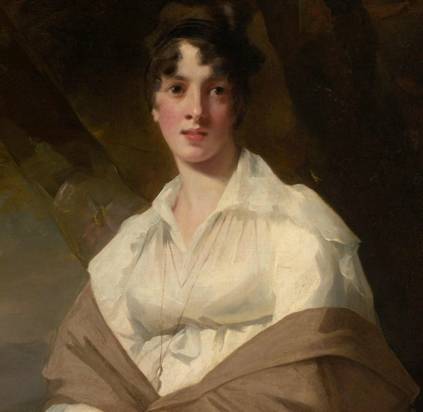
that was hanging up, and said, “Qui est cette jeune personne?” “Who is that young lady?” “My wife,” I replied. “Ah! elle est trfes jeune et tres jolie,” “Ah! she is both young and pretty.”[6] He then asked what countrywoman she was, begged to know if I had any children, and put a number of questions respecting my country, and the service I had seen. He next requested I would send for the officers, land introduce them to him: which was done according to their rank. He asked several questions of each, as to the place of his birth, the situation he held in the ship, the length of time he bad served, and the actions he had been in. He then expressed a desire to go round the ship; but, as the men had not done cleaning, I told him it was customary to clean the lower decks immediately after their breakfast, that they were then so employed, and, if he would defer visiting the ship until they had finished, he would see her to more advantage.
At this time I proposed to him to allow me to address him in English, as I had heard he understood that language, and I had considerable difficulty in expressing myself in French. He replied in French, “The thing is, impossible; I hardly understand a word of your language and from the observations I had an opportunity of making afterwards, I am satisfied he made a correct statement, as, on looking into books or newspapers, he frequently asked the meaning of the most common word. He spoke his own language with a rapidity that at first made it difficult to follow him; and it was several days before I got so far accustomed to his manner of speaking, as to comprehend his meaning immediately.
In about a quarter of an hour, he again intimated a desire to go round the ship; and although I told him he would find the men rubbing and scouring, he persisted in his wish of seeing her in the state she then was. He accordingly went over all her decks, asking me many questions; more particularly about any thing that appeared to him different from what he had been accustomed to see in French ships of war. He seemed most struck with the cleanliness and neatness of the men, saying “that our seamen were surely a different class of people from the French; and that he thought it was owing to them we were always victorious at sea.” I answered, “I must beg leave to differ with you: I do not wish to take from the merit of our men; but my own opinion is, that perhaps we owe our advantage to the superior experience of the officers; and I believe the French seamen, if taken as much pains with, would look as well as ours. As British ships of war are constantly at sea, the officers have nothing to divert their attention from them and their men; and in consequence, not only is their appearance more attended to, but they are much better trained to the service they have to perform.”
“I believe you are right,” said he. He then went on to talk of several naval actions; adding, “Your laws are either more severe, or better administered, than ours; there are many instances of French officers having conducted themselves. ill in battle, without my being able to punish them as they deserved:” among others, he mentioned the names of two naval officers; and speaking of one of them, said, “He ought to have suffered death, and I did all I could to bring it about, but he was tried by a French naval court-martial, which only dismissed him the service.” I observed, “The laws appear sometimes to be administered with more than sufficient severity. I commanded a frigate in the affair of Basque Roads; and in my opinion, the sentence of death on the Captain of the Calcutta was unjust: he could do no more to save his ship, and she was defended better and longer than any one there.” He answered, “You are not aware of the circumstances that occasioned his condemnation; he was the first man to quit his ship, which was fought some time by her officers and crew after he had left her.”
He next said, “I can see no sufficient reason why your ships should beat the French with so much ease. The finest men of war in your service are French; a French ship is heavier in every respect than one of yours, she carries more guns, those guns of a larger calibre, and has a great many more men.” I replied, “I have already accounted for it to you, in the superior experience of our men and officers” “I understand,” said he, “from some Frenchmen who were on board your ship for several days,[7] that you take great pains in exercising your guns, and training your men to fire at a mark.” I answered, “I did so, because I considered it of the greatest importance and I added, “that if the frigates had attempted to put to sea, he would probably have had an opportunity of seeing the effect of it.” He asked me “If I thought two frigates, with four- and-twenty pounders on their main decks, were a match for a seventy-four gun ship; and whether it was my opinion, if he had attempted to force a passage in the ships at Isle d’Aix, it would have been attended with success.” I replied, “That the fire of a two deck ship was so much more compact, and carried such an immense weight of iron, in proportion to that of a frigate, and there was so much difficulty in bringing two or three ships to act with effect at the same time upon one, that I scarcely considered three frigates a match for one line-of-battle ship;—that, with respect to forcing a passage past the Bellerophon, it must have depended greatly on accident, but the chances were much against it; as the frigates would have had to beat out against the wind for three or four leagues, through a narrow passage, exposed to the fire of a seventy-four gun ship, which, from being to windward, would have had the power of taking the position most advantageous for herself.” He then said, reverting to what had passed before about firing at marks, “You have a great advantage over France in your finances: I have long wished to introduce the use of powder and shot in exercise; but the expense was too great for the country to bear.” He examined the sights on the guns, and approved -of them highly; asked the weight of metal on the different decks, disapproving of the mixture of different calibres on the quarterdeck and forecastle. I told him the long nines were placed in the way of the rigging, that they might carry the fire from the explosion clear of it, which a carronade would not do: he answered, " That may be necessary, but it must be attended with inconvenience.” His enquiries were generally much to the purpose, and showed that he had given naval matters a good deal of consideration.
On seeing the additional supply of wads for each deck made up along with the shot- boxes, in the form of sophas, with neat canvass covers, he observed, “The French ships of war have all the preparations for action that you have, but they have not the. way of combining appearance with utility.”
We had breakfast about nine o’clock, in the English style, consisting of tea, coffee, cold meat, &c. He did not eat much, or seem to relish it; and when, on enquiry, I found he was accustomed to have a hot meal in the morning, I immediately ordered my steward to allow his Maitre d’Hotel to give directions, that he might invariably be served in the manner he had been used to; and after that we always lived in the French fashion, as far as I could effect that object.
During breakfast he asked many questions about English customs, saying, “I must now learn to conform myself to them, as I shall probably pass the remainder of my life in England.”
The Superb, as I before observed,' had been seen in the offing early in the morning, and was now approaching with a light breeze: he asked two or three times how soon she would anchor, seemed very anxious to know whether the Admiral would approve of my having received him; and when I went to wait on Sir Henry Hotham, requested I would say he was desirous of seeing him.
The Superb anchored about half past ten, and I immediately went on board, and gave the Admiral an: account of all that had occurred, adding, “I trust I have done right, and that the Government will approve of my conduct, as I considered it of much importance to prevent Buonaparte’s escape to America, and to get possession of his person.” Sir Henry Hotham said, ”Getting hold of him on any terms would have been of the greatest consequence; but as you have entered into no conditions whatever, there can not be a doubt that you will obtain the approbation of his Majesty’s Government.”
He then said, “How do you feel as to keeping him? would you like to part with him?” “Certainly not,” was my answer:: “as I have had all the anxiety and responsibility of conducting this matter to an issue, I am of course desirous of taking him to England; but, as I do not wish to keep him, or any man, in my ship against his will, if he desires to remove into another, I shall certainly not object.”
I then delivered Buonaparte’s message, that he was desirous of receiving a visit from the Admiral, who said he would wait upon him with much pleasure.
I soon after returned to the Bellerophon, and told Buonaparte that the Admiral meant to wait on him; upon which he desired Count Bertrand to go and pay his respects to Sir Henry. I accompanied him, and while the Admiral was preparing for his visit, Captain Senhouse attended General Bertrand through the ship.
In the afternoon, Sir Henry Hotham, accompanied by Captain Senhouse, and Mr. Irving, his secretary, came on board the Bellerophon. They were introduced to Buonaparte by General Bertrand, in the after-cabin, where he had a good deal of conversation with them: he showed his portable library, which was laid out in small travelling cases round the cabin; asked various questions, principally relative to the discipline and regulation of our ships of war, and finally invited them all to remain to dinner.
Dinner was served about five o’ clock upon Buonaparte’s plate. This was arranged by his Maltre d’Hotel, whom I had told to regulate every thing in the manner most likely to be agreeable to his master.
When dinner was announced, Buonaparte, viewing himself as a Royal personage, which he continued to do while on board the Bellerophon, and which, under the circumstances, I considered it would have been both ungracious and uncalled for in me to have disputed, led the way into the dining-room. He seated himself in the centre at one side of the table, requesting Sir Henry Hotham to sit at his right hand, and Madame Bertrand on his left. For that day I sat as usual at the head of the table, but on the following day, and every other, whilst Buonaparte remained on board, I sat by his request at his right hand, and General Bertrand took the top. Two of the ward-room officers dined daily at the table, by invitation from Buonaparte, conveyed through Count Bertrand.
He conversed a great deal, and showed no depression of spirits: among other things, he asked me where I was born. I told him, in Scotland. “Have you any property there?” said he. “No, I am a younger brother, and they do not bestow much on people of that description in Scotland.” “Is your elder brother a Lord?” “No, Lord Lauderdale is the head of our family.” “Ah! you are a relation of Lord Lauderdale’s! he is an acquaintance of mine, he was sent Ambassador from your King to me, when Mr. Fox was Prime Minister: had Mr. Fox lived, it never would have come to this, but his death put an end to all hopes of peace. Milord Lauderdale est un bon garcon adding, “I think you resemble him a little, though he is dark and you are fair.’’
When dinner was over, a cup of strong coffee was handed round; he then rose and went into the after-cabin, asking the Admiral and all the party to accompany him, the ladies among the rest. This was the only time I ever saw them in the apartment in which he slept.
After some conversation, he said, in a cheerful and playful way, that he would show us his camp bed; and sent for MarChand, his premier valet de chambre, who received his order, and soon returned with two small packages in leather cases; one of which contained the bedstead, which was composed of steel, and, when packed up, was pot above two feet long and eighteen inches in circumference; the other contained the mattress and curtains, the latter of green silk. In three minutes the whole was put together, and formed a very elegant small bed, about thirty inches wide.
He then went out, and walked the quarterdeck for some time, and retired to his cabin about half-past seven o’clock. Soon after, when the Admiral was going to return to his ship, he proposed to Bertrand to take leave of him. He went into the cabin, but returned immediately with an apology, saying he was undressed, and going to bed.
In the course of the afternoon, the Admiral invited Buonaparte, with the ladies and all his principal officers, to breakfast, the following day: which invitation was accepted, apparently, with much satisfaction.
When I went on deck, early the next morning, (the 16th of July) I observed that the Superb had the tompions out of her guns, and the man ropes on her yards, as if for the purpose of saluting and manning ships; and as I had received Buonaparte without even the guard presenting arms, I felt that he might conceive I had intentionally treated him with disrespect. I therefore sent the officer of the watch with my compliments to Sir Henry Hotham, and begged to know if it was his intention to salute Buonaparte on his going on board, and to receive him with manned yards; and, if so, whether I was to do the same, on his quitting the Bellerophon. He sent for answer, that it was not his intention to salute, but he meant to man ship; that I was not to do so on his quitting the Bellerophon, but was at liberty to man yards on his return. I likewise received directions from the Admiral to hoist a signal, when the boat with his visitors was ready to leave the ship, that he might have time to make the necessary preparations.
About ten A. M. the barge was manned, and a captain’s guard turned out. When Buonaparte came on deck, he looked at the marines, who were generally fine-looking young men, with much satisfaction; went through their ranks, inspected their arms, and admired their appearance, saying to Bertrand, “How much might be done with a hundred thousand such soldiers as these.” He asked which had been longest in the corps; went up and spoke to him. His questions were put in French, which I interpreted, as well as the man’s answers. He enquired, how many years he had served; on being told upwards of ten, he turned to me and said, “Is it not customary in your service, to give a man who has been in it so long some mark of distinction?” He was informed that the person in question had been a sergeant, but was reduced to the ranks for some misconduct. He then put the guard through part of their exercise, whilst I interpreted to the Captain of Marines, who did not understand French, the manoeuvres he wished to have performed. He made some remarks upon the difference of the charge with the bayonet between our troops and the French; and found fault with our method of fixing the bayonet to the mus- quet, as being more easy to twist off, if seized by an enemy when in the act of charging.
On getting into the boat, he looked at the barge’s crew, and said, “What a very fine set of men you have got!” He then turned to Las Cases, who had come on board the ship in plain clothes, but now appeared in a naval uniform, and said jocularly, f* Comment, Las Cases, vous etes militaire?” “What, Las Cases, are you a military man? I have never till now seen you in uniform.” He answered, “Please your Majesty, before the revolution I was a lieutenant in the navy; and as I think an uniform carries more consideration with it in a foreign country, I have adopted it.”
His attention was now drawn to the men on the Superb’s yards, as well as to the appearance of the ship, about which he made some observations, and asked several questions; among others, whether she was French or English; what her age was; the number of guns she carried, and the weight of metal on each deck.
On going alongside, General Bertrand went up and announced to the Admiral, that the Emperor, for they always gave him that title, was in the boat. He then went up, and was received by Sir Henry Hotham on the quarter-deck, where a captain’s guard was turned out to him. He was immediately shown into the cabin, and, after looking round him, requested to have the officers presented, which was done; when he asked nearly the same questions of each, that he had put to those of the Bellerophon the day before. He then expressed a wish to go through the ship; and did so, accotppanie4 by several of his own suite, the Admiral, Captain Senhouse, and myself. The men were drawn up at divisions, and every thing was in the nicest order. He appeared much pleased with all he saw, and drew many comparisons between French and English ships of war. On going through the wings and store-rooms, he said to General Savary,
“Our ships have nothing of this sort:” who answered, “All the new ones, built at Antwerp, were constructed on this plan.” When he returned to the quarter-deck, he questioned the Admiral and myself very minutely, about the clothing and victualling of the seamen. It was then, on being told that all that department was under the charge of the purser, he said in a facetious way, “Je crois que c’est quelquefois chez vous, comme chez nous, le commissaire est un peu coquin.” “I believe it happens sometimes with you, as it does with us, that the purser is a little of a rogue.” This was addressed to the Admiral and me, with whom he was conversing, and not to the people, as has been represented; nor was there a man that could have understood it, as it was spoken in French, and not within their hearing. He asked to see the Chaplain, put a few questions to him as to the number of Catholics and foreigners in the ship, and whether any of them spoke the French language. A Guernsey man was pointed out to him, but he had no conversation with him.
He was then shown into the cabin, where breakfast was prepared: during which meal he talked a good deal, but ate little, the breakfast being served in the English manner. I observed, during the whole time of breakfast, that Colonel Planat, who was much attached to him, and of whom Buonaparte always expressed himself in terms of affection, had tears running down his cheeks, and seemed greatly distressed at the situation of his master. And, from the opportunities l afterwards had of observing this young man’s character, I feel convinced he had a strong personal attachment to Buonaparte;—and this, indeed, as far as I could judge, was the case also with all his other attendants, without exception.
On rising from the breakfast-table, the whole party went into the after-cabin, where a discussion took place about Buonaparte’s horses and carriages, which had been left at Rochefort, and which he was desirous of having forwarded to England. I had formerly agreed, in the event of their arriving, to receive two Carriages, and five or six horses, as many as the ship could conveniently stow; but as they had not come, the Admiral now consented to give a passport for a vessel to transport the whole of them, consisting of six carriages and forty-five horses: which was accordingly made out, and forwarded to Monsieur Philibert, the senior naval officer at Isle d’Aix, but I believe it was never acted upon.
We all returned to the Bellerophon about noon, when the ships present manned their yards, the boat was immediately hoisted in, and the ship got under weigh, in pursuance of orders from the Admiral, of which the following is an extract.
Extract of an Order from Rear Admiral Sir Henry Hotham, K. C. B., addressed to Captain Maitland of H. M. S. Bellerophon, dated Superb, in Basque Roads, July 15th, 1815.
“You. are hereby required and directed to take the Myrmidon under your orders, and, putting on board her such persons composing a part of the suite of Napoleon Buonaparte as cannot be conveyed in the Bellerophon, you are to put to sea in H. M. S. under your command, in company with the Myrmidon, and make the best of your way with Napoleon Buonaparte and his. suite to Torbay, and there landing the officer of the ship bearing my flag, whom I have charged with a despatch addressed to the Secretary of the Admiralty, as well as an officer of the ship you command, for the purpose of proceeding express to Plymouth with the despatch you will herewith receive, addressed to Admiral Lord Keith, and a copy of these instructions (which you will transmit to his Lordship,) await orders from the Lords Commissioners of the Admiralty, or his Lordship, for your further proceedings.”
During the time we Were heaving the anchor up, and setting the sails, Buonaparte remained on the break of the poop; and was very inquisitive about what was going on. He observed, “Your method of performing this manoeuvre is quite different from the French and added, “What I admire most in your ship, is the extreme silence and orderly conduct of your men:—on board a French ship, every one calls and gives orders, and they gabble like so many geese.” Previous to his quitting the Bellerophon he made the same remark, saying, “There has been less noise in this ship, where there are six hundred men, during the whole of the time I have been in her, than there was on board the Epervier, with only one hundred, in the passage from Isle d’Aix to Basque Roads.”
Soon after the ship was under weigh, the Mouche joined, with three or four sheep, a quantity of vegetables, aind other refreshments,—a present from the French Commodore to Buonaparte; After receiving them on board, we made sail, accompanied by the Myrmidon, for England.
In working out, we passed within about a cable’s length of the Superb. He asked me if I considered that was near enough for a naval engagement: I answered, that half the distance, or even less, would suit much better; as it was a maxim in our navy, not to be further from our enemy than to give room for working the yards, and manoeuvring the ship.
He remained upon deck all the time the ship was beating out of the Pertuis d’Antioche. Having cleared the Chasseron shoal about six P. M., dinner was served. He conversed a great deal at table, and seemed in very good spirits; told several anecdotes of himself; among others, one relating to Sir Sydney Smith. Knowing that I had served under that officer on the coast of Syria, he turned to me and said, “Did Sir Sydney Smith ever tell you the cause of his quarrel with me?” I answered he had not. “Then,” said he, “I will.—When the French army was before St. Jean d’Acre, he had a paper privately distributed among the officers and soldiers, tending to induce them to revolt and quit me; on which I issued a proclamation, denouncing the English commanding- officer as a madman, and prohibiting all intercourse with him. This nettled Sir Sydney so much, that he sent me a challenge to meet him in single combat on the beach at Caiffa. My reply was, that when Marlborough appeared for that purpose, I should be at his service; but I had other duties to fulfil besides fighting a duel with an English commodore.” He pursued the subject of Syria, and said, patting me (who was sitting next him) on the head; “If it had not been for you English, I should have been Emperor of the East; but wherever there is water to float a ship, we are sure to find you in our way.”
During the 17th and 18th of July, the weather was very fine, and nothing of note occurred. Several strange vessels were seen, about which Buonaparte and his attendants were very inquisitive, in order, I presume, that they might judge whether they would probably have escaped or not, had they put to sea. The only ship of war fallen in with on those days was the Bacchus sloop, which I pointed out; and at the same time informed him, that we had several frigates cruising in this position, for the purpose of intercepting him, had he got past the ships stationed dose in with the land. This, as it afterwards appeared, was not the case: the Endymion having gone into the Gironde, the Liffey having sprung her bowsprit and returned to England, and the others, from various causes, having quitted the station; so that, had he passed the squadron off Rochefort, there can be little doubt he would have made bis voyage in safety to America.
About this time, Buonaparte amused himself by playing at cards after breakfast: the game was vingt-un, in which all the party joined, except myself. He proposed that I should play with them, but I told him I had no money, making it a rule to leave it all with my wife before I went to sea: on which he laughed, and good-humouredly offered to lend me some, and trust the until we arrived in England: 1, however, declined his offer, haying the numerous duties of the ship to attend to.
As my despatch of the 14th instant, to the Secretary of the Admiralty had been very short, and written in greet haste,—being desirous that his Majesty’s Ministers should be made acquainted with the important arrangements agreed upon, as early as possible,—I considered it right to make a more detailed report to the Commander in Chief) mid therefore wrote a despatch to Lord Keith, of which the following are extracts, intending to send it by the officer who should announce to. him the Bellerophon’s arrival in Torbay.
Extract of a Letter from Captain Maitland, addressed to Admiral Viscount Keith, O. C. B. dated on hoard H. M. Ship Bellerophon, at sea, July 18th, 1815.
“Having received directions from Sir Henry Hotham to forward the accompanying despatch to your Lordship by an officer, I avail myself of the opportunity to explain the circumstances under which I was placed when induced to receive Napoleon Buonaparte into the ship I command.
“After the first communication was made to me by Count Bertrand (a copy of which, with my answer, has been forwarded to your Lordship by Sir Henry Hotham) that Buonaparte was at Isle d’Aix, and actually embarked on board the frigates for the purpose of proceeding to the United States of America, my duty became peculiarly harassing and anxious, owing to the numerous reports, that were daily brought from all quarters, of his intention to escape in vessels of various descriptions, and from different situations on the coast, of which the limited means I possessed, together with the length of time requisite to communicate with Sir Henry Hotham at Qui- beron Bay, rendered the. success at least possible, and even probable. Thus situated, the enemy having two frigates and a brig, while the force under my command consisted of the Bellerophon and Slaney, (having detached the Myrmidon to reinforce the Daphne off the Mamusson passage, where the force was considerably superior to her, and whence one of the reports stated Buonaparte meant to sail,) another flag of truce was sent out, for the ostensible reason of enquiring whether I had received an answer to the former, but I soon ascertained the real one to be a proposal from Buonaparte to embark for England in this ship.
“Taking into consideration all the circumstances of the probability of the escape being effected, if the trial Was made either in the frigates, or clandestinely in a small vessel, as, had this ship been disabled in action^ there was no other with me that could produce any effect oh a frigate, and, from the experience I have bad in blockading the ports of the bay, knowing the impossibility of preventing small vessels from getting to sea, and looking upon it as of the greatest importance to get possession of the person of Buonaparte; I was induced, without hesitation, to accede to the proposal, as far as taking him on board, and* proceeding with him to England: but, at the same time, stating in the most clear and positive terms, that I had no authority to make any sort of stipulation as to the reception he was to meet with.
“I am happy to say, that the measures I have adopted have met with the approbation of Sir Henry Hotham, and will, I trust and hope, receive that of your Lordship, as well as of his Majesty’s Government.”
On the 29th, a conversation took place between Madame Bertrand and myself, about Buonaparte’s voyage to Elba. She asked me if I was acquainted with Captain Usher. On my answering in the negative, she said, “The Emperor is very fond of him: he gave him his portrait set with diamonds, and has another which he intends for you.” I replied, “I hope not, as I cannot accept of it. Captain Usher’s situation and mine were very different, and what might be proper in him would not be so in me.” She rejoined, “If you do not accept of it, you will offend him very much.” “If that is the case,” I said, “I shall be obliged to you to take steps to prevent its being offered, as I wish to save him the mortification, and myself the pain, of a refusal; and I feel it absolutely impossible, situated as I am, to take a present from him. In receiving him on board, I had no direct authority from my Government, and I have yet to learn whether my conduct will be approved of. Besides, were I to receive a present of such value, it might possibly be said, that I was actuated by selfish motives; whereas all the measures I have taken were dictated solely by the desire of serving my country to the best of my judgment: if, therefore, I am to receive any reward, it must come from that quarter.”
On the 20th of July, early in the morning, we spoke the Swiftsure, on her way from England to reinforce .me in the blockade of Rochefort. The astonishment of Captain Webley can scarcely be conceived, when, on his entering the ship, I said, “Well, I have got him.” “Got him! got whom?” “Why, Buonaparte; -the man that has been keeping all Europe in a ferment these last twenty years.” “Is it possible?” said he; “well, you are a lucky fellow.” We had some further conversation; but Captain Webley was not introduced to Buonaparte, who had not then left bis cabin; and as the Swiftsure was going to the southward, and I was desirous of getting to England as quickly as possible, we soon parted company.
During the 21st and 22d of July, we exchanged signals with two or three others of our ships, which I took care to explain were on the look-out for my guest; and he seemed by this time pretty well convinced that an attempt to elude our cruisers would have been fruitless. On the latter day, the Prometheus showed her number, while we were at dinner: when Buonaparte expressed a wish to know whether the ships at Brest had hoisted the white flag or not. I sent for the officer of the watch, and desired him to ask the question by telegraph. In a few minutes he returned, with an answer in the affirmative.. Buonaparte made no remark upon this information but asked, with apparent indifference, how the question and answer had been conveyed; and when I explained it to him, he approved highly of the usefulness of the invention.
During meals, he always entered very freely and familiarly into conversation with those about him, addressing himself frequently to Las Cases and me; asking many questions about the manners, customs, and laws of the English; often repeating the observation he had made on first coming on board, that he must gain all the information possible on those subjects, and conform himself to them, as he should probably end his life among that people. Monsieur Las Cases, it appears, had emigrated from France early in the revolution, and remained in England until the peace of Amiens, when he was allowed to return to his own country.
Sunday, the 23rd of July, we passed very near to Ushant: the day was fine, and Buonaparte remained upon deck great part of- the morning. He cast many a melancholy look at the coast of France, but made few observations on it; Ha asked several questions about the coast of England; whether it was safe to approach; its distance, and the part we were likely to make. About eight in the evening, the high land of Dartmoor was discovered, when I went into the cabin and told him of it: I found him in a flannel dressing-gown, nearly undressed, and preparing, to go to bed. He put on his greatcoat, came out upon deck, and remained some time looking at the land; asking its distance from Torbay, and the probable time of our arrival there.
At day-break of the 24th of July, we were close off Dartmouth. Count Bertrand went into the cabin, and informed Buonaparte of it, who came upon deck about half-past four, and remained on the poop until the ship anchored in Torbay. He talked with admiration of the boldness of the coast; saying, “You have in that respect a great advantage over France, which is surrounded by rocks and dangers.” On opening Torbay, he was much struck with the beauty of the scenery; and exclaimed, “What a beautiful country! it very much resembles the bay of Porto Ferrajo, in Elba.”
The ship was scarcely at anchor, when an officer came along-side, bringing an order from Lord Keith; of which I give an extract.
Extract of an Order from Admiral Viscount Keith, G. C. B. addressed to Captain Maitland, of H. M. S. Bellerophon, dated Ville de Paris, Hamoaze, 23d July, 1815.
“Captain Sartorius, of His Majesty’s ship Slaney, delivered to me last night, at eleven o’clock, your despatch of the 14th instant, acquainting me that Buonaparte had proposed to embark on board the ship you command; and that you had acceded there-to, with the intention of proceeding to Torbay, there to wait for further orders. I lost no time in forwarding your letter by Captain Sartorius to the Lords Commissioners of the Admiralty, in order that their Lordships might, through him, be acquainted with every circumstance that had occurred on an occasion of so much importance; and you may expect orders from their Lordships for your further guidance. You are to remain in Torbay until you receive such orders; and in the mean time, in addition to the directions already in your possession, you are most positively ordered to prevent every person whatever from coming on board the ship you command, except the officers and men who compose her crew; nor is any person whatever, whether in His Majesty’s service or not, who does not belong to the ship; to be suffered to come on board, either for the purpose of visiting the officers, or on any pretence whatever, without express permission either from the Lords Commissioners of the Admiralty, or from me. As I understand from Captain Sartofius, that General Gourgaud refused to deliver the letter with which he was charged for the Prince Regent, to any person except his Royal Highness, you are to take him out of the Slaney, into the ship you command, until you receive directions from the Admiralty on the subject, and order that ship back to Plymouth Sound, when Captain Sartorius returns from London.”
Along with the above order,. I received a letter from Lord Keith, of which I give some extracts.
((
You will perceive by the newspapers, that the intelligence had reached London before Captain Sartorius, owing to his long passage. I have a letter from Lord Melville to-day, enforcing in the strongest manner the former orders,—even that no person, myself or Sir John Duckworth excepted, shall be suffered to come on board the ship, till orders are sent from Government; which you will be so good as strictly to comply with. Let him and his want for nothing; and send to me for any thing Brixham cannot furnish; I will send it to you by a small vessel. You may say to Napoleon, that I am under the greatest personal obligations to him for his attention to my nephew, who was taken and brought before him at Belle Alliance, and who must have died, if he had not ordered a surgeon to dress him immediately, and sent him to a hut. I am glad he fell into your hands at this time, because a Frenchman had been sent from Paris on the mission, a Monsieur Drigni.”
Buonaparte recollected the circumstance alluded to, and seemed much gratified with Lord Keith’s acknowledgments.
Napoleon and all his attendants were very anxious to see' as many newspapers as possible, but particularly the Courier, which they considered the Ministerial paper, and most likely to contain the intentions of Government respecting them. They received little encouragement from any of them, but least of all from those which are supposed to take the Ministerial side in politics, as they not only contained a great deal that was personally offensive, but stated, in very plain terms, that none of the party would be allowed to land in England, and that St. Helena was the probable place of their ultimate destination. Buonaparte himself always affected to consider this as a mere newspaper report, though I believe it gave him a good deal of uneasiness. His followers received it with much irritation and impatience, frequently endeavouring to convince me that our Government could have no right to dispose of them in that way, and talking to me, as if I had been one of his Majesty’s Ministers, and had influence in determining on their future destination. All I could say on the subject did not prevent them from frequently recurring to it, and appealing against the injustice of such a measure.
This morning General Gourgaud returned from the Slaney, which we found lying here, not having been permitted to land, and having refused to deliver the letter he had been charged with for the Prince Regent to any person except his Royal Highness himself.
When I was conversing with Madame Bertrand, she said, “Had the Emperor gained the battle of Waterloo, he would have been firmly seated on the throne of France.” I answered, “It certainly might have protracted his downfall, but, in all probability, he would have been overthrown at last, as the Russians were fast advancing, and he never could have resisted the combined forces of the Allies.” To which she replied, “If your army had been defeated, the Russians never would have acted against him.” “That I cannot believe,” I said, “as they were using every effort to join and support the Allies; and the assertion is ridiculous.” “Ah,” said she, “you may laugh at it, and so may other people, nor will it, perhaps, now be discovered; but remember what I say, and be assured that at some future period it will be proved, that it never was Alexanders intention to cross the frontiers of France, in opposition to him.”
In the course of the day I received many applications for admittance into the ship: among others a note from a lady residing in the neighbourhood, accompanied by a basket of fruit, requesting a boat might be sent for her next morning. I returned a civil answer, informing her that my instructions would not admit of her request being complied with: no more fruit was sent from that quarter. Lord Gwydir and Lord Charles Bentinck also applied for admittance, but with no better success.
No sooner was Buonaparte’s arrival known in the neighbourhood, than the ship was surrounded by a crowd of boats, people being drawn from all quarters to see this extraordinary man. He came often upon deck, and showed himself at the gangways and stern windows, apparently for the purpose of gratifying their curiosity, of which, as he observed to me, the English appeared to have a very large portion.
In the evening, the officer who had been sent to Plymouth, on the ship’s arrival, with despatches for Lord Keith, returned, bringing letters, from which I give the following extracts:—
Extract of a Letter from Admiral Viscount Keith, 6. C. B. addressed to Captain Maitland, of H. M. S- Bellerophon, dated Ville de Paris, Hamoaze, July 24, 1815.
“The officer of the ship you command has just delivered to me your letter of this date, reporting your arrival in Torbay, with the Bellerophon and Myrmidon, having on board Napoleon Buonaparte and his suite. I have also received your other letter, explaining the circumstances under which you were placed, when you were induced to receive Napoleon on board; and I shall transmit the same to the Lords Commissioners of the Admiralty, in confident expectation, that his Majesty’s Government will fully approve of your conduct.”
Extract of a letter from Admiral Viscount Keith, G.C. B. addressed to Captain Maitland, of H. M. S. Bellerophon, dated 24th July, 1815.
“I take the opportunity of your officer’s return, to congratulate you and the nation, and to thank you for the perfect manner in which you entered into my views on the subject, and for the management of the blockade about which I was most anxious. It will not be long ere you are instructed by the Government: the first express would arrive about four o’clock this morning, and I attempt a telegraph message, but it is cloudy. I beg you will send for any thing you may want, to me, and it shall be sent instantly; and I beg to present my respects to Napoleon, and if I can render him any civility, I will consider it my duty, as well as in gratitude for Captain Elphinstone’s report of the attention he received from him on the field of battle.”
During the 25th of July, the concourse of people round the ship was greater than the day before, and the anxiety of the Frenchmen was considerably augmented by the confidence with which the newspapers spoke of the intention to remove Buonaparte to St. Helena. In the afternoon, he walked above an hour on deck, frequently stood at the gangway, or opposite to the quarter-deck ports, for the purpose of giving the people an opportunity of seeing him, and, whenever he observed any well-dressed women, pulled his hat off, and bowed to them.
At dinner he conversed as usual, was inquisitive about the kinds of fish produced on the coast of England, and ate part of a turbot that was at table, with much relish. He then spoke of the character of the fishermen and boatmen on our coast, saying, “They are generally smugglers as well as fishermen; at one time a great many of them were in my pay, for the purpose of obtaining intelligence, bringing money over to France, and assisting prisoners of war to escape. They even offered, for a large sum of money, to seize the person of Louis, and deliver him into my hands; but as they could not guarantee the preservation of his life, I would not give my consent to the measure.”
At three in the morning of the 26th of July, Captain Sartorius returned from London; having carried my despatch announcing Buonaparte’s intention to embark in the Bellerophon, and brought with him orders for me to proceed to Plymouth Sound. We immediately got under weigh, accompanied by the Myrmidon and Slaney. While heaving the anchor up, Las Cases came upon deck, when I told him the ship was ordered to Plymouth, supposing, if he thought it requisite, he would acquaint his master. Soon after the ship was at sea, Madame Bertrand made her appearance, when she attacked me with some warmth for having neglected to acquaint Buonaparte with the orders I had received, and told me he was excessively offended. As she had once or twice before, when every thing did not go exactly as she wished, held the same language, I determined to ascertain whether Buonaparte had expressed any dissatisfaction, and, if so, to come to an explanation with him, as, though I was inclined to treat him with every proper consideration, it never was my intention to be looked upon as responsible to him for my movements; I therefore told Las Gases what she had said, and requested he would ascertain whether Napoleon really had felt displeased. He immediately went into the cabin, and on his return assured me that there must have been some mistake, as nothing of the kind had taken place.
The ship’s removal to the westward was by no means an agreeable event to the suite of my guest: they naturally reasoned, that, had it been the intention of the British Government to allow him to land in England, he would not have been removed further from the Metropolis. He, however, made no observations on the subject himself; still affecting to consider the reports in the newspapers as the surmises of the editors.
We had, during the forenoon of the 26th of July, to beat up from the Start to Plymouth Sound, against a strong northerly wind. Buonaparte remained upon deck the greater part of the day. When going into the Sound, I pointed out the Breakwater to him, and described the manner in which they were forming it He said, it was a great national undertaking, and highly honourable to the country; enquired the estimated expense, and seemed surprised, when I told him it was expected to be finished for something less than a million sterling. He added, “I have expended a large sum of money on the port of Cherbourg, and in forming the Boyart Fort, to protect the anchorage at Isle d’Aix; but I fear now, those and many other of my improvements will be neglected, and allowed to go to ruin.”
When the ship had anchored, I informed him I was going to wait on the Commander- in-chief, and requested to know if I could convey any message from him. He desired me to return his thanks to Lord Keith, for the kind intentions he had expressed towards him in his letters to me, and to say he was extremely anxious to see his Lordship, if it could be done with propriety. On delivering his message to Lord Keith, he answered, “I would wait upon him with much pleasure, but, to tell you the truth, I have as yet received no instructions as to the manner in which he is to be treated; and until I do receive these, I cannot well visit him.” He then gave me some precautionary orders to prevent his escape, or any attempt to effect it. From which I give the extracts below.
Extract of an Order from Admiral Viscount Keith, 6. C. B.
to Captain Maitland, of H. M. S. Bellerophon, dated
Hamoaze, July 26,1815.
“In addition to the orders already received, you are to pay the strictest regard and attention to the directions contained in the enclosed extract of a letter from the Secretary of the Admiralty. If General Gourgaud has not already been taken out of the Slaney, you are to cause him to be removed immediately into the ship you command. I enclose, for your information, a copy of a general order that I have issued, forbidding communication with the ship you command; and it is my intention to order the Liffey and Eurotas to anchor near you, and to row guard.”
Extract of a Letter from the Secretary of the Admiralty to Admiral Viscount Keith, O. C. B-; dated 24th July, 1815; enclosed in the foregoing.
“Referring your Lordship to Mr. Croker’s letter of the 1st instant, respecting Buonaparte, I am to signify their Lordships* directions to you, to give the most positive orders to Captain Maitland to prevent all communication whatever with the shore but through him, and by him through your Lordship; and on no account to permit any person whatsoever to go on board the ship, without your Lordship’s permission given in writing for that purpose; which permission, for obvious reasons, will only be granted in such cases as the public service may require: and proper measures are to be taken to prevent boats and small craft from crowding near the Bellerophon.
“Your Lordship will restrict the captains and commanders of your squadron from communicating, until further orders, with the Bellerophon.”
There was also enclosed the following copy of a Memorandum, addressed to the respective Captains of H. M. Ships Liffey and Eurotas.
Ville de Paris, in Hamoaze, 26th July, 1815.
** Memo:
“The Liffey and Eurotas are to take up an anchorage on each side of the Bellerophon, at a convenient distance, and observe the following directions, as well for the purpose of preventing the escape of Buonaparte, or any of his suite, from that ship, as for restraining shore-boats and others from approaching too close to her, either from curiosity or any other motive.
“A constant watch of an officer, a quarter- watch, and double sentinels, are to be kept by day, as well as a boat manned and armed alongside, in constant readiness, as a guard-boat: the same precaution is to be observed all night, with the exception, that one of the boats, in charge of a lieutenant, is to row guard, and to be relieved every hour.
“No shore-boats, or others, are to be suffered, either by night or by day, to approach nearer the Bellerophon than one cable’s length; and no boats are to be permitted to loiter about the ship, even at that distance, either from curiosity or any other motive: neither the captains of the Liffey or Eurotas, nor any other officer belonging to those or any other ships, are to go on board the Bellerophon, either to visit, or on any pretence whatever, without permission from me in writing.”
Signed, Keith, Admiral.
A Copy.
Keith, Admiral.
To the respective Captains of the Liffey and Eurotas.
When I returned on board, I found the frigates had taken their positions as directed in the last order, and their boats were endeavouring as much as possible to keep the shore-boats at the specified distance from the ship. I stated to Buonaparte what Lord Keith had said; to which he answered, “1 am extremely anxious to see the Admiral, and therefore beg he will not stand upon ceremony: I shall be satisfied to be treated as a private person, until the British Government has determined in what light I am to be considered.” He then complained of the two frigates being placed as guard-ships over him, “as if,” said he, “I were not perfectly secure on board a British line-of-battle ship and added, “The guard-ships’ boats have been firing musquetry all the evening, to keep the shore-boats at a distance: it disturbs and distresses me, and I shall be obliged to you to prevent it, if it lies in your power.”
I immediately sent to the Captains of the frigates, to put a stop to the firing.
On the 27 th of July, I received a letter from the Secretary of the Admiralty, of which I give an extract:—
Extract of a Letter from the Secretary of the Admiralty, addressed to Captain Maitland of H. M. S. Bellerophon, dated 25th July, 1815.
'* I have received and laid before my Lords Commissioners of the Admiralty, your letter of yesterday’s date, reporting your arrival in the Bellerophon in Torbay, accompanied by the Myrmidon, having on board Napoleon Buonaparte and suite, and transmitting a copy of a letter you had addressed to Admiral Lord Keith, reporting your proceedings, under the various circumstances which occurred prior to his embarkation, of which their Lordships have been pleased to direct me to signify their approval.”
I waited on Lord Keith in the morning, and carried with me Buonaparte's original letter to the Prince Regent, which General Gourgaud had refused to deliver to Captain Sartorius: finding that one of his own officers would not be allowed to proceed with it, he now consented to its being forwarded through the Admiral. I reported to his Lordship all the occurrences of the previous day; and that, in consequence of the frequent repetition in the newspapers of its being the intention of his Majesty’s Government to send Buonaparte to St. Helena, he, as well as the officers of his suite, had expressed much uneasiness. I also carried a message from him, stating his desire to see his Lordship, and that he would willingly wave all ceremony, and be considered as a private person. To which Lord Keith answered, “I shall now have no difficulty whatever, having received full instructions as to the manner in which he is to be treated: he is to be considered as a General Officer, and have the respect due to that rank paid him, and no more: you may therefore say I shall wait on him to-morrow forenoon.” He then put into my hands the following additional orders.
Extract of a Letter from Admiral Viscount Keith, G. C. B. addressed to Captain Maitland, of H. M. S. Bellerophon, dated Ville de Paris, Hamoaze, 27th July, 1815.
“I herewith transmit an extract of an order, containing certain directions relative to Buonaparte and his suite, and you are forthwith to carry the same into execution; sending on board the Liffey or Myrmidon, with directions similar to those that have been addressed to yourself, such of his suite as are to be withdrawn from the ship you command.”
Extract of an Order from the Lords Commissioners of the Admiralty, to Admiral Viscount Keith, O. C. B. dated July 25th, 1815.
“That he should give immediate orders, that, upon the arrival of the Bellerophon, Napoleon Buonaparte should remain, until the Prince Regent’s further pleasure shall be signified, on board of that, or such other ship of war as we shall appoint, and shall not be permitted on any account to come on shore; or to hold communication with the shore, or with other vessels, either personally, or by writing. Not more than four or five persons of his suite (exclusive of menial servants) are to remain on board the same ship with himself: the remainder of his suite are to be kept under similar restraint, on board of other vessels of war. Napoleon Buonaparte is to be considered and addressed as a General Officer.”
In consequence of those orders, several of the officers of inferior rank, and some of the servants, were sent to the frigates appointed to guard us.
In the afternoon Sir Richard and Lady Strachan, accompanied by Mrs. Maitland, came alongside the ship. Buonaparte was walking the deck, and, when I told him my wife was in the boat, he went to the gangway, pulled off his hat, and asked her if she would not come up and visit him. She shook her head; and I informed him, that my orders were so positive, I could not even allow her to come on board. He answered, “C’est dur, ca.” “That is very hard.’’ And addressing himself to her, “Milord Keith est un peu trop severe; n’est-ce pas, Madame?” “Lord Keith is a little too severe; is he not, Madam?” He then said to me, “Ma foi, son portrait ne la flatte pas; elle est encore plus jolie que lui.” “I assure you the portrait is not flattering; she is handsomer than it is.” I told him Sir Richard Strachan was in the boat with her, and that he was second in command of the Channel fleet: he bowed to him, and said, “He appears a very young man to hold so high a rank.”
There were this day a great many boats round the ship, full of people, among which were a number of well-dressed females. He expressed himself in strong terms of admiration of the beauty of the English women, and was desirous of knowing which were the ladies,—”les dames comme il faut,” as he termed it; as they were all so well dressed that he could not distinguish them.
In the evening a letter was sent to me by Lord Keith, of which I subjoin an extract:
Extract of a Letter from Admiral Viscount Keith, 6. C. B. addressed to Captain Maitland of H. M. S. Bellerophon, dated Ville de Paris, Hamoaze, 27th July, 1815.
“From the representation you have made to me of the dissatisfaction expressed by Buonaparte, on observing by the newspapers that he was to be sent to St. Helena; it will be necessary that you redouble your vigilance to prevent his escape; and you are therefore to station double sentinels, and resort to every other means that may be necessary for frustrating any such intention.”
On the 28th of July, Lord Keith came on board, between eleven and twelve o’clock, and was shown by me into the cabin, where Count Bertrand introduced him to Buonaparte. I immediately withdrew, and cannot therefore state what passed between them; but Lord Keith afterwards informed me, that Buonaparte had been very anxious to know whether the Government had come to any determination with regard to his disposal; of which his Lordship professed total ignorance.
After Lord Keith came out of the cabin, he remained some time with Buonaparte’s suite, who were collected in the state room. Madame Bertrand drew him aside, and entered into conversation with him, saying what she had repeated to me a hundred times, that it would be the height of injustice to send them to St. Helena, and endeavouring to persuade him to interfere in preventing her husband at least from going, should Napoleon be sent there.
During the whole of the 29th of July it rained incessantly, and nothing worth relating took place: the Frenchmen were deprived of their usual amusement of admiring the ladies, and being admired in return, not a boat having made its appearance. They often remarked, with the characteristic vivacity of their nation, that they were placed in the situation of Tantalus, —so many beauties in view, without the possibility of approaching them.
On Sunday, the 30th of July, the crowd of boats was greater than I ever remember to have seen at one time. I am certain I speak within bounds when I state, that upwards of a thousand were collected round the ship, in each of which, on an average, there were not fewer than eight people. The crush was so great, as to render it quite impossible for the guard-boats to keep them off; though a boat belonging to one of the frigates made use of very violent means to effect it, frequently running against small boats, containing women, with such force as nearly to upset them, and alarming the ladies extremely. The French officers were very indignant at such rude proceedings, saying, “Is this your English liberty? Were such a thing to happen in France* the men would rise with one accord and throw that officer and his crew overboard.”
After the ship’s arrival in England, Buonaparte seldom left the cabin earlier than five o'clock in the afternoon; passing his time in walking up and down the aftercabin, reading a great deal[8], and often falling asleep on the sopha, having within these two or three years become very lethargic.
I this day informed him, that Lord Keith had received an intimation, that Sir Henry Bunbury, one of the Under Secretaries of State, was to arrive in the course of the day with the decision of the British Government as to his future disposal. He asked me many questions, but, although Lord Keith had acquainted me that Buonaparte was to go to St. Helena, he had at the same time desired me not to communicate this information, and I was therefore obliged to evade his interrogatories as I best could.
In the newspapers of this day there appeared the lists of persons proscribed by the Government of France. Among the first class were the names of Bertrand, Savary, and Lallemand: the first treated it with derision, the two others appeared much alarmed, and often asked me if I thought it possible the British Government would deliver them up to Louis. I said, ** Decidedly not; you have been received on board an English man of war, and it never can be the intention of the Ministers to deliver you over to punishment.” They were not, however, satisfied by any means; and a French frigate, bearing the white flag, which lay in Hamoaze, was an object of much jealousy to them.
When I waited on Lord Keith, the morning of the 31st of July, he acquainted me that Sir Henry Bunbury had arrived, and was to accompany him on board at ten o’clock. He also showed me a notification of the decision of Government respecting Buonaparte, in which he was styled General throughout. It stated, that he was to be sent to St. Helena, and to be permitted to take with him three of the higher class of those that had accompanied him from France,- and twelve domestics, who were to be selected by himself, with the exception of Savary and Lallemand, who were not on any account to be permitted to go with him. I immediately returned on board, to be in readiness to receive Lord Keith and Sir Henry Bun- bury; and informed Buonaparte, that he might expect them. He asked me if I knew what they were to communicate; and having then received his Lordship’s sanction for doing so, I told him, I understood it was determined he was to be sent to St. Helena. His mind had, by this time, been so much prepared by the newspapers for that event, that he did not show any very strong emotion at receiving the intimation; though he complained, in strong terms, of the injustice of such a measure. As, however, the Admiral’s barge was seen approaching, and I was. obliged to go upon deck to receive him, I had very little conversation with him at that time.
Lord Keith and Sir Henry Bunbury arrived about half- past ten in the forenoon, when I showed them into the cabin, where Buonaparte was attended by Count Bertrand.
I then withdrew, leaving them shut up with him for about half-an-hour, when Lord Keith called me into the fore-cabin, where all the suite were assembled, and I presented each of them to the Admiral and Sir Henry. They all appeared very much distressed, but particularly Savary and Lallemand; who were extremely urgent to know how they were to be disposed of; protesting, most vehemently, against their being given up to France, as a breach of all faith and honour. Madame Bertrand again tried to induce Lord Keith to use his influence with our Government, to prevent Bertrand from accompanying Buonaparte to St. Helena.
As soon as the Admiral had left the ship, Buonaparte sent for me, and showed me the same paper Lord Keith had communicated to me in the morning. When I had read it, he complained vehemently of his treatment in being sent to St. Helena, saying, “The idea of it is perfect horror to me. To be placed for life on an island within the Tropics, at an immense distance from any land, cut off from all communication with the world, and every thing that I hold dear in it!—c’est pis que la cage de fer de Tamerlan. (It is worse than Tamerlane’s iron cage.) I would prefer being delivered up to the Bourbons. Among other insults,” said he,—”but that is a mere bagatelle, a very secondary consideration,—they style me General! they can have no right to call me General; they may as well call me Archbishop, for I was head of the church, as well as the army. If they do not acknowledge me as Emperor, they ought as First Consul; they have sent Ambassadors to me as such; and your King, in his letters, styled me brother. Had they confined me in the Tower of London, or one of the fortresses in England, (though not what I had hoped from the generosity of the English people,) I should not have so much cause of complaint; but to banish me to an island within the Tropics! They might as well have signed my death-warrant at once, as it is impossible a man of my habit of body can live long in such a climate.”
He then expressed a desire to write another letter to the Prince Regent; and I carried it the same afternoon to Lord Keith, by whom it was immediately forwarded to London.
Generals Savary and Lallemand this day made many appeals to me on the injustice of our Government delivering them up to France; saying they had not a doubt it was intended, else why except them from accompanying the Emperor, as they were both married men, and Savary the father of a large family:—it was not the wish of either to have gone to St. Helena; but their being expressly excepted, and their names appearing to the list of proscribed, was but too sure a proof of their intended fate. Savary added, “Were I to be allowed a fair and impartial trial, I should have nothing to fear, never having accepted a situation tinder Louis; but at present, when faction runs so high, I should inevitably be sacrificed to the fury of party. Lailemand’s case is quite different: ’he held a command under the King, and, on Napoleon’s return from Elba, joined him with his troops; therefore, his situation would at any time be a dangerous one-but I lived in the country all the time Louis was in France, and did not come forward until Buonaparte’s arrival in Paris, when he directed me to take the command of the Gendarmerie.”
Lallemand said, “My reason for coming on -board the Bellerophon with Las Cases on the morning of the 14th, was to ascertain whether there would be a risk of any of the Emperor’s followers being delivered up to the French Government, in the event of their accompanying him to England; when you assured me there could be no danger of it.” I replied, “My answer to you was, that I was of opinion there could be no risk of the British Government taking such a step; and I see no reason now to alter that opinion. As I have received you on board the Bellerophon, I consider you under the protection of the British flag, and myself, in a great measure, responsible for your personal safety; and under that impression I will write on the subject to Lord Melville, as the Minister under whose immediate control I act, that your minds may be set at rest, though, I repeat, you run no hazard of being sent to France.” The same evening, before I went to bed, I wrote the letter which follows:—
“H. M. S. Bellerophon, Plymouth Sound, 31st July, 1815.
“My Lord,
“I am induced to address your Lordship in consequence of having observed, in the intimation delivered to Napoleon Buonaparte of the number of persons allowed to accompany him to the Island of St. Helena, that the names of Savary and Lallemand are expressly excepted, which, together with their being proscribed in the French newspapers, has created in them a belief that it is the intention of His Majesty’s Government to deliver them up to the King of France. Far be it from me to assume such an idea; but I hope your Lordship will make allowance for the feelings of an officer who has nothing so dear to him as his honour, and who could not bear that a stain should be affixed to a name he has ever endeavoured to bear unblemished. These two men, Savary and Lallemand (what their characters or conduct in their own country may be I know not), threw themselves under the protection of the British flag; that protection was granted them with the sanction of my name. It is true, no conditions were stipulated for; but I acted in the full confidence that their lives would be held sacred, or they should never have put foot in the ship I command, without being made acquainted that it was for the purpose of delivering them over to the laws of their country.
“I again beg leave to repeat to your Lord- ship, that I am far from supposing it to be the intention of His Majesty’s Government to deliver these men over to the laws of their country; but, as they sure strongly impressed with that belief, and I look upon myself as the cause of their being in their present situation, I most earnestly beg your Lordship’s influence may be exerted that two men may not be brought to the scaffold who claimed and obtained at my hands the protection of the British flag.
“I have the honour to be,
See. &c. &c.
“Fred. L. Maitland.”
“The Viscount Melville,
&c. &c. &c.”
I felt convinced that Buonaparte, after the notification he had received, would be too much depressed in spirits to make his appearance on deck this day; and sent a boat to some of my friends, who were waiting in hopes of seeing him, to say there was no chance of his coming out, as he was much distressed at the communication which had been made to him. I was, therefore, a good deal surprised, on turning round, to find him standing at my elbow; and I can only account for his showing himself as usual, by supposing either that he was not in fact so much annoyed as I had believed him to be, or that he was actuated by a desire of creating a feeling of commiseration among the English people in his behalf.
At dinner he conversed as usual; and* indeed, it was quite astonishing with what elasticity his spirits regained his usual cheerfulness, after such trials and disappointments. He never, in my hearing> threatened to commit suicide; nor do I believe he did on any occasion: the only expression I ever heard him make use of, that could in any way be construed into such a threat, was, that he would not go to St, Helena,Je n’irai pas a St. Helene.”
As Buonaparte always retired early to bed, it was the custom for the French ladies and officers to assemble every evening in the ward room, end partake of wine and water, punch, or bishop— mixture consisting of Port, Madeira, nutmeg, and other ingredients, well-known to sailors, and much relished by our foreign guests.
I was sitting this evening next Montholon, when Madame Bertrand entered; I said to her, “Will you not sit down and take something?” She gave an answer which I took for No; and passed rapidly into the first lieutenant’s cabin, which she had occupied since she came on board. Montholon, who had observed her with more attention than I had done, immediately rose and followed her. There was instantly a shriek from the cabin, and a great uproar; and some one called out ‘The Countess is overboard.’ I ran upon deck, that, in the event of its being so, a boat might be lowered down, or the guard- boats called to her assistance. On looking over the quarter, and seeing no splash in the water, I felt satisfied it was a false alarm, and returned to the ward-room. Madame Bertrand had by this time been placed on her bed, where she was lying in strong hysterics, at intervals abusing the English nation and its Government, in the most vehement and unmeasured terms; sometimes in French and sometimes in English. Lallemand was walking up and down the wardroom much agitated, joining in the abuse; saying, among other things, “that it was horrible to bring a set of people on board the ship for the purpose of butchering them.” I turned to him, and said, “Monsieur Lallemand, what a woman says in the state of violent irritation that Madame Bertrand at present is, I consider of little consequence, and am willing to make every allowance for the situation you are placed in; but I cannot stand by and hear such terms used of the Government of my country; and if you do not desist, or make use of more respectful language, I shall be under the necessity of taking measures that will be very unpleasant both to you and myself.”
This had the effect of silencing him. When the bustle had subsided, I retired to my cabin, and was employed in writing the fore- going letter to Lord Melville, in behalf of Messrs. Savary and Lallemand; when the latter, attended by Generals Montholon and Gourgaud, came in. They immediately entered into conversation with me about the cruelty of their situation: among many other things, they said, “You may depend upon it, the Emperor never will go to St, Helena; he will sooner put himself to death; he is a man of determined character, and what he says he will do.” “Has he ever said he will put himself to death?” I asked. They answered, “No; but he has said he will not go, which amounts to the same thing; and were be to consent himself, here are three of us who are determined to prevent him” I told them they had better consider the consequences well, before they ventured on a measure of that kind.
The next day, August 1st, 1815, I waited on Lord Keith, and reported all that had occurred during the preceding day. I also showed him the letter I had written and meant to send to Lord Melville, respecting Generals Savary and Lallemand; he read it, and said, “that though he did not agree with me in opinion as to my honour or character being implicated, yet that he saw no harm in the letter.” He then said, “You may tell those gentlemen who have threatened to be Buonaparte’s executioners, that the law of England awards death to murderers, and that the certain consequence of such an act will be finishing their career on a gallows.”
After quitting his Lordship, I had an inter, view with Sir Henry Bunbury, previous to his setting out for London, and stated to him my feelings respecting the cruelty of delivering up to the French Government, men who had been received under the protection of the British flag. I said that I had no belief myself that any such intention existed; but that they were so strongly impressed with the conviction of it, that I had been induced to write to Lord Melville, and now begged to state to him, that I should consider myself dishonoured for ever, if they suffered death through my means. He listened, but did not speak till I had finished; when he told me he would repeat what I had said to his Majesty’s Ministers.
Madame Bertrand kept her bed the whole of this day, and did not appear at dinner. When Buonaparte came upon deck, he asked Mr. O’Meara, the surgeon, after her health; and then said, with an incredulous smile, “Do you really think, Doctor, she meant to drown herself?’’ I put the same question to Montholon; who said he had not a doubt of it, for, when he followed her into the cabin, she was in the act of throwing herself out of the gallery window; that He rushed forward and caught hold of her, and that she continued suspended by the bar that goes across the window, with the greater part of her body hanging out, until he received assistance to drag her in. The bar above-mentioned had been placed there for the purpose of preventing people from falling overboard when the window was open and the ship had much motion at sea.
On returning on board after being with Lord Keith, I went into Madame Bertrand’s cabin to see how she was, and found her in bed. I asked her, how she could be so indiscreet as to attempt to destroy herself? “Oh! I am driven to desperation,” she said; “I do not know what I do; I cannot persuade my husband to remain behind, he being determined to accompany, the Emperor to St. Helena.” She then ran into a great deal of abuse of Napoleon, saying, “If his ends are served, he does not care what becomes of other people. ’Tis true he has always given Bertrand lucrative and honourable situations, but the expense attending them is such, that it was impossible to save money; and be has never given him a grant of land, or any thing that permanently bettered our fortune.” On another occasion, she came into the cabin which I occupied, when I was writing, and, after exacting a promise of secrecy towards the remainder of the suite, she entreated I would take measures to prevent her husband from accompanying Buonaparte, and begged me to write a letter m her name to Lord Keith, to induce him to interfere. I told her it would .appear extremely officious in me to write on such a subject, but that any thing she chose to put on paper I would deliver to his Lordship. She did write, and I carried the letter; but his Lordship declined interfering, desiring me to say, he considered it the duty of every good wife to follow the fortunes of her husband, in the course of the 'conversation above- mentioned, she became extremely warm in speaking of Napoleon, saying, “He deserves nothing at our hands; and, indeed, there is not one of his people who would not most gladly quit him.” Whenever she became animated, she could not pour out her feelings in the English language fast enough, (though she spoke it remarkably well, having received her education partly in England,) when she had always recourse to French; and though I frequently reminded her that there was nothing but a piece of canvass between us and the ward-room, where there were generally some of the French officers, I could by no means keep her within bounds. The consequence of which was, that all she said was heard and understood by one of them. When Madame Bertrand had left me, Count Montholon requested to speak with me in private. He carried me up to his cabin on the quarter-deck, where I found Generals Gourgaud and Lallemand, who told me they had been informed of what Madame Bertrand had said to me; and they had requested to see me, for the purpose of contradicting her assertion, that they were desirous of quitting Buonaparte: that, so far from that being the case, there was not one of them that would not follow him with pleasure wherever he might be sent, or that would not lay down his life to serve him: they also required secrecy towards the Countess.' I answered, “Why really, gentlemen, this is very extraordinary; you pretend to know all that passed in a private conversation I have had with Madame Bertrand, and then to bind me to secrecy: you may depend upon it, I will enter into no such engagement, until I know by what means you obtained your information.” They then told me that one of them had been in the quarter-gallery, and overheard all she said.
Nothing of importance occurred during the 2d. of August. Buonaparte did not appear upon deck; nor would he consent to nominate the people who were to accompany him to St. Helena; he still seemed to indulge a hope, that the Government might be induced to reconsider the decision. I had half an hour’s conversation with him in the cabin: it consisted, on his part, of complaints of the cruelty of sending him to St. Helena. He likewise asked me many questions about that island, as to its extent, climate, and productions, whether it would be possible to take exercise on horseback, if there was game of any kind upon it, $c: to all of which I could only answer from report, never having visited the island myself. He conversed very little at dinner, and appeared unwell. In the evening, General Bertrand informed me that the sentinel’s calling but “All’s well!” during the night disturbed him, and prevented his sleeping; upon which I gave directions they should not do so while he remained on board.
During the 3d of August Buonaparte kept his cabin. When I went to the Admiral, I met him- escorting some ladies, in company with Sir William Lemon, to the Ville de Paris’s barge. On being introduced to Sir William, he told me that a report was in circulation that a boat was to have been under the Bellerophon’s stern’ the night before, at ten o’clock, for the purpose of effecting Buonaparte’s escape.Although- I gave no credit to- the report, ‘I immediately returned on board, and asked the first lieutenant if Buonaparte had been seen that morning; he informed me that he had not attended breakfast, and that no person had seen him but his own people. I then sent to the Eurotas, which lay astern of the ship, to enquire if he had appeared'at the stem windows; but, was answered in the negative': upon which I desired one of the young gentlemen to go out on the spanker-boom and look into the cabin windows, to ascertain if he was sitting on the sofa; but he could not discover him in any part of the cabin. I then became extremely uneasy, and sent my servant in to bring some paper out, who on entering found the object of my anxiety stretched out on his bed with his clothes on, and the curtains drawn close round him, with every appearance of being unwell. I had before asked Count Bertrand about him, who said- he had passed a bad night, and was too ill to leave his apartment
Instead of retiring to his: bed this evening between eight and nine o’clock, as was his usual custom, I heard him and another person (I, believe General Bertrand) pacing up and down the cabin until past eleven; and in consequence gave directions to the officer of the watch and the sentries to be particularly vigilant; and ordered one of the guard-boats to remain under the ship’s stern all night. He had still declined all this day giving a list of those that he wished to attend him to St. Helena.
At three in the morning of the 4th of August, the officer of the watch brought me a letter from Lord Keith, informing me that a courier had just arrived from London, and that it was probable the ship would be required to put to sea at a moment’s notice. In consequence of this order, we unmoored at daylight, bent the top-gallant sails, and made other preparations for getting under weigh. The Frenchmen were very watchful of all our motions, appeared much alarmed and annoyed, and questioned me frequently as to the cause. I told them, what was literally the fact, that I had received directions to be ready to put to sea, but had no orders to carry it into effect; and that was all I knew.
Between seven and eight o’clock, I waited on Lord Keith, who said he had received information that a Habeas Corpus had been taken out for the purpose of bringing Buonaparte on shore, and that a lawyer was on his way down to serve it; desiring me, therefore, to be ready to put to sea whenever the signal might be made.
On returning on board, I had an interview with Buonaparte, who was very urgent to know why the ship was preparing for sea. I told him, by Lord Keith’s directions, that it was the intention of our Government, his removal should take place at sea; and that we were going out to meet the Northumberland, the ship which was to convey him to St. Helena.
He begged I would write to Lord Keith, and say he wished very much to see him; and Count Bertrand told me he was also desirous of having the newspapers. I accordingly wrote to his Lordship, who was then on board the Tonnant: who, however, declined visiting him, .but sent me a note, of which the following is an extract.
Extract of a Note from Admiral Viscount Keith, addressed to Captain Maitland, of If. M. S. Bellerophon; dated Tonnant, 4th August.
“I send you the paper, and shall be glad to hear the determination of the General, whom you may inform that the answer is arrived from London, and that I have no authority to alter, in any degree, any part of the former communication; which induces me to wish the selection of the persons he is inclined should attend him.”
I communicated the contents to General Bertrand, who made his report to Buonaparte. On his coming out of the cabin, I pressed him on the .subject of nominating those that were to go with him to St; Helena; but the only answer he- retured was, “L’Empereur n’ira pis a St. Helene;V—the Emperor will not go to St.'Helena.
Soon after nine o’clock, the Bellerophon’s signal was made to prepare to weigh, and at half-past nine to weigh: we immediately started. As the light air of wind that blew was right into the Sound, and the flood-tide against us, the guard-boats, were sent a head to tow; but, soon observing a suspicious looking person in a boat approaching the ship, I ordered one of them to cast off, keep under the ship’s stern, and not allow any shore boat, under any pretext, to come near us. The person alluded to proved afterwards to have, been the lawyer mentioned by Lord Keith; not with a Habeas Corpus, but a subpoena for Buonaparte to attend a trial at the Court of King’s Bench as a witness. He was, however, foiled: as Lord Keith avoided him, and got on board the Prometheus, off the Ramehead, where he remained until joined by the Tonnant; while the guard-boat prevented him from approaching near enough to the Bellerophon, to serve his writ on me.[1]
While the ship was working out of the Sound, two well-dressed women in a boat kept as close to her as. the guard-boat would allow, and, whenever Buonaparte appeared at the stern windows, stood up and waved their handkerchiefs.
On joining the Prometheus off the Rame-head, where Lord Keith’s flag was then flying, I received the following note from his Lordship.
No date; received August 4th, in the Afternoon.
“I have been chased all day by a lawyer with a Habeas Corpus: he is landed at Cawsand, and may come off in a sailing-boat during the night; of course, keep all sorts of boats off, as I will do the like in whatever ship I may be in.“Keith.”
“Captain Maitland."
Buonaparte wrote another letter this evening to the Prince Regent, which I carried to Lord Keith, who again told me of his having been chased all day by a lawyer: who had first started him out of his own house, then followed him to the Tonnant, where he attempted to get in at one side, as his Lordship left her on the other; he afterwards pursued him towards Cawsand, but the Admiral being in a twelve-oared barge, out-rowed him, and gave him the slip round the Ramehead. It was on his return from this chase that he attempted to get on board the Bellerophon.
Buonaparte now confined himself entirely to his cabin, never coming on deck, or appearing at breakfast or dinner. He was not served from the table, but what he ate was prepared and carried in to him by Marchand, his favourite valet de chambre. Messrs. Bertrand and Las Cases passed much time with him*; and this evening the protest was prepared, which will appear in the sequel.
On the morning of the 5th of August, the weather was overcast, with a strong breeze of wind, and the sea began to rise, much to the discomposure of my poor French guests.
Soon after breakfast, my signal being made from the Tonnant, where Lord Keith had now hoisted his flag, I told General Bertrand that I was going to the Admiral, and would convey any thing Buonaparte had to say to him. He requested I would wait until a letter or paper, then under preparation, was finished, which was intended for me, but a copy to be presented to Lord Keith. I waited nearly an hour, when he brought me Buonaparte’s protest. I delivered it to the Admiral, stating at the same time that I wished to have a copy; and was afterwards furnished with one by his Lordship’s secretary. I insert it here.
Buonapartes Protest.
“Je proteste solennellement ici, k la face du Ciel et des hommes, contre la violence qui m’est faite, contre la violation de mes droits les plus sacr6s, en disposant par la force, de ma personne et de ma liberty.
174
NARRATIVE OF
“Je suis venu librement k bord du Belle- rophon; je ne suis point prisonnier; je suis Fhdte de l’Angleterre. J’y suis venu 4 l’insti- gation m6me du Capitaine qui a dit avoir des ordres du Gouvernement de me recevoir, et de me conduire en Angleterre'avec ma suite, si cela rn’&oit agr6able. Je me suis pr£sent6 de bonne foi pour venir me mettre sous la protection des loix d’Angleterre. Aussitdt assis & bord du Bellerophon, je fus surle foyer du peuple BritanniqUe. Si le Gouvernement, en donnant des oTdres au Capitaine du Belle fd- phon, de me recevoir ainsi que ma suite, n’a voulu que tendre une embAche, il a forfait & 1’honneur et fl^tri son pavilion. Si cet acte se consommoit, ce seroit en vain que les Anglais voudroient parler k 1’Europe de leur loyaut£, de leur loix, et de leur libert^; La foi Britannique sy trouvera perdue dans thospitality du Bellerophon. J’en appelle k l’histoire; elle dira qu’un ennemi qui'fit vingtans la guerre aux peuples Anglois, vint libtement, dansson:infortune, chercherun asile sous ses loix. Quelle plus ^clatante preuv®' pouvait-il lui donner de son estime et de sa Confiance? Mais comment r^pondit^om en Angleterrei une telle magnanimity—Ob feignit de tendre une main hospitalise k cet ennemi, et quand il se fut livr6 de bonne foi, on l’immola.
“Sign£, Napoleon.”
A' bord du Bellerophon.
4 Aout, 1815.
TRANSLATION.
Buonaparte’s Protest.
“I hereby solemnly protest, in the face of Heaven and of men; against the violence done me, and against the violation of my most sacred rights, in forcibly disposing of my person mid my liberty I came voluntarily ' on board of the Bellerophon; I am not a prisoner, I am the guest of England. I came on board even at the instigation of the Captain, who told me<he had orders from the Government to receive me and my suite, and conduct me to England, if agreeable to me. I presented myself with good faith to put myself under the protection of the English laws. As soon as I was on board the Bellerophon, I was under shelter of the British people.
”If the Government, in giving orders to the Captain of the Bellerophon to receive me as well as my suite, only intended to lay a snare for me, it has forfeited its honour and disgraced its flag.
“If this act be consummated, the English will in vain boast to Europe of their integrity, their laws, and their liberty. British good faith will be lost in the hospitality of the Bellerophon.
“I appeal to History; it will say that an enemy, who for twenty years waged war against the English people, came voluntarily, in his misfortunes, to seek an asylum under their laws. What more brilliant proof could he give of his esteem and his confidence? But what return did England make for so much magnanimity? They feigned to stretch forth a friendly hand to that enemy; and when he delivered himself up in good faith, they sacrificed him.
“Signed, Napoleon.”
“On board the Bellerophon,
4th August, 1815.”
On the above I shall only observe, that no snare had been laid, either on the part of His Majesty’s Government or mine. I was placed before Rochefort for the open purpose of preventing Buonaparte from making his escape from that port; and the exertions of myself and those under my command had been so completely successful, that the intention of forcing past the ships under my orders, as well as every other plan proposed, of which there appear to have been several, were abandoned as utterly hopeless. And so far was I from seeking communication with Napoleon, that all the flags of truce proceeding from him, were strongly reprobated by me, as improper, except in extraordinary cases, and were only resorted to when, as appears from Lord Keith’s letter of the *23d of July, orders had been sent from Paris for his arrest, and when (as has since been proved) one or more intimations had been given by the officer commanding in Isle d’Aix, that, if he did not depart, he would be under the necessity of detaining him. Besides, it is now perfectly ascertained, that the determination of repairing to England was adopted at aconsultation held by Buonaparte on the night of the 13th of July, when his letter to the Prince Regent was written; and Messrs.. Las Cases and Lallemand were sent on the morning of the 14th to discover if I would receive him on board the Bel* lerophon, and convey him to that country.
On the morning of the 6th of August, when walking the deck with Monsieur Las Cases, he for the first time mentioned, that he understood me to have assured him that the Emperor would be well received in England, and allowed to reside there. I replied, “I cannot conceive how you could so far misunderstand me, as I constantly, in my communications with you, stated that I could make no promises whatever: that I thought my orders would bear me out in receiving him on board, and conveying him to England; but even in doing that, I acted very much upon my own responsibility. You questioned me frequently, as to my private opinion; and as I was quite ignorant upon the subject, I could only say I had no reason to believe he would be ill received.” It did not, however, require my assistance to raise the hopes of those about Buonaparte, respecting the manner in which he was to be received in England; as one of his followers, on the passage home, asked me if I thought the Prince Regent would confer the order of the Garter upon him. If there was any misunderstanding, (which I cannot allow to have been the case,) Monsieur Las Cases has himself to blame. When he came on board of the Bellerophon for the purpose of treating, he concealed his knowledge of the English language; which, as I had considerable difficulty in expressing myself in French, could only be intended for the purpose of throwing me off my guard, that he might take advantage of any expressions that fell from me, or the officers I had always present at our meetings. Even after he was on board with Buonaparte, though he acknowledged he could read English, and always translated the newspapers for his master, he affected not to be able to speak it. What his actual knowledge of the language was, the following extract of a letter, from a friend of mine on board the Northumberland, dated at sea, August the 22d, 1815, will show:
“I do not know, whether Las Cases ever let you know he could speak English; but this I can assure you, that he speaks it very near as well as Madame Bertrand, and can hold a conversation, or maintain an argument in it, with as much fluency as she can.'’
This forenoon, I had a long conversation with Buonaparte. He complained bitterly of the conduct of the British Government; and entered, at considerable length, into the state of his affairs when he determined upon the measure of repairing on board the Bellerophon. “There still,” said he, “was a large party in the South, that wished me to put myself at its head; the army behind the Loire was also desirous of my return. At ten o’clock of the night before I embarked, a deputation from the garrison of Rochelle waited upon me, with an offer to conduct me to the army; in addition to which, the troops that were in Rochefort, Bourdeaux, and Isle d’Aix, amounting to twelve thousand men, were at my disposal. But I saw there was no prospect of ultimate success, though I might have occasioned a great deal of trouble and bloodshed, which I did not choose should take place on my account individually while the empire was at stake, it was another matter.”
In the afternoon, Mr. O'Meara, the surgeon, informed me that General Savary had made a proposal to him to accompany Buonaparte to St. Helena as his medical attendant; Monsieur Maingaut, his surgeon, being a young man with whom he was little acquainted, having suffered so much from sea-sickness in the passage from Rochefort, that he felt averse to undertaking another sea voyage. He consulted me as to the propriety of accepting the offer. I told him it must depend very much upon his own feelings; but if he had no dislike to it, he had better accept the proposal, on condition that our Government consented, and agreed to pay his salary; but, in that case, an official communication must pass, through me, to the Admiral on the subject. This was the first intimation I received of Buonaparte having made any arrangement towards complying with the notification he had received from our Government.
About nine A. M, a large ship was seen to leeward, which, on closing, proved to be the Northumberland. The whole squadron then stood in, and anchored to the westward of Berry head. I went on board the Tonnant, and reported to Lord Keith that Buonaparte had at last made up his mind to move from the Bellerophon without force being used; and that Count Bertrand was desirous of seeing his Lordship, that he might make the necessary arrangements about the people who were to accompany him. By the Admiral's directions, I returned to my ship and brought Monsieur Bertrand to him. Soon after Sir George Cockburn arrived, and they were shut up together for nearly two hours.
When I first went on board the Tonnant, I received a memorandum from Lord Keith, from which I give an extract; and at the same time a verbal intimation, that I should receive an order in writing the next day, to remove Buonaparte, and such part of his suite as he might select, to the Northumberland.
Extract of a Memorandum from Admiral Viscount Keith, G. C. B. addressed to Captain Maitland, of H. M. S. Bellerophon, dated Tonnant, off the Start, 6th August, 181o.
“All arms of every description are to be taken from the Frenchmen of all ranks on board the ship you command; and they are to be carefully packed up and kept in your charge, while they remain on board the Bellerophon; and afterwards in that of the captain of the ship to which they may be removed.”
While we were at dinner, Generals Bertrand and Montholon were employed making out lists of what would be required by the French officers and the ladies, to render them comfortable during their voyage to St. Helena, which were despatched to Plymouth by Sir George Cockburn’s secretary.
In the course of the evening Lord Keith and Sir George Cockburn came on board the Bellerophon; when the latter was introduced to Buonaparte.
As soon as General Bertrand was at leisure, I told him I had orders to remove Napoleon to the Northumberland the following day, and also to take away the arms from him and his attendants, giving him to understand that they would be returned on their arrival at their destination. He seemed much hurt at being deprived of his arms, but said he would give directions for their being delivered; and I received them the next morning, with the exception of Buonaparte’s sword, which, by an order I subsequently received from Lord Keith, he was permitted to wear, when quitting the ship.
About half-past nine in the evening, Mons. Bertrand told me that Buonaparte was desirous of seeing me. On going into his cabin, he said, “Bertrand informs me you have received orders to remove me to the Northumberland; is it so?” I answered in the affirmative. “Have you any objection,” he said, “to writing a letter to Bertrand, acquainting him of it; that I may have a document to prove that I was forced to quit the ship, and that my inclinations were not consulted.” I replied, “I can have no objection to write such a letter, and shall do it this evening.” I was then going to retire, when he requested me to remain, having more to say. “Your Government,” he continued,” has treated me with much severity, and in a very different way from what I had hoped and expected, from the opinion I had formed of the character of your countrymen. It is true I have always been the enemy of England, but it has ever been an open and declared one; and I paid it the highest compliment it was possible for man to do in throwing myself on the generosity of your Prince: I have not now to learn, however, that it is not fair to judge of the character of a people by the conduct of their Government.” He then went on, (alluding to the Government,) “They say I made no conditions. Certainly I made no conditions; how could an individual enter into terms with a nation? I wanted nothing of them but hospitality, or, as the ancients would express it, ‘air and water.’ My only wish was to purchase a small property in England, and end my life there in peace and tranquillity. As for you, Capitaine,” (the name by which he always addressed me) “I have no cause of complaint; your conduct to me has been that of a man of honour; but I cannot help feeling the severity of my fate, in having the prospect of passing the remainder of my life on a desert island. But,” added he with a strong emphasis, “if your Government give up Savary and Lallemand to the King of France, they will inflict a stain upon the British name that no time can efface.” I told him, in that respect, they were under an erroneous impression; that I was convinced it was not the intention of his Majesty’s Ministers to deliver them up. “Je l’espere,” “I hope so was his only reply.—I then took my leave of him for the night.
That I may not break in upon the occurrences of the 7th, I shall here insert the letter I wrote at Buonaparte’s request, and a copy of the orders under which I acted in removing him from the Bellerophon to the Northumberland.
“H. M. S. Bellerophon, Start Bay,
“7th August, 1815.
“Sir,
“I beg to acquaint you that I have this day received orders from Lord Keith, Commander-in-Chief of the Channel Fleet, to remove General Buonaparte from the ship command, to his Majesty’s ship Northumberland; and I have to request you will intimate the above to the General, that he may prepare for the removal.
“I likewise enclose a. copy of an order respecting the arms of General Buonaparte and the whole of his attendants, and request you will give directions for their being delivered to me, that they may be disposed of as the order directs.
“I have the honour to be,
&c. &c. &c.
Fred. L. Maitland.
“Lieut. General Count Bertrand/’
Copy of the order alluded to.
“By the Bight Hon. Viscount Keith* G. C. B. &c. &c. &c.
“You are hereby required and directed to deliver the persons, named below, into the charge of Rear-Admiral Sir George Cockburn.
" Given on board the Tonnant,
At anchor under Berrybead,
7th August, 1815.
Keith, Admiral.
“By command of the Admiral,
“James Meek, Secretary.”
“To F. L. Maitland, Esq.
Captain of H. M. S. Bellerophon*
General Buonaparte. -
Count Bertrand, his Wife, three children, one female servant, and her child.
General Montholon, his Wife, one child, and one female servant.
General Gourgaud.
Le Comte <Je Lae Cases, and his son*
Marphand Prenier, Valet de Chamhre.
St Denis, ditto.
Novarra, ditto.
Pieron, Chef d'Office.
Le Page Cuisinier.
Archambaud, Premier Valet de Pied.
Gentilini, Valet de Pied.
Bernard, domestique du Comte Bertrand.
The four domestics underneath, who had come to England in the Myrmidon, also accompanied him:—
Cipriani, Maitre d'Hotel.
Santini, Huissier.
Ro68ean, Lampiste.
Archamband, Valet de Pied.
Extract of a Letter from Admiral Viscount Keith,
G. C. B., addressed to Captain Maitland, of H. M. S.
Bellerophon, dated Tonnant, off Berryhead, 7th
August, 1815.
" When the General quits the ship, it is not intended to take his sword from him, but to let him wear it, but not the others. Pistols, guns, &c. must, as in all instances, be removed for the safety of the ship, but the arms are carefully to be kept, and restored at a proper occasion.’*
On the morning of the 7th of August, 1815, Count Las Cases made an application to me for permission to wait on Lord Keith; having a communication to make to him. I, in consequence, went to his Lordship, and obtained leave to send him. When the Admiral came on board the Bellerophon, in the forenoon, to attend Buonaparte in his removal to the Northumberland, he informed me that Monsieur Las Cases had represented to him, that I had promised Buonaparte should be well received in England, and allowed to remain there; and the same day he wrote a letter to me containing the above statement, and directing me to report upon it, which I afterwards did, as will hereafter appear.
Count Bertrand was employed, during the morning, making out a list of those that were to proceed to St. Helena with Buonaparte, in .which General Gourgaud’s name was omitted, and Colonel Planat was nominated his Secretary. This offended Monsieur Gourgaud so much, that he made use of some very strong language to General Bertrand; and after a good deal of altercation, it was arranged, I believe- by Buonaparte himself, that Gourgaud should take Planat’s place. There was also another cause of disagreement. The number of domestics allowed to go to St. Helena being only twelve, did not admit of all the officers taking their personal attendants; General Montholon was obliged to leave a servant who had been with him many years, and Count Bertrand’s was the only exception.
General Bertrand had been so much employed all the morning making preparations for their removal, that he did not come to breakfast until every one had finished; his wife remained at the table, as I did also, as a mark of attention to him. She soon commenced an attack on her husband, to induce him to quit .Buonaparte and remain in England. He seemed much distressed, but remained silent. At last, she turned to me, and begged I would give an opinion, and use my influence in favour of her proposal. I said, “Madame Bertrand, I have from the beginning endeavoured to avoid meddling in the very unpleasant discussions that have been going on for some days; but, as you demand my opinion, and force me to give it, I must acquaint you that I think, if your husband quits his master at such a time as the present, he will forfeit the very high character he now bears in this country.” I then rose from the table and went upon deck.
A short time after, Madame Bertrand came oni deck, and, addressing me with much indignation in her countenance, said, “So, Captain Maitland, I hear the Emperor is not to have the whole of the after-cabin on board the Northumberland.” I told her I understood that Sir George Cockburn had received orders to that effect “They had better treat him like a dog at once,” said she, “and put him down in the hold.” I had for several days been kept in a state of irritation that cannot be described,- and such as few people have had an opportunity of experiencing. Madame Bertrand had, it will be readily understood, some share in causing this; and on her making the above remark, I am sorry to say, the little self-possession that still remained gave way, and I answered in these words, “Madam, you talk like a very foolish woman; and if you cannot speak more to the purpose, or with more respect of the Government I have the honour to serve, I request you will not address yourself to me.” Just before she went out of the ship, however, she came up to me in a conciliatory and friendly manner, that did her the highest honour, and said, “Captain Maitland, you called me a very foolish woman this morning, but I should be sorry to part with you on bad terms; have you any objection to shake hands with me? as God knows if we shall ever meet again.” “Very far from it,” I answered; “I should be extremely sorry you left the ship without receiving my good wishes for your happiness and prosperity; and if, in the warmth of my temper, and under the harassing circumstances of my situation, I have said any thing unpleasant, I most sincerely beg your pardon, and hope you will forgive and forget it.”
Soon after breakfast, Marchand came and said the Emperor wished to see me: I went into the cabin. “I have requested to see you, Captain,” said he, “to return you my thanks for your kindness and attention to me whilst I have been on board the Bellerophon, and likewise to beg you will convey them to the officers and ship’s company you command. My reception in England has been very different from what I expected; but it gives me much satisfaction to assure you, that I feel your conduct to me throughout has been that of a gentleman and a man of honour.” He then said, he was desirous of having Mr. O’Meara, the surgeon of the Bellerophon, to accompany him; and asked my opinion of him in his medical capacity, an well as of his principles. I replied, that I had the highest opinion of him, both for his skill and attention that he had given me so much satisfaction while under my command, that I had procured his removal from two different ships in which he had served with me previous to my appointment to the Bellerophon, that he might accompany me; and that I was convinced he was a man of principle and integrity. After conversing some time longer with him, during which he spoke in the warmest terms of affection of General Bertrand, and the obligations he felt to him for his remaining with him during his adversity, when he knew strong efforts had been used to induce him to abandon him, I took my leave; and this was the last time I was ever alone with him.
Soon after, Sir George Cockburn came or board, attended by Mr. Byng as his secretary, for the purpose of examining Buonaparte’s baggage: he had directions to apply to some person of his suite to attend at the search. The proposal was made to Count Bertrand; but he was so indignant at the measure, that he positively refused either to be present himself or to direct any other person to superintend. General Savary, however, consented, and was present, as well as Marchand. The covers of the trunks were merely opened, and Mr. Byng passed his hand down the side, but the things were not unpacked. Once or twice, when the door of the after-cabin was opened, Buonaparte expressed his obligation to Mr. Byng for the delicate manner in which he conducted the search, by bowing to him. When they came to the boxes containing the money, of which there were two, Marchand was permitted to take out such sum as was considered necessary for paying the wages of the servants that were to be left behind, and for other contingent expenses. One box, containing four thousand gold Napoleons, was retained and put under my charge, where it remained until my arrival in London, when I delivered it to Sir Hudson Lowe to be restored to its owner, as will be seen by the following order, receipts, &c.
“By the Right Hen. Viscount Keith, G. C. B. &c. &c. &c.
w You are hereby required and directed to receive into your custody such a sum of money belonging to General Buonaparte, as will be delivered into your charge by Rear- Admiral Sir George Cockburn, granting proper receipts for the same.
Given on board the Tonnant,
At anchor under Berryhead,
7th August, 1815,
“Keith, Admiral.”
“To F. L. Maitland, Esq*
Captain of H. M. 8. Bellerophon.”
“J’ai laisse le sept d’aout, & bord du Belle- rophon, & Monsieur le Capitaine Maitland, une somme de quatrevingt mille francs, en quatre mille Napoleons d’or.
“Marchand,
Premier Valet de Chambre.”
On the 7th of August, I have left on board the Bellerophon, in charge of Captain Maitland, the sum of eighty thousand francs, in four thousand gold Napoleons.
Marchand,
1st Valet de Chambre.
“I acknowledge to have received a box with four paper packages, said to contain four thousand gold Napoleons, the property of Napoleon Buonaparte.
“August 7th, 1815,
“Fred. L. Maitland.”
“Approved, George Cockburn.”
As I shall not have to revert to the subject of the money, I shall here subjoin the receipt I obtained on delivering it at the Admiralty Office, though it is of h date some time posterior.
“Admiralty, September 14,1815.
“Received from Captain Maitland a box, containing four packages, marked each 20,000 francs, and said to contain four thousand Napoleons dor.”
“H. Lowe, Major General.”
About eleven A. M., Lord Keith came on board in the Tonnant’s barge, to accompany Buonaparte from the Bellerophon to the Northumberland. Count Bertrand immediately went into the cabin to inform him of his Lordship’s arrival: it was, however, full two hours before it was reported that he was ready to attend him. About one o’clock, the barge of the Admiral was prepared; a Captain’s guard turned out, and by Lord Keith’s direction, as Napoleon crossed the quarter-deck to leave the ship, the guard presented arms, and: three ruffies of the drum were beat, being the salute given to a General Officer.
He walked out of the cabin with a steady, firm step, came up to me, and, taking off his hat, said, “Captain Maitland, I take this last opportunity of once more returning you my thanks for the manner in which you have treated me while on board the Bellerophon, and also to request you will convey them to the officers and ship’s company you command:” then turning to the Officers, who were standing by me, he added, “Gentlemen, I have requested your Captain to express my gratitude to you for your attention to me, and to those who have followed my fortunes.” He then went forward to the gangway; and before he went down the ship’s side, bowed two or-three times to the ship's company, who were collected in the waist and on the forecastle; he was followed by the ladies and the French Officers, and lastly by Lord Keith. After the boat had shoved off, and got the distance of about thirty yards from the ship, he stood up, pulled his hat off, and bowed first to the Officers, and then to the men; and immediately sat down, and entered into conversation with Lord Keith, with as much apparent composure as if he had been only going from one ship to the other to pay a visit.
About a quarter of an hour before Buonaparte quitted the Bellerophon, Montholon came to me on the quarter-deck, and said, “I am directed by the Emperor to return you his thanks for the manner in which you have conducted yourself throughout the whole of this affair; and he desires me to say, that the greatest cause of disappointment he feels in not being admitted to an interview with the Prince Regent is, that he had intended to ask as a favour from his Royal Highness, that you should be promoted to the rank of Rear Admiral.” I answered, “that although the request could not have been complied with under any circumstances, as it was contrary to the regulations of our naval service, yet I do not the less feel the kindness of the intention.” “He meant also,” he said, “to have presented you with a box containing his portrait, but he understands you are determined not to accept it.” I replied, “In the situation I am placed, it is quite impossible I can receive any present from him.” “He is perfectly aware,” said he, “of the delicacy of your situation, and approves of your conduct.” I then said, “I feel much hurt that Count Las Cases should have stated to Lord Keith, that I had promised Buonaparte should be well received in England, or indeed made promises of any sort. I have endeavoured to conduct myself with integrity and honour throughout the whole of this transaction, and therefore cannot allow such an assertion to go uncontradict ed.’’ “Oh!” said he, “Las Cases negotiated this business; it has turned out very differently from what he and all of us expected. He attributes the Emperor’s situation to himself, and is therefore desirous of giving it the best countenance he can; but I assure you, the Emperor is convinced your conduct has been most honourable:” then taking my hand, he pressed it, and added, “and that is my opinion also.”
In the course Of the afternoon, I attended General Savary and Lallemand on board the Northumberland, where they went for the purpose of taking a last farewell of their master. I had very little conversation with him myself, but they remained with him a considerable time. When I was about to return to my ship, I went into the cabin to tell them they must accompany me. They approached him in the after-cabin, where he was standing, when he embraced each of them most affectionately, after the French manner, putting his arms round them, and touching their cheeks with his. He was firm and collected; but, in turning from him, the tears were streaming from their eyes. On getting on board, all the squadron got under weigh, the Tonnant and Bellerophon to return to Plymouth, the Northumberland-, with two troop ships in company, to proceed to St. Helena. The following day she was joined by a frigate and several sloops of war from Plymouth, when she made sail to the westward.
209
Having now brought my narrative down to the period of Buonaparte’s quitting the ship, it only remains for me to give some account of his person and character, as far as it fell under my view. In doing so, I shall endeavour, as far as possible, in the same spirit with which the foregoing narrative is written, to avoid being biased, either by favourable or unfavourable feelings towards him. What he may have been when at the head of the French Empire, with the destiny of the greater part of Europe under his control, I have no peculiar means of knowing; all I can pretend to do is, to describe him as he was on board the Bellerophon; adding a few anecdotes, which have been omitted in the course of the narrative, as serving to throw some further light upon his character.
Napoleon Buonaparte, when he came on board the Bellerophon, on the 15th of July, 1815, wanted exactly one month of completing his forty-sixth year, being born the 15th of August, 1769. He was then a remarkably strong, well-built man, about five feet seven inches high, his limbs particularly well-formed, with a fine ankle and very small foot, of which he seemed rather vain, as he always wore, while on board the ship, silk stockings and shoes. His hands were also very small, and had the plumpness of a woman’s rather than the robustness of a man’s. His eyes light grey, teeth good; and when he smiled, the expression of his countenance was highly pleasing; when under the influence of disappointment, however, it assumed a dark gloomy cast. His hair was of a very dark brown, nearly approaching to black, and, though a little thin on the top and front, had not a grey hair amongst it. His complexion was a very uncommon one, being of a light sallow colour, differing from almost any other I ever met with. From his having become corpulent, he had lost much of his personal activity, and, if we are to give credit to those who attended him, a very considerable portion of his mental energy was also gone. It is certain his habits were very lethargic while he was on board the Bellerophon; for though he went to bed between eight and nine o’clock in the evening, and did not rise till about the same hour in the morning, he frequently fell asleep on the sofa in the cabin in the course of the day. His general appearance was that of a man rather older than he then was. His manners were extremely pleasing and affable: he joined in every conversation, related numerous anecdotes, and endeavoured, in every way, to promote good humour: he even admitted his attendants to great familiarity; and I saw one or two instances of their contradicting him in the most direct terms, though they generally treated him with much respect He possessed, to a wonderful degree, a facility in making a favourable impression upon those with whom he entered into conversation: this appeared to me to be accomplished by turning the subject to matters he supposed the person he was addressing was well acquainted with, and on which he could show himself to advantage. This had the effect of putting him in good humour with himself; after which it was not a very difficult mutter to transfer a part of that feeling to the person who had occasioned it. Lord Keith appears to have formed a very high opinion of the fascination of his conversation, and expressed it very emphatically to me, after he had seen him: speaking of his wish for an interview with the Prince Regent, “D- n the fellow,” he said, “if he had obtained an interview with his Royal Highness, in half an hour they would have been the best friends in England.” He appeared to have great command of temper; for, though no man could have had greater trials than fell to his lot during the time he remained on board the Bellerophon, he never, in my presence, or as far as I know, allowed a fretful or captious expression to escape him: even the day he received the notification from Sir Henry Bunbury, that it was determined to send him to St. Helena,, he chatted and conversed with the same cheerfulness as usual. It has been asserted that he was acting a part all the time he was on board the ship; but still, even allowing that to be the case, nothing but great command of temper could have enabled him to have sustained such a part for so many days, in his situation.
I shall here relate a circumstance that occurred during the passage to England, which will show in a strong point of view the freedom that subsisted between him and those of his attendants in whom he had confidence. A conversation took place respecting the relative state of cultivation in France and in England. My opinion being asked, I. said, that though the climate of France was much superior to that of England, I believed that agriculture had arrived at a greater state of perfection with us than in France. Most of the Frenchmen treated the idea with ridicule; upon which I said, let us refer to Monsieur Las Gases, who has lived several years in England. “You are right,” said he; “there can be no doubt, that agriculture has arrived to much greater perfection in England than in France; but what I admire most in England, are the country-seats of your noblemen and gentlemen; there you surpass France very much.” General Bertrand then took up the conversation, and said, that he was assured, that thirty thousand pounds sterling was annually expended on the park and grounds of Blenheim. Buonaparte immediately reduced that sum into livres; and observed, “The thing is impossible: the English people are not fools; they know the value of money, and no individual either could or would expend such a sum for such a purpose.” He then spoke of the expense of keeping up Mailmaison, one of the country palaces in France; stating the sum it cost annually, which did not exceed five thousand pounds. Bertrand still persisted in his statement, and made a reference to me. I, however, could give no information further than saying, that from what I had heard of the Duke of Marlborough’s finances, he could not possibly lay out any such sum on Blenheim. Monsieur Bertrand would not give up the point, but repeated his assertion. On which Buonaparte said, with quickness, “Bah! c’est impossible.” “Oh!” said Bertrand, much offended, “if you are to reply in that manner, there is an end of all argumentand for some time would not converse with him. Buonaparte, so far from taking umbrage, did all he could to soothe him and restore him to good humour, which was not very difficult to effect.
One morning he began to talk of his wife and child, and desired Marchand to bring two or three miniature pictures to show me: he spoke of them with much feeling and affection. “I feel,” said he, “the conduct of the allied sovereigns to be more cruel and unjustifiable towards me in that respect than in any other. Why should they deprive me of the comforts of domestic society, and take from me what must be the dearest objects of affection to every man—my child, and the mother of that child?” On his expressing himself as above, I looked him steadily in the face, to observe whether he showed any emotion: the tears were standing in his eyes, and the whole of his countenance appeared evidently under the influence of a strong feeling of grief.
There were two pictures of young Napoleon: one in the dress of a Polish lancer, and the other with long curly flowing ringlets: they both represented a fair, strong, chubby boy, with features very much resembling those of his father. That of his mother, a very fair woman, with good features, but by no means handsome.
From the observations I was enabled to make, I very much doubt Monsieur Savary’s statement, that the passion of ambition was so completely overcome in his bosom, “that had it been proposed to him again to ascend the throne of France, he would have declined itand I do think, that if he had succeeded in eluding the British cruisers and arrived in America, he would always have looked forward to returning to France. In all his conversations, he spoke of ambition as a quality absolutely.necessary to form the character of a soldier. On one occasion, Savary spoke of Kleber, (who was left by Napoleon in command of the army when he quitted Egypt,) in terms of high encomium; this brought on a discussion upon the respective merits of that officer and Dessaix, whose aid-de-camp Savary had been during the negotiation of the convention of El Arish. Buonaparte, speaking of Kleber, bestowed upon him great praise as an officer; but he added, “He was deficient in one of the most necessary qualifications of a soldier,—ambition. He was indolent, and required constant spurring. Dessaix, on the contrary, bad all his abilities, which were kept in constant activity by a mind whose ambition there was no satisfying; and, had they both lived to the present period, he would have been much the greater man of the two.”
It does not appear from the statement of Buonaparte’s attendants, that he had made any very considerable provision for the future, in the event of a reverse of fortune. They often regretted his poverty; and Madame Bertrand assured me that he was not possessed of more than a million of francs—forty-two thousand pounds of our money;[9] which, if correct, is certainly not a very large sum for a man who had had so many millions at his disposal. “The Emperor has always declared,” she said, “that he would rise or foil with the country, and never would enrich himself out of the public property.” He also upon one occasion, when there was some intention of leaving Madame Bertrand with her children in England, after stating Bertrand’s poverty as an objection to that arrangement, said to me, “My finances are not such as to enable me to give him much assistance.”
Buonaparte’s carriage, which was taken at the battle of Waterloo by the Prussian cavalry, contained many articles of great value. In it was a necessaire, in which all the instruments, bason, &c. were composed of gold; a sword set with diamonds, and a diamond necklace, estimated at a very large sum of money, which one of his sisters (I think, the Princess of Borghese) put round his neck the night he took leave of her at Paris, on his setting out to join the army previous to the battle of Waterloo, and which he had taken off and deposited in a secret place in the carriage; Marchand, his Valet de Chambre, being so nearly taken by the Prussian hus¬sars, that he quitted the carnage without having time to secure it. But I have since learned from Las Cases’s Memoirs, that the necklace alluded to was saved, and that Las Cases had it concealed about his person all the time he was on board the Bellerophon. •
It has been stated in many of the public prints, that had not the Marquis of Anglesea received a wound when he was leading on a charge, Buonaparte must have fallen into his hands. In consequence of observing this assertion, I asked Generals Bertrand and Gourgaud whether they knew if any such occurrence had taken place: both of whom replied, “Certainly not; the Emperor was frequently in the midst of the British troops (pele-mele avec les troupes Angloises); but at no time during the battle was he in danger of being captured by a charge of cavalry.
The midshipmen of the Bellerophon were in the habit of occasionally performing plays, to amuse themselves and the officers during the tedious operations of a blockade. Buo¬naparte being told of it by Savary, requested that they would oblige him by acting one for his amusement. During the performance,
Madame Bertrand sat next to him, and in¬terpreted. He appeared much amused, and laughed very heartily at our ladies, who were personated by great strapping fellows dressed in women’s clothes, and not in the most tidy fashion. He had the patience to remain to the end of the third act, though, when attending the Opera at Paris, he had always retired at the end of the first.
I heard several of the French officers dis¬cussing the merits of the British troops. One of them said, “The cavalry is superb.” I observed, “In England we have a higher opinion of our infantry.” “You are right,” said he; “there is none such in the world: there is no making an impression on them: you may as well attempt to charge through a wall: and their fire is tremendous.” Ano¬ther of them observed: “A great fault in your cavalry is their not having their horses sufficiently under command: there must be something wrong in the bit, as on one or two occasions, in a charge, they could not stop their horses: our troops opened to the right and left, let them pass through, and then closed their ranks again, when they were either killed or taken prisoners.”
I never heard Buonaparte speak of the battle of Waterloo, or give an opinion of the Duke of Wellington; but I asked General Bertrand what Napoleon thought of him. “Why,” replied he, “I will give you his opinion nearly in the words he delivered it to me. ‘The Duke of Wellington, in the management of an army, is fully equal to myself, with the advantage of possessing more prudence.’ ”
During the time that Buonaparte was on board the Bellerophon, we always lived ex¬pressly for his accommodation—entirely in the French manner; that is to say, a hot meal was served at ten o’clock in the morning, and another at six in the evening j and so nearly did they resemble each other in all respects, that a stranger might have, found difficulty, on coming into the cabin, to dis¬tinguish breakfast from dinner. His maitre d’hdtel took the joints off the table, cut them up in portions, and then handed them round. Buonaparte ate a great deal, and generally of strong solid food: in drinking he was ex¬tremely abstemious, confining himself almost entirely to claret, and seldom taking more than half-a-pint at a meal. Immediately after dinner, strong coffee was handed round, and then some cordial; after which he rose from table—the whole meal seldom lasting more than twenty or twenty-five minutes: and I was told, that during the time be was at the head of the French Government, he never allowed more than fifteen minutes for that purpose.
After he had quitted the ship, being desirous to know the feeling of the ship’s com¬pany towards him, I asked my servant what the people said of him. “Why, Sir,” he an¬swered, “I heard several of them conversing together about him this morning; when one of them observed, ‘Well, they may abuse that man as much as they please; but if the people of England knew him as well as we do, they would not hurt a hair of his headin which the others agreed.” This was the more ex¬traordinary, as he never went through the ship’s company but once, immediately after his coming on board, when I attended him, and he did not speak to any of the men; merely returning their salute by pulling off his hat; and in consequence of his presence they suffered many privations, such as not being allowed to see their wives and friends, or to go on shore, having to keep watch in port, &c.; and when he left the ship, the only money he distributed was twenty Napoleons to my steward, fifteen to one of the under¬servants, and ten to the cook.
It may, perhaps, be interesting to give a slight sketch of the principal persons who accompanied Buonaparte to the Bellerophon; premising, that I do not pretend to be mi¬nutely correct in the view I took of them: the trying circumstances in which these un¬fortunate men were placed, being such as required more than common temper; and I think it very doubtful, whether, in the same situation, Englishmen would have maintain¬ed equal forbearance.
Count Bertrand was a man of about forty- four years of age, five feet ten inches in height, of a slight make and prepossessing appear¬ance: his manners extreme! y placid and gentle, though evidently of a warm temper; and showed himself rather hasty in his con¬duct to Sir George Cockburn, about search¬ing the baggage; as Sir George was not act¬ing upon his own authority, but by the directions of his superiors, and was inclined to conduct himself with as much consideration as his orders would admit. He was an affec¬tionate attentive husband, and much attach¬ed to his children.
The Countess Bertrand was then of a tall slight figure. Her maiden name was Dillon; her father was an Irishman in the French ser¬vice, who lost his life during the revolution, and was related to Lord Dillon. Though, perhaps, a little warm, she has undoubtedly many excellent qualities: she showed herself to be a kind mother and affectionate wife; and if she easily took offence, she as easily forgot it; and any little dispute that occurred between her and me, was amply atoned for by the frank and affectionate manner in which she took leave when we were about to part, perhaps for ever. They had, at the time I speak of, three fine children, — two boys and a girl; the eldest boy about five years of age, who seemed to have a natural turn for the profession of his father: his constant amuse¬ment, in which the young lady and little Montholon joined, was forming lines and squares, and other military evolutions, on the quarter-deck.
General Savary, Due de Rovigo, was a tall handsome man, then about forty-six years of age, of a cheerful disposition; and notwith¬standing the alarm he was in lest he should be given up to the French Government, he never forgot himself -so for as to make use of a rude expression in my presence. He was Minister of Police after Fouchd. As a great deal had been said about Captain Wright’s death, I spoke to him one day upon the subject, and told him it was gene¬rally believed in England that he had been murdered: he said, “I took much pains in investigating that matter, and in ascertaining the cause of his death; and I have not a doubt that he cut his own throat in a fit of a delirium.” Neither Savary nor Lallemand were allowed to accompany Buonaparte to St. Helena; but on theBellerophon’s return to Plymouth, after transferring Napoleon to the Northumberland, both of them, to¬gether with Planat and the other officers, with the exception of three, were, by an order from the Admiralty, sent on board the Eurotas frigate, which conveyed them to Malta, from whence, after remaining some time as prisoners in Fort St. Angelo, they were'allowed to proceed to Smyrna.
General Lallemand was about forty-two years of age, of a thick strong make; his manners not pleasing, and his appearance by no means prepossessing. During the whole time he was in the Bellerophon, he was morose; and abstracted, and seemed much alarmed lest he should be given up to the French Government; and there can be little doubt, had he fallen into its power, he would have shared the fate of Ney, as he had, with the troops under his command, joined Na¬poleon on his return from Elba. He had for¬merly been, for several years, one of Buona¬parte’s aide-de-camps, and during the time he was in the Bellerophon always did that duty in rotation with Montholon and Goiir- gaud; one of them sleeping in his clothes on a mattress every night Outside of the door of the cabin he slept in. The other two aide- de-camps, Generals Montholon and Gourgaud, were young men about thirty-two years of age, the former an officer in the cavalry, and the other in the artillery: they were both of good families; but their attach¬ment to Buonaparte induced them to give up their country and property to follow him.
Madame Montbolon was a quiet unassum¬ing woman, gave no trouble, and seemed perfectly satisfied, provided she were allow¬ed to accompany her husband. She had with her one fine little boy, about four yean old, and I believe left another child at nurse in France.
Count Las Cases, though he bore the title of Counsellor of State, held no official situ¬ation with Buonaparte; nor did I perfectly understand how he came to accompany him on his departure from France, as he was not with him in Elba: but the intimacy appear¬ed to have been formed since his return from that island. Napoleon was fond of his con¬versation. He was of small stature, being little more than five feet high, and slightly made. He always spoke of his master in terms of enthusiasm, and resisted every ap¬plication from his wife and family to remain behind, being determined to follow where- ever Buonaparte might be sent. He took with him his eldest son, a quick intelligent boy of thirteen.
Monsieur Maingaut, the surgeon, with all the domestics beyond the twelve who went to St. Helena, were conveyed in the Belle- rophon to Portsmouth, and from thence sent to Cherbourg, and landed there. Monsieur Saint Catharine, a lad about sixteen, nephew to the Empress Josephine, and a native of Martinique, was provided with a passage to that island in one of our sloops of war.
Captain Prontowski, a Pole, was allowed to proceed to St. Helena, some time after the Northumberland sailed. Why this in¬dulgence was granted to him, I never clearly understood; but it was said to be in conse¬quence of the representations be made to the British Government, of the very strong attachment he entertained to his fallen mas¬ter,—a feeling, as far as I could judge, which prevailed with equal force in the breasts of all those who accompanied him from France, without excepting Madame Bertrand, who, when not influenced by the horror she entertained of being banished to St. Helena, always spoke of him not only with affection but in the language of respect and enthusiasm.
So many erroneous statements have gone abroad, as to the terms of Buonaparte’s reception on board the Bellerophon, that I conceive it right to give the following correspondence, although at the expense of some repetition; in order to its being distinctly seen, that the good faith of the British nation was not compromised on that occasion, but that His Majesty’s Government were at perfect liberty, as far as those terms were concerned, to act as they thought best.
“Tonnant, at anchor under Berry-head, 7th August, 1815.
“SIR,
“Count Las Cases having this morning stated to me that he understood from you, when he was on board the Bellerophon in Basque Roads, on a mission from General Buonaparte, that you were authorized to re¬ceive the General and his suite on board the ship you command, for conveyance to England; and that you assured him, at the same time, that both the General and his suite would he well received there; you are to report for my information, such observations as you may consider it necessary to make upon these assertions, “I am, Sir,
Your most obedient,
Humble servant,
KEITH, Admiral.”
“Captain Maitland,
Bellerophon.**
APPENDIX:
235
“H. M. S. Bellerophon, Plymouth Sound, 8th August, 1815.
“MY LORD,
" I have to acknowledge the receipt of your Lordship’s letter of yesterday’s date, informing me that Count Las Cases had stated to you, that he had understood from me when he was on board the Bellerophon in Basque Roads, on a mission from General Buonaparte, that I was authorized to receive the General and his suite on board the ship I command, for a conveyance to England, and that I assured him at the same time that both the General and his suite would be well received there; and directing me to report for your Lordship’s information such observations as I may consider it necessary to make upon these assertions. I shall, in consequence, state, to the best of my recollection, the whole of the transaction that took place between Count Las Cases and me, on the 14 th of July, respecting the embarkation of Napoleon Buonaparte, for the veracity of which I beg to refer your Lord- ship to Captain Sartorius as to what was said in the morning, and to that officer and Captain Gambier (the. Myrmidon haying joined me in the afternoon) as to what passed in the evening.
“Your Lordship being informed already of the flag of truce that came out to me on the 10th of:July,' as well as of every thing that occurred on that occasion, I shall confine myself to the transactions of the 14th of the same month.
“Early in the morning of that day, the officer of the watch informed me, a schooner, bearing a flag of truce, was approaching: on her joining the ship, about seven A.M. the Count Las Cases and General Lallemand came on board, when, on being shown into the cabin, Las Cases asked me if any answer had been returned to the letter sent by me to Sir Henry Hotham respecting Napoleon Buonaparte being allowed to pass for Ameriea, either in the frigates or in a neutral vessel. I informed him no answer had been returned, though I hourly expected, in consequence of those despatches, Sir Henry Hotham would arrive; and, as I had told Monsieur Las Cases, when last on board, that I should send my boat in when the answer came, it was quite unnecessary to have sent out a flag of truce on that account: —there, for the time, the conversation ter¬minated. On their coming on board, I had made the signal for the Captain of the Sla- ney, being desirous of having a witness to all that might pass.
“After breakfast (during- which Captain Sartorius came on board) we retired to the after-cabin, when Monsieur Las Cases began on the same subject, and said, ‘The Emperor was so anxious to stop the further ef¬fusion of blood, that he would go to America in any way the English Government would sanction, either in a neutral, a dis¬armed frigate, or an English ship of war.’ To which I replied, * I have no authority to permit any of those measures; but if he chooses to come on board the ship I com¬mand, I think, under the orders I am acting with, I may venture to receive him and carry him to England; but, if I do so, I can in no way be answerable for the reception he may meet with (this I repeated several times); when Las Cases said, ‘I have little doubt, un¬der those circumstances, that you will see the Emperor on board the Bellerophon.’ After some more general conversation, and the above being frequently repeated, Monsieur Las Cases and General Lallemand took their leave: and I assure your Lordship that I never, in any way, entered into conditions with respect to the reception General Buonaparte was to meet with; nor was it, at that time, finally arranged that he was to come on board the Bellerophon. In the course of conversation, Las Cases asked me whether I thought Buonaparte would be well received in England; to which I gave the only answer I could do in my situation—’That I did not at all know what was the intention of the British Government; but I had no reason to suppose be would not be well received.’ It is here worthy of remark, that when Las Cases came on board, he assured me that Buona¬parte was then at Rochefort, and that it would be necessary for him to go there to report the conversation that had passed between us (this I can prove by the testimony of Captain Sartorius, and the first Lieutenant of this ship, to whom I spoke of it at the time), which statement was not fact; Buonaparte never having quitted Isle d’Aix, or the frigates, after the 3rd.
“I was, therefore, much surprised at seeing Monsieur Las Cases on board again before seven o’clock the same evening; and one of the first questions I put to him was, whether he had been at Rochefort. He answered, that on returning to Isle d’Aix, he found that Buonaparte had arrived there.
“Monsieur Las Cases then presented to me the letter Count Bertrand wrote concerning Buonaparte’s intention to come on board the ship (a copy of which has been transmitted to your Lordship by Sir Henry Hotham); and it was not till then agreed upon that 1. should receive him; when either Monsieur Las Cases, or General Gourgaud (I am not positive which, as I was employed writing my own despatches,) wrote to Bertrand to inform him of it. While paper was preparing to write the letter, I said again to Monsieur Las Cases, ‘You will recollect I have no authority for making conditions .of any sort.’
Nor has Monsieur Las Cases' ever started such an idea till the day before yesterday. That it was not the feeling of Buonaparte, or the rest of his people, I will give strong proof, drawn from the conversations they have held with me.
“As I never heard the subject mentioned till two days ago, I shall not detail every conversation that has passed, but confine myself to that period.
“The night that the squadron anchored at the back of Berry-head, Buonaparte sent for me about 10 P. M. and said he was informed by Bertrand, that I had received orders to remove him to the Northumberland, and wished to know if that was the case; on being told that it was, he requested I would write a letter to Bertrand, stating I had such orders, that it might not appear that he went of his own accord, but that he had been forced to do so. I told him, I could have no objection, and wrote a letter to that effect (a copy of which is here annexed), which your Lordship afterwards sanctioned, and desired me, if he required it, to give him a copy of the order. -
“After having arranged that matter, I was going to withdraw, when he requested me to remain, as he had something more to say: he then began complaining of his treatment in being forced to go to St. Helena: among other things, he observed, ‘They say I made no conditions: certainly, I made no conditions: how could a private man (in particular) make conditions with a nation? Ij wanted nothing from them but hospitality, or (as the ancients would express it) air and water. I threw myself on the generosity of the English nation; I claimed a place sur tears foyers, and my only wish was to purchase a small estate and end my life in tranquillity.’ After more of the same sort of conversation I left him for the night.
“On the morning he removed from the Bellerophon to the Northumberland, he sent for me again, and said, ‘I have sent for you to express my gratitude for your conduct to me, while I have been on board the ship you command. My reception in England has been very different from what I expected; but you throughout have behaved like a man of honour; and I request you will accept my thanks, as well as convey them to the officers, and ship’s company of the Bellerophon.’ “Soon afterwards Montholon came to me from Buonaparte; but, to understand what passed between him and me, I must revert to a conversation that I had with Madame Bertrand on the passage from Rochefort.
“It is not necessary to state how the conversation commenced, as it does not apply to the present transaction; but she informed me, that it was Buonaparte’s intention to present me with a box containing his pic¬ture set with diamonds. I answered, * I hope not, for I cannot receive it.’ * Then you will offend him very much,’ she said. ‘If that is the case,’ I replied, * I request you will take measures to prevent its being offered, as it is absolutely impossible I can accept of it; and I wish to spare him the mortification, and myself the pain, of a re¬fusal.’ There the matter dropt, and I heard no more of it, till about half an hour before Buonaparte quitted the Bellerophon, when Montholon came to me, and said he was desired by Buonaparte to express the high sense he entertained of my conduct throughout the whole of the transaction: that it had been his intention to present me with a box containing his portrait, but that he under¬stood I was determined not to accept it. I said, ‘Placed as I was, I felt it impossible to receive a present from him, though I was highly flattered at the testimony he had borne to the uprightness of my conduct throughout.’ Montholon then added, ‘One of the greatest causes of chagrin he feels in not being admitted to an interview with the Prince Regent, is, that he had determined to ask as a favour, your being promoted to the rank of Rear-Admiral.’ To which I replied, * That would have been quite impossible, but I do not the less feel the kindness of the intention.’ I then said, ‘I am hurt that Las Cases should say I held forth any assurances as to the reception Buo¬naparte was to meet with in England.’ ‘Oh!’ said he, ‘Las Cases is disappointed in his expectations; and as he negotiated the affair, he attributes the Emperor’s situation to himself: but I can assure you, that he (Buonaparte) feels convinced you have acted like a man of honour throughout.’ “As your Lordship overheard part of a conversation which took place between Las Cases and me on the quarter-deck of the Bellerophon, I shall not detail it; but on that occasion, I positively denied having promised any thing as to the reception of Buonaparte and his suite; and I believe your Lordship was of opinion he could not make out the statement to you.
“It is extremely unpleasant for me to be under the necessity of entering into a detail of this sort; but the unhandsome representation Monsieur Las Cases has made to your Lordship of my conduct, has obliged me to produce proofs of the light in which the transaction was viewed by Buonaparte as well as his attendants.
“I again repeat, that Captains Gambier and Sartorius can verify the principal part of what I have stated, as far as concerns the charge made against me by Count Las Cases.
“I have the honour to be,
Your Lordship’s
Most obedient humble servant,
FREDERICK L. MAITLAND.”
“To the Right Hon.
Viscount Keith, G. C. B.
&c. &c. &c.”
Slaney, in Plymouth Sound, 15th August, 1815.
“Mr LORD,
“I have read Captain Maitland’s letter to your Lordship, of the 8th instant, con¬taining his observations upon the assertions made on the preceding day by Count Las Cases; and I most fully attest the cor¬rectness of the statement he has made, so far as relates to the conversations that took place in my presence.
“I have the honour to be,
Your Lordship's
Most obedient humble servant,
G. R. SARTOUIUS.
Capt. of H. M. S. Slaney.”
t: To the Right Hon.
Viscount Keith, G. C- B.
&c. &c. &c.”A letter to the same effect as the foregoing was written to Lord Keith, by Captain Gambier, of the Myrmidon, and forwarded by his Lordship to the Admiralty, with my report; of which, by some accident, the Admiral's secretary did not furnish me with a copy.
THE END.
LONDON:
PRINTED BY S. AND R. BENTLEY, DORSET STREET. ,
* r»
8, New Burlington Street.
Changes:
18/11/00: added line from James Maitland to Stanley Le Blanc.
15/2/2001: Added More Captains logs. Sorted FLM's Scottish family
layout. Added Internet information.
21/5/01: Edited & Reorganised.
14/6/2001: resaved HTML from Word
13/9/2001: "Queen" Capt Logs
24/9/2001: Maitland-Makgill-Crichton's; FLM ships; other misc info. Wedderburn connection.
5/11/2001: More Captains logs. Sarah Parchment.
5/2/2002: ditto
23/7/2002: edited
15/1/2003: small changes re Sarah Maitland
24/2/2004: more Parchment info
22/4/2004: more on descendants ref Meldrum
22/2/2005: Letter transcript from FLM Renown
11/4/2006: Removal of connection to John & Francis Maitland
14/5/2006: Details Edited
6/4/2009: Robert Maitland Roy info
7/9/2009: Added Scrymgeour Wedderburn file
17/1/2013: removed references to Parchment & Sarah Maitland
2/7/2015: small additions from newspapers.
23/10/2015: Combined Barham papers
13/11/2020: edited for printing.
3/3/2025: Added More Wedderburn – tidying files!
22/3/2025: combined FLM2 & Napoleon surrender
28/7/2026: checked against printer version.